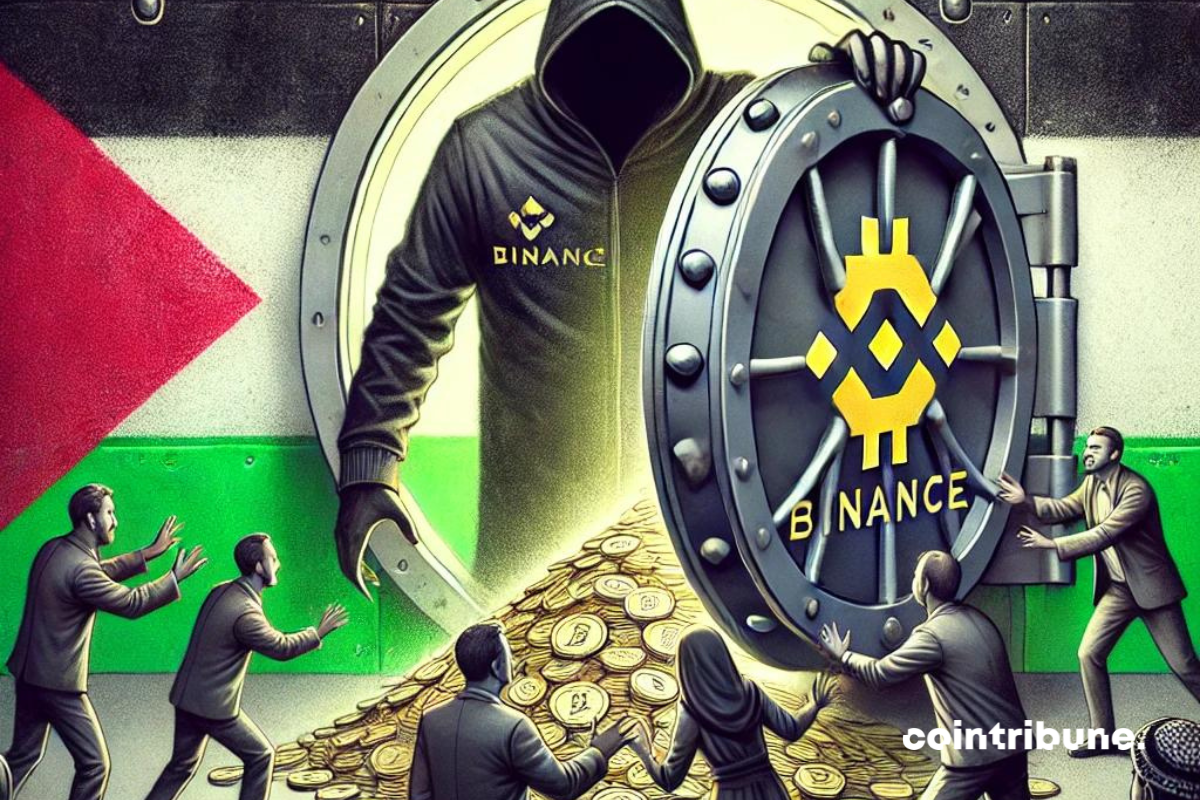
Tensions in the crypto space have recently been reignited by allegations of freezing funds made against Binance by Noones CEO and Paxful CEO Ray Youssef. While Youssef claims that the exchange froze the funds of several Palestinian customers at the request of Israeli authorities, Binance CEO Richard Teng has strongly denied the allegations, calling them false and unfounded. He has stressed Binance’s commitment to protecting its users’ funds and cooperating with international regulators to ensure the security and compliance of its operations, but it is struggling to convince. Regardless, this situation highlights the risks associated with holding cryptocurrencies on centralized platforms.
Accusations of freezing funds: confrontation between Binance and Noones
Yesterday, we reported on the accusations against Binance, made by Ray Youssef, CEO of Noones and CEO of Paxful. He claimed on X (formerly Twitter) that the crypto exchange had frozen the funds of several Palestinian customers. To support his idea, Youssef had shared a video as well as a letter in Hebrew, which he claimed were proof of this supposed seizure, and that it had been done at the request of the Israeli authorities.
In response to these accusations, Richard Teng, CEO of Binance, reacted and vehemently denied these allegationsand that they are false and unfounded. Teng clarified that Binance has never received any directives from Israel to seize Palestinian funds. He even insists that the company works closely with regulators to ensure the compliance and security of its operations. According to Teng, these accusations are aimed at tarnishing Binance’s reputation in an already sensitive geopolitical context. He reiterated Binance’s commitment to protecting its customers’ funds, regardless of their origins.
Fight against the financing of terrorism: Binance account seizures and international sanctions
Since 2021, Israel has seized 190 Binance accounts suspected of being linked to terrorist groups. These measures were strengthened after the October 7, 2023 attack, which caused an escalation of tensions. Additional accounts associated with Hamas were frozen on October 10 at the request of Israeli police. Later this month, the United States expanded its sanctions list to include a Gaza company involved in money transfer and digital asset trading.
While the use of cryptocurrencies to fund terrorist activities is a growing concern, exact figures are difficult to establish due to the difficulty in identifying the owners of specific wallets. In this case, the situation is even more delicate because mistakes can be made that could further complicate the lives of some already struggling households.
To conclude, the current situation demonstrates the risks associated with holding cryptocurrencies on centralized platforms, especially in a context of geopolitical tensions. Without taking sides, it is important to remember that the best way to secure your cryptos remains the use of a hardware wallet. This type of wallet offers total control over your digital assets, thus reducing the risks of confiscation or freezing of funds by third parties, and offering better protection against cyberattacks.
Maximize your Tremplin.io experience with our 'Read to Earn' program! For every article you read, earn points and access exclusive rewards. Sign up now and start earning benefits.