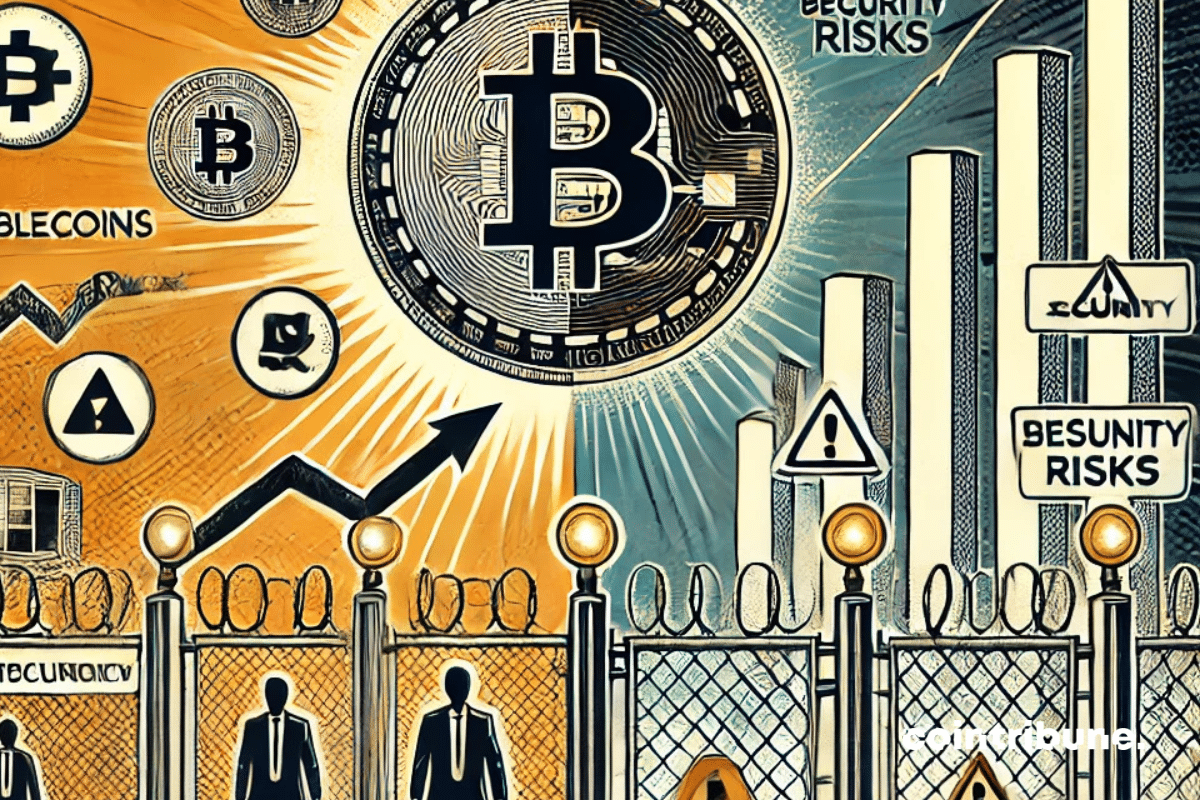
The rise of stablecoins, these cryptos backed by stable assets like the dollar, could well be a game-changer for the global financial system. While the debate on their regulation rages, an influential voice has just taken a position. Christopher Waller, governor of the US Federal Reserve, said that under certain conditions, these digital assets could benefit the traditional financial system. His remarks, delivered at a conference at the Institute for Advanced Study on October 18, shed more light on how stablecoins could transform the way payments are made globally.
Stablecoins: a new asset for international payments
During his speech, Christopher Waller highlighted that stablecoins, if well regulated, could reduce the costs of cross-border payments by eliminating the need for financial intermediaries. Indeed, “stablecoins can reduce the need for payment intermediaries and thus lower transaction costs on a global scale,” he said. These cryptos, often backed by fiat currencies such as the US dollar, offer the possibility of making transactions more fluid, and speed up payment times, particularly in areas where banking infrastructures are less developed.
Waller also mentioned that stablecoins, if properly regulated, could become an essential pillar of new trading platforms. “If appropriate safeguards can be put in place to minimize panic risks and limit other dangers, such as their use in illicit activities, then stablecoins could play a beneficial role in payments and serve as assets sure,” he specified. The Fed Governor emphasizes the importance of clear and robust regulation to allow stablecoins to thrive without compromising the stability of the financial system.
Stablecoins: a potential to be carefully managed
However, despite these apparent advantages, Waller did not fail to point out that the security of stablecoins was in no way guaranteed. He expressed reservations about their large-scale use without strict regulation to control the associated risks. “The security of stablecoins is not assured,” he warned. In addition, he points out the dangers linked to the absence of a regulatory framework. Without adequate safeguards, these assets could be used for illicit purposes or even cause liquidity crises in the event of massive losses of confidence, i.e. a “bank run”.
Waller also echoed the concerns of several US lawmakers regarding growing competition between offshore stablecoins and those regulated in the United States. According to a new report from Chainalysis, stablecoin transactions on non-US regulated platforms will reach 60% of global volume in 2024, a figure that reflects the trend towards adoption of these assets outside the US legal framework. . Thus, if this trend continues, stablecoins could escape the control of regulators, which makes their supervision even more complex. This situation could strengthen calls for more consistent and harmonized international regulation to prevent these assets from becoming a threat to global financial stability.
As stablecoins continue to establish themselves as an alternative to traditional payments, their integration into the overall financial system will depend heavily on the ability of regulators to establish a secure framework. While Christopher Waller and other influential voices recognize their potential, the need for strict regulation remains at the heart of the debate. Future prospects will therefore depend on legislators, but also on the ability of the financial sector to adapt to the new dynamics imposed by these cryptos. Stablecoins: opportunity or threat? Only effective regulation will resolve this question.
Maximize your Tremplin.io experience with our 'Read to Earn' program! For every article you read, earn points and access exclusive rewards. Sign up now and start earning benefits.