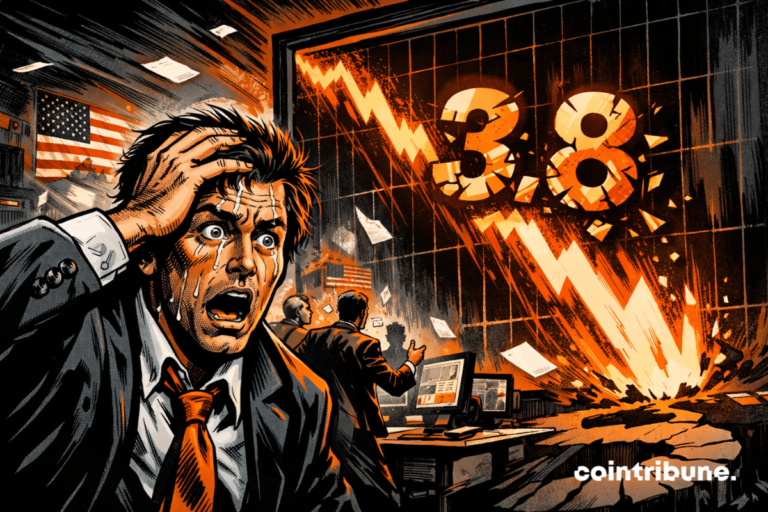
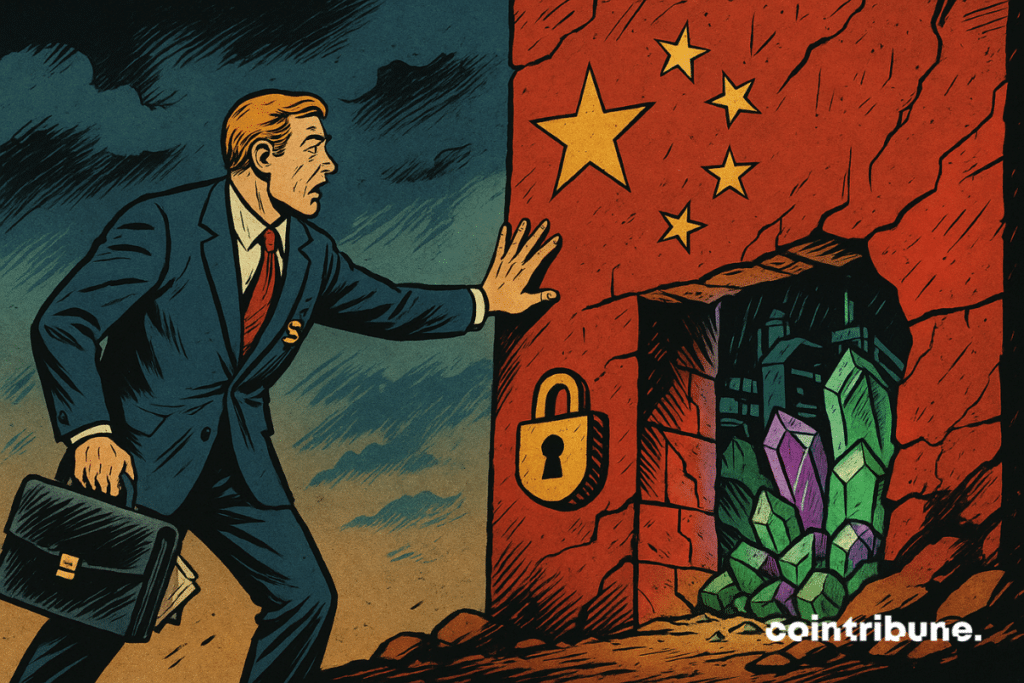
In the Sino-American escalation, a discreet lever takes on an explosive dimension: rare earths. Essential in cutting-edge technologies, these materials become the silent weapon of a strategic duel where industrial sovereignty and monetary confrontation combine.
In brief
- China imposes restrictions on the export of rare earths, key resources for the American military and technology industry.
- According to analyst Luke Gromen, this decision directly threatens the global monetary balance dominated by the dollar.
- The United States responds with 100% tariffs, revealing the escalation of economic tensions between Beijing and Washington.
- Bitcoin and gold appear to be refuges from monetary depreciation, according to several market experts.
Rare earths: Beijing’s geopolitical leverage against the dollar
In an interview with the podcast “Truth For The Commoner”macroeconomic analyst Luke Gromen revealed a major geopolitical development: China has officially restricted the export of its rare earths, particularly to the American military-industrial complex.
For Gromen, this decision constitutes much more than a simple commercial act. It calls into question one of the invisible pillars of the dollar's domination. “China now bans the sale of these critical minerals to the US military-industrial complex”he said, adding that “if you touched the monetary side of the rules-based world order, the United States would send its army to crush you.”
According to him, this logic of military intervention to protect the hegemony of the dollar was at work in cases like those of Saddam Hussein or Muammar Gaddafi.
Here is the highlights to remember from this situation:
- China produces more than 90% of the world's rare earths, essential elements for the manufacture of electronic components, batteries, semiconductors and defense systems;
- Beijing has officially restricted the export of these minerals to the United States, targeting military applications in particular;
- In response, Donald Trump announced 100% tariffs on Chinese products, illustrating rising trade tensions;
- Luke Gromen believes that this decision reveals an asymmetry of power: “China has far more leverage than most Western commentators admit”.
These restrictions are not just a new episode in the Sino-American economic war. They affect a changing international monetary system. By putting pressure on one of the West's most critical supply chains, China is signaling that it is prepared to use its dominant position over strategic resources as an instrument of indirect monetary policy.
Bitcoin, gold and the search for alternatives to a declining currency
While tensions are escalating between the world's two leading economic powers, some observers see this situation as a historic opportunity for so-called assets. “hard money”starting with bitcoin and gold.
For Luke Gromen, the diagnosis is clear: “a monetary standard based on solid assets is the only solution to the current economic problems of the United States”. He believes that digital currencies backed by the dollar, like stablecoins, are only temporary solutions, incapable of responding to the underlying structural problem: the accelerated depreciation of fiat currency.
The figures confirm this worrying trend. For The Kobeissi Letter, the Dollar Currency Index (DXY) is on track to experience its worst year since 1973, with a drop of more than 10% since January.
Worse still, the dollar has lost 40% of its purchasing power since the year 2000. In this context, the attraction for bitcoin or gold is explained less by speculation than by an instinct to preserve purchasing power, both among individuals and institutions. Gromen says these assets will continue to rise as investors seek to protect their savings from inflation and devaluation.
This redirection towards safe haven values, whether digital or material, inevitably raises the question of the future role of decentralized currencies in the global economy. If the dollar were to continue to lose its status as the dominant reserve currency, a new paradigm could emerge, based no longer on military power or the Bretton Woods agreements, but on mechanisms of programmed scarcity, transparency and individual sovereignty.
Maximize your Tremplin.io experience with our 'Read to Earn' program! For every article you read, earn points and access exclusive rewards. Sign up now and start earning benefits.