Europe is going backwards. Three years after MiCA, its crypto framework is already obsolete. Brussels is seeking to catch up with the hegemony of stablecoins backed by the dollar and the American GENIUS law. But is there still time to avoid the exodus of platforms and the reign of the dollar?
In brief
- The EU is updating its MiCA crypto framework to include stablecoins and compete with the United States.
- The United States is a leader in the stablecoin market thanks to more flexible rules regarding public debt reserves, in particular thanks to the GENIUS law.
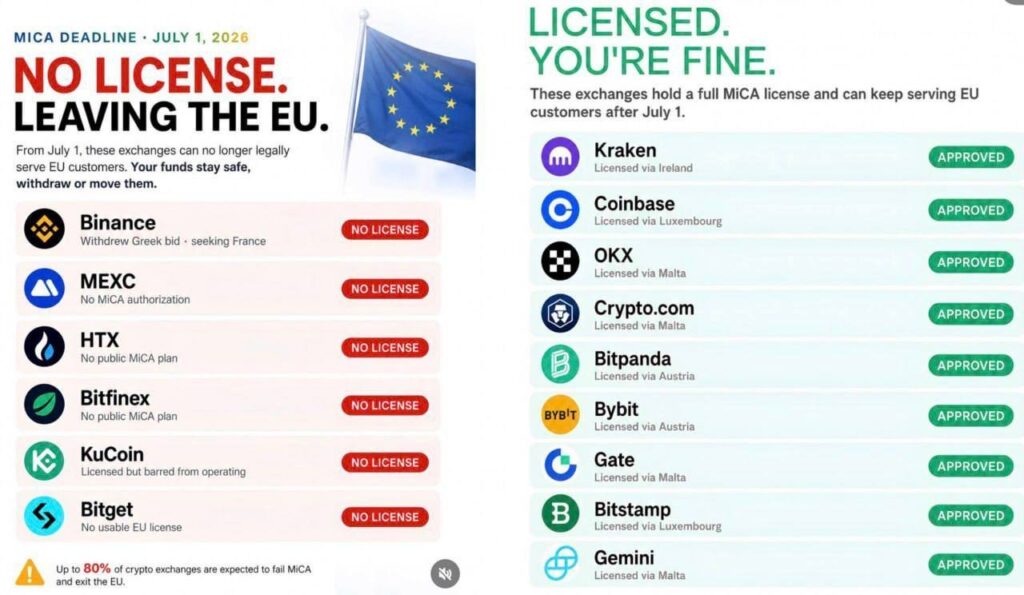
- Binance is abandoning Europe, and Kraken and OKX are taking advantage of the departure of crypto platforms.
MiCA undergoes review in the face of the rise of stablecoins
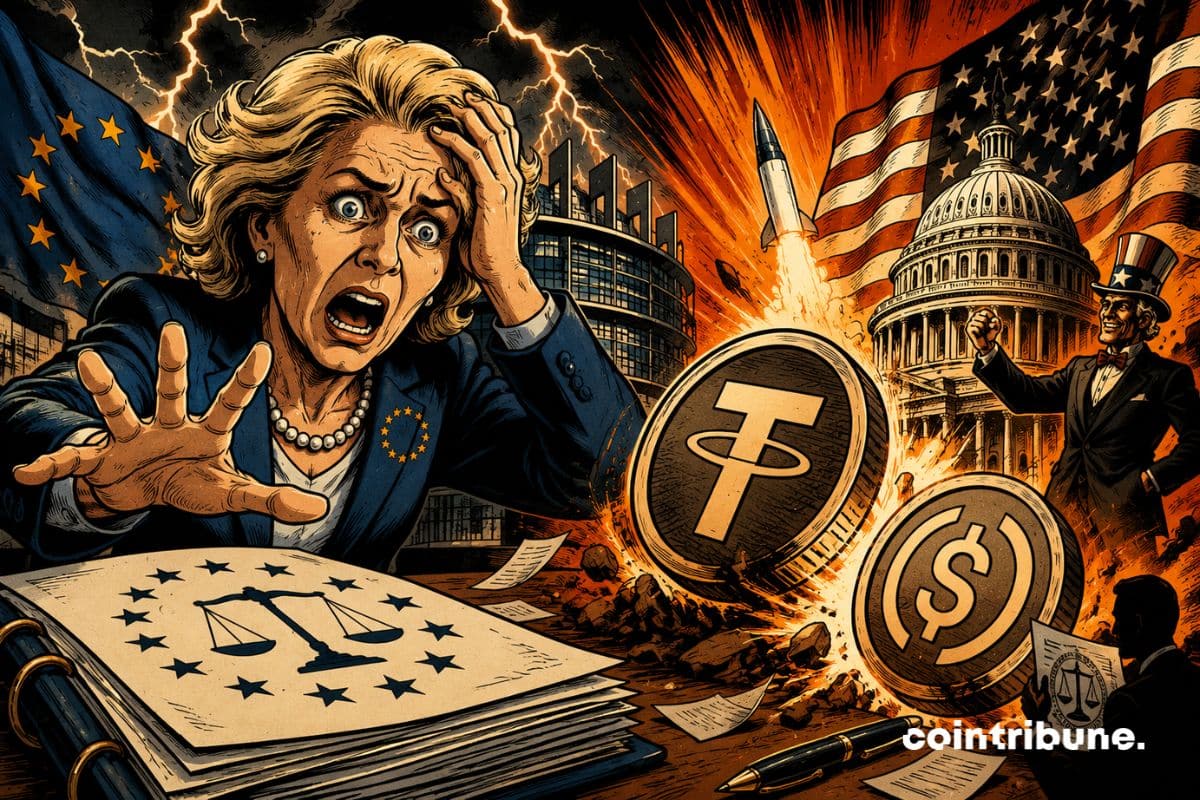
The European Commission has officially begun reviewing MiCA, its crypto regulatory framework, in the face of two major challenges: the explosion of stablecoins and the American GENIUS law. MiCA was set up in 2023 to regulate spot cryptos, but it is struggling to adapt to changes in the financial sector. Meanwhile, stablecoins are embezzling billions of euros and jeopardizing the stability of the banking system. In the United States, the GENIUS law accelerated the movement by authorizing stablecoin issuers to keep their reserves in American public debt. Which strengthens the dollar as the dominant currency.
For its part, the EU still requires issuers of stablecoins to deposit their reserves in the traditional banking system, a measure considered too restrictive by players in the sector. As a result, euro stablecoins, including EUROC, are struggling to compete with USDC or USDT. With MiCA 2.0, Brussels wants to broaden its scope of application to include stablecoins and tokenization, but time is running out… Already, crypto platforms are fleeing to warmer skies, far from Europe.
Europe loses hundreds of crypto platforms, but the giants benefit
As of July 1, 2026, ESMA has published the official list of 244 MiCA authorized crypto platforms, out of the 3,389 previously registered, that are authorized to operate in the EU. Binance, which failed to obtain its approval on time, suspended its services for European residents. This has led to a massive influx of users to compliant platforms such as Kraken and OKX, which are currently running aggressive campaigns to capture these new customers.
Furthermore, some European startups are studying the possibility of moving part of their activities to Switzerland or Singapore, where the rules are more flexible. Europe is therefore increasingly losing its market share in stablecoin exchanges to the United States and Asia, due to its strict regulations. MiCA, supposed to protect crypto investors, risks killing European innovation.
The EU is struggling with the clock. Without an ambitious MiCA 2.0, its crypto market risks disappearing. But Brussels will have to choose between investor protection and competitiveness. Especially at this time when the Bank of France is demanding a tightening of MiCA rules.
Maximize your Tremplin.io experience with our 'Read to Earn' program! For every article you read, earn points and access exclusive rewards. Sign up now and start earning benefits.