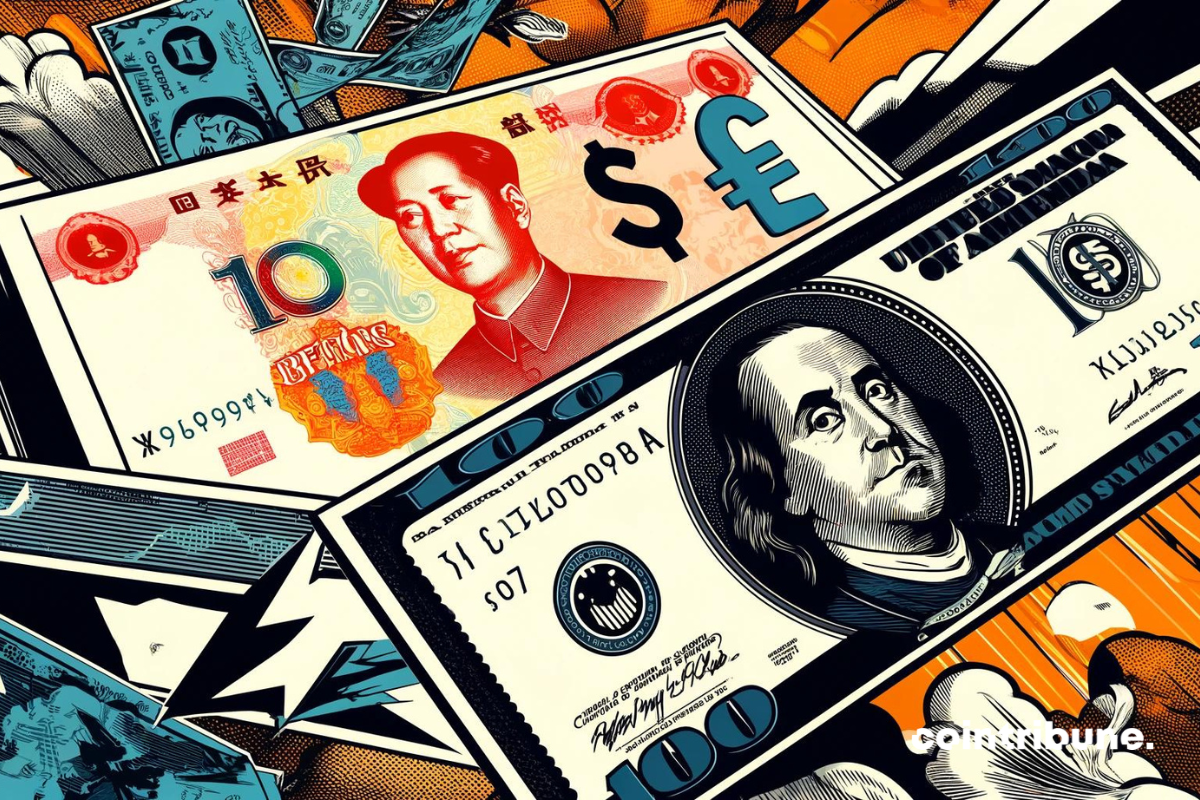
Several countries, including China, are working to reduce their dependence on the dollar by promoting the use of their own currencies in international transactions. However, despite the ambitious attempts at monetary diversification undertaken by this BRICS member, some experts remain skeptical about their success. According to their analyses, the dollar will resist external pressures and maintain its supremacy over the Chinese currency.
China tries to overshadow the US dollar
China is stepping up efforts to reduce the dominance of the US dollar in global trade. By encouraging the use of the yuan in international trade, notably through bilateral trade agreements with BRICS member nations such as Russia, China seeks to establish its currency as a viable alternative to the dollar. Recently, it carried out $260 billion in yuan transactions with Russia, deliberately excluding the dollar from these exchanges.
This initiative comes within a broader context where BRICS countries are also considering developing a common digital currency, independent of the USD-dominated financial system. This ambitious project aims to create a multipolar financial structure, where the dollar would no longer be the sole global reserve currency.
At the same time, the United States faces internal economic challenges that contribute to the deterioration of the dollar's position. Economic indicators such as rising national debt and economic uncertainties are fueling concerns about the currency's stability and continued appeal as a global reserve currency. This situation could favor BRICS efforts, but the dollar remains a currency of choice for many global economies.
Lost effort for China?
Despite Beijing's considerable efforts to internationalize its currency, the yuan remains hobbled by strict capital control policies and limited international liquidity. These restrictions are partly responsible for the reluctance of global markets to adopt the yuan on a broader scale.
James Lord, an analyst at Morgan Stanley, warns that without significant liberalization of China's monetary policy and greater opening of its capital market, the yuan will not be able to seriously threaten the supremacy of the dollar. Beijing's strict control measures aim to stabilize the yuan, but paradoxically limit its adoption as a global currency.
Additionally, China's recent housing crisis and signs of weakness in other economic sectors add a layer of uncertainty about the long-term viability of the yuan as a serious competitor to the dollar. Despite China's ambitions, U.S. economic strength and global confidence in the dollar continue to bolster its status as the preeminent reserve currency. Analysts believe that the dollar could withstand the turbulence and outperform the currency of this BRICS member.
Maximize your Tremplin.io experience with our 'Read to Earn' program! For every article you read, earn points and access exclusive rewards. Sign up now and start earning benefits.
Click here to join 'Read to Earn' and turn your passion for crypto into rewards!