What happens when one of the world's major financial markets suspends trading in the world's major currencies? The Moscow Stock Exchange has just done so, in direct reaction to American economic sanctions. Could this Russian initiative redefine the rules of international trade and global financial relations? Initial reactions and analyzes suggest significant changes on the horizon, affecting not only this BRICS member, but also the global economic balance.
The Moscow Stock Exchange responds to US sanctions
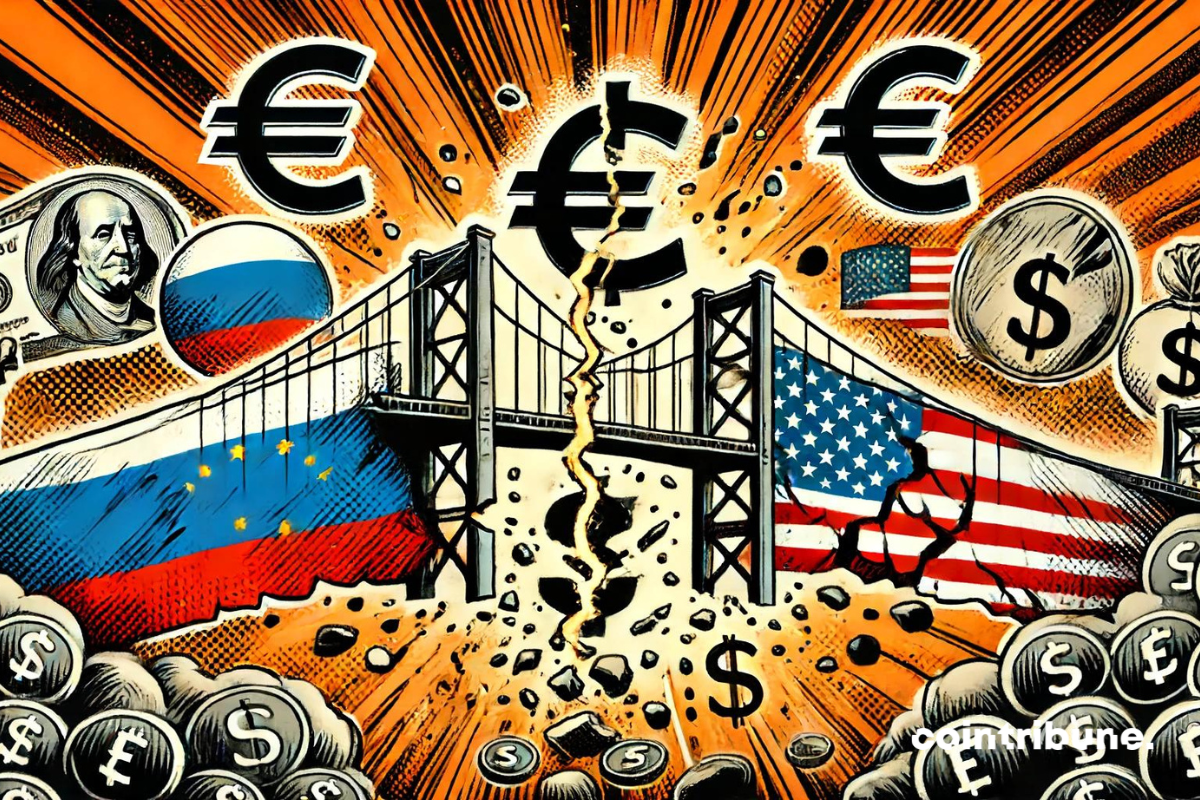
The Moscow Stock Exchange announced the suspension of transactions in dollars and euros from June 13, 2024. This decision comes immediately after the United States Treasury Department imposed sanctions on more than 300 Russian entities, targeting the the country's vital financial infrastructure. The explicit objective of these sanctions is to restrict the financial capabilities of the BRICS member in response to its policies and actions on the international stage, putting a brake on essential financial flows for the Russian economy.
In response to these punitive measures, the Moscow Stock Exchange announced this suspension as a defense mechanism to protect its economy against the impacts of external restrictions. The measure was described by stock exchange officials as a necessary response to maintain financial and economic stability in the face of an increasingly uncertain and hostile international environment. This suspension underlines Russia's desire to secure its financial operations and preserve the integrity of its financial market in these tumultuous times.
What implications for BRICS and the global economy?
Faced with tougher international sanctions, Russia is responding with measures aimed at reducing its dependence on Western currencies, a strategy that resonates strongly among BRICS nations. Moscow's move to suspend trading in U.S. dollars and euros at its main exchange was welcomed as a strategic move to instil greater financial autonomy within the bloc. Indeed, this action is part of the broader dedollarization movement led by the BRICS and encouraged by recent geopolitical and economic tensions.
This policy could potentially accelerate the adoption of local currencies in trade between BRICS member countries, thereby decreasing the dominance of the dollar in global trade. This transition suggests significant repercussions not only for the Russian financial market, but also for international economic relations. Analysts predict disruptions in global trade and financial flows, with possible impacts on the stability of emerging and developed markets.
Furthermore, this decision could lead to a reassessment of economic and political alliances, particularly at a time when the G7 seeks to consolidate its position in the face of the challenges posed by emerging powers. The response of the international community to this Russian strategy could well define the contours of global economic dynamics for years to come.
Maximize your Tremplin.io experience with our 'Read to Earn' program! For every article you read, earn points and access exclusive rewards. Sign up now and start earning benefits.
Click here to join 'Read to Earn' and turn your passion for crypto into rewards!