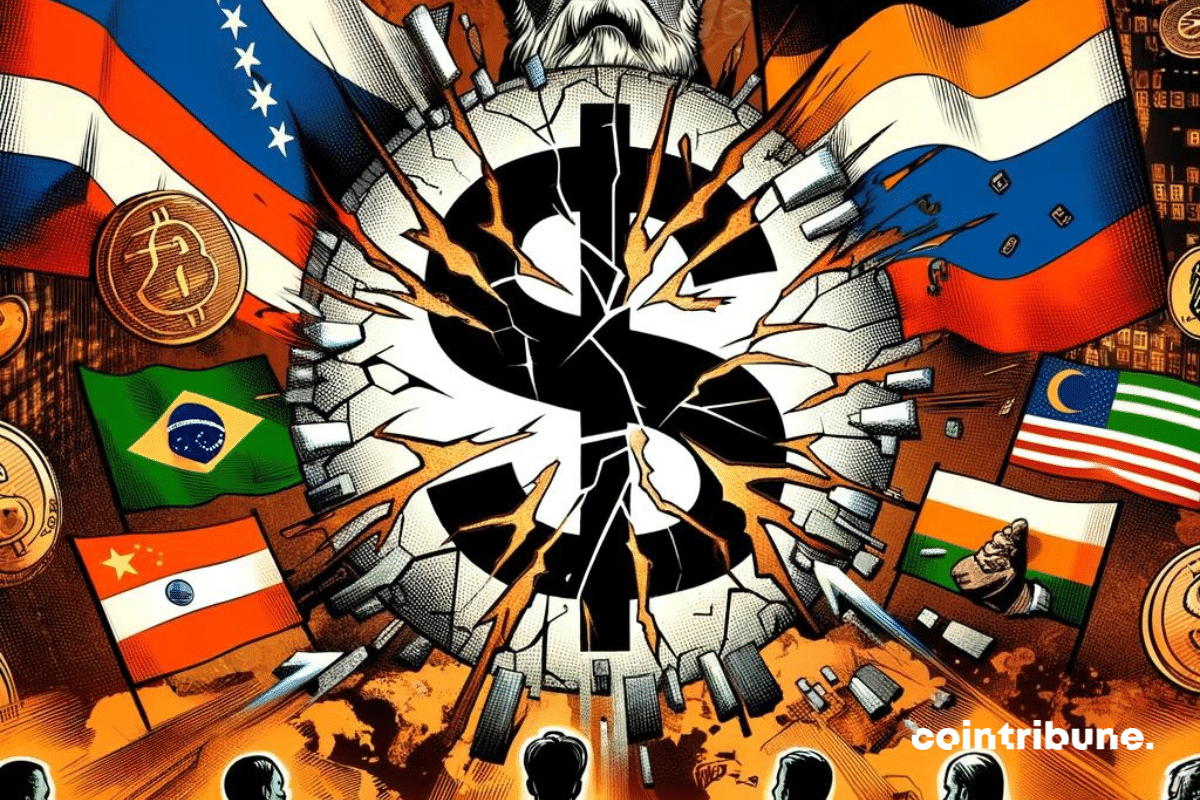
The BRICS plan to put an end to the hegemony of the dollar in international transactions continues to provoke reactions in the United States. Janet Yellen, the US Treasury Secretary, recently spoke on the subject, indicating her concern about the implementation of this project. Especially since, according to her, harmful effects are observed on the dollar.
The future of the American dollar, threatened by the BRICS?
In recent months, BRICS has emerged as a significant force in global economic affairs. This, through one of their priority objectives consisting of reducing the dominance of the dollar as the main global reserve currency.
During a Congressional hearing, Janet Yellen, the US Treasury Secretary, recognized the extent of this policy for the benefit of the BRICS. She’s worried to see the alliance succeeding.
As proof, the financier cited a growing loss of confidence in the greenback. The latter having lost 8% of its shares in global reserves since 2022. A trend which signals a potential change in the international monetary landscape.
Meanwhile, BRICS continues to expand its influence and gain support. This concerted posture represents a significant challenge to the dollar’s long-standing supremacy as the alliance’s efforts to promote dedollarization continue to intensify.
Faith in the resilience of the dollar
Despite this development, Janet Yellen remains optimistic. She believes in the historical capacity of the dollar to meet challenges. However, it also recognizes nations’ growing interest in diversifying their reserves, driven by the dollar’s recent woes.
Analyzed, this development reflects a deep skepticism regarding the stability of the dollar. A dynamic that has propelled BRICS to the forefront as a viable and relevant economic and monetary alternative.
This situation constitutes a setback for the dollar, whose dominance is increasingly undermined. This strengthens the influence of BRICS member states in establishing the global financial system.
In this context, the prospect of a multipolar monetary regime where the greenback is no longer the sole dominant financial force becomes more and more plausible and possible. This, as countries seek alternatives to the dollar. Finally, the dollar still constitutes the dominant reserve currency. However, the rise of BRICS and the growing appetite for other reserve currencies pose significant challenges to the supremacy of the US currency.
Maximize your Tremplin.io experience with our ‘Read to Earn’ program! For every article you read, earn points and access exclusive rewards. Sign up now and start earning benefits.