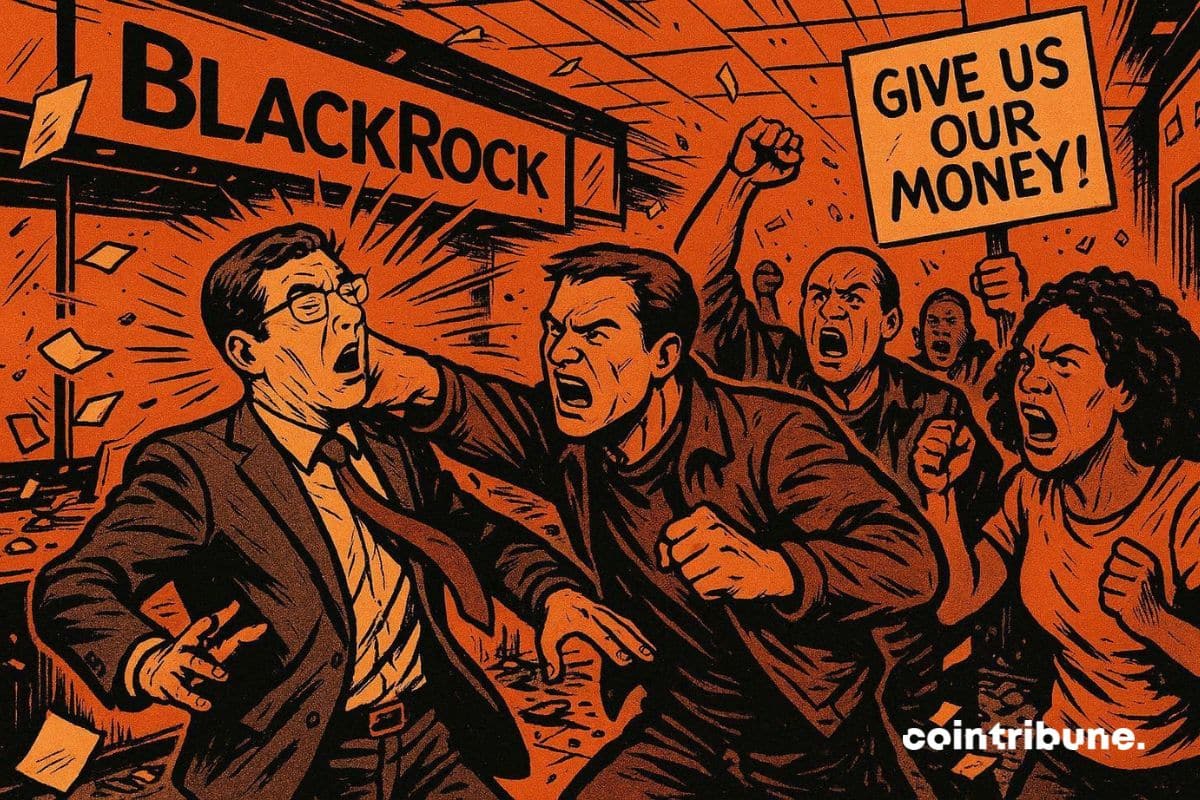
In March 2026, the world of finance is shaking. BlackRock and Blackstone, two asset management behemoths, have just limited withdrawals from their private credit funds and are suffering record losses. An unprecedented liquidity crisis is shaking a sector once seen as stable.
In brief
- BlackRock limits withdrawals from its private credit fund, blocking nearly $600 million.
- The sudden depreciation of loans and the increase in redemption requests reveal the liquidity and valuation risks of the sector.
- Investors must diversify their portfolios and demand more transparency to limit risks.
Finance: why are BlackRock and Blackstone in difficulty?
In 2026, BlackRock made history by writing down the value of a $25 million loan to Infinite Commerce, a company specializing in online seller aggregation, to zero. Three months earlier, this loan was still valued at its nominal value. This case is not isolated since it is the second collapse in less than a year. This led to brutal losses, eroding investor confidence.
Additionally, redemption requests exploded, forcing BlackRock to limit withdrawals from its HPS Corporate Lending Fund. With 9.3% requests (or $1.2 billion), the fund capped redemptions at 5%, leaving almost half of investors without access to their capital. An unprecedented situation which reveals the flaws of a system designed for long-term investments.
Blackstone, for its part, faced record redemption requests of 7.9% in its BCRED fund, equivalent to $3.8 billion. To honor these requests, the company increased its buyback limit to 7% and injected $400 million of its own funds.
What are the risks for investors and the market?
The current crisis in private credit at BlackRock raises questions about the stability of the sector. Often perceived as safe and profitable investments, these funds are now revealing their vulnerability. The illiquidity of underlying assets and sometimes opaque valuations create fertile ground for crises of confidence. For investors, the risks are multiple:
- First, the inability to withdraw their funds in case of urgent need;
- Then, the sudden depreciation of certain loans, such as that of Infinite Commerce, can lead to significant losses;
- Finally, in a context of high interest rates and economic uncertainties, borrowers are struggling to repay. Thus increasing payment defaults.
Investors in private funds like BlackRock should be aware that high returns come with equally high risks. Furthermore, others could be tempted by cryptos, in this case bitcoin, which holds up quite well in times of crisis. However, regulators and asset managers will need to review their practices to restore trust and improve transparency.
The private credit crisis in finance is a stark reminder of the risks inherent in illiquid investments. BlackRock and Blackstone, despite their size and reputation, are not immune to turbulence. For investors, the stakes are high. Should we continue to invest in these funds, or favor safer investments?
Maximize your Tremplin.io experience with our 'Read to Earn' program! For every article you read, earn points and access exclusive rewards. Sign up now and start earning benefits.