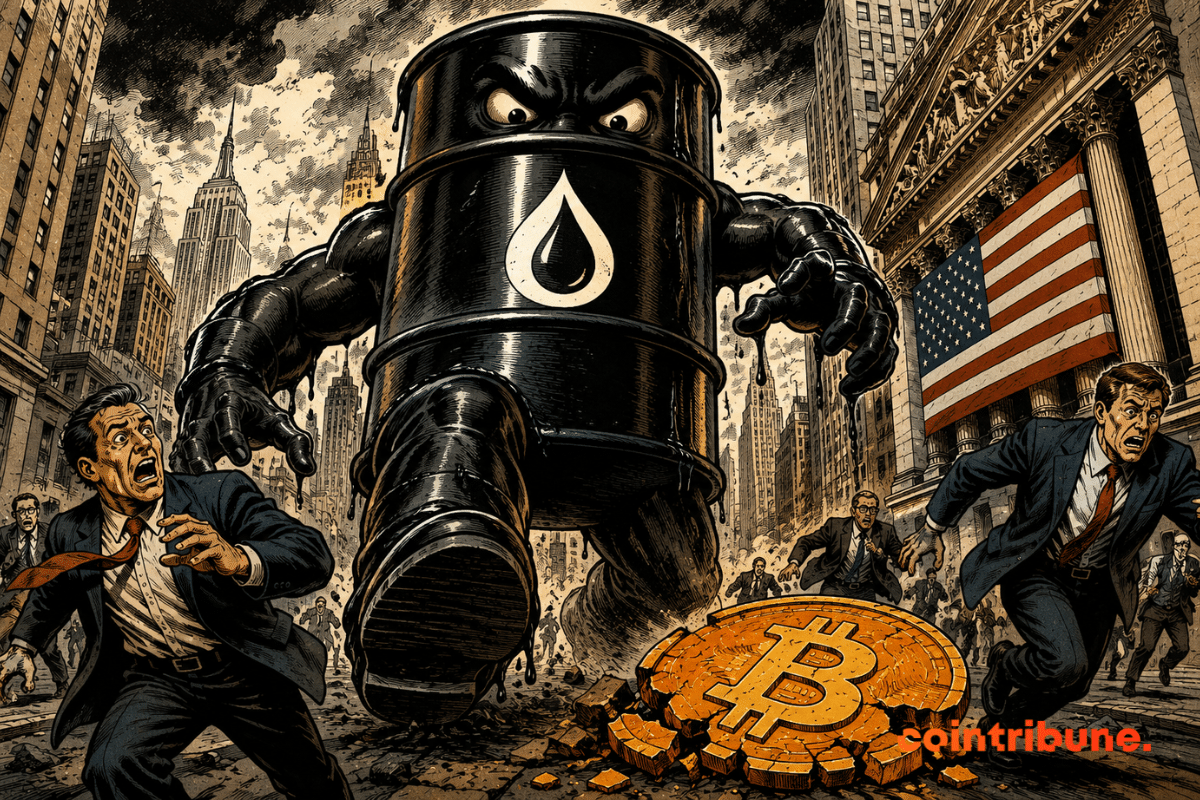
Donald Trump displays an offensive posture on the world stage. However, the markets are no longer able to read his game. All over the world, doubt is taking hold. Iran, oil going crazy and central banks on alert: the game is becoming very vague.
In brief
- The US CPI for May could reach 4.2%, its highest since April 2023.
- A closure of the Strait of Hormuz would directly threaten American oil stocks.
- Weekly outflows from Bitcoin ETFs have exceeded $1.7 billion.
- BlackRock sees inflation as the real danger for risky assets.
The CPI that BlackRock monitors like a poker hand
Global investment giant BlackRock is looking to the May CPI report as a litmus test. Economists anticipate annual inflation of 4.2% over one year. This would be the highest level since April 2023. It would move further away from the 2% target set by the Fed.
We await May US inflation figures to get a clearer read on the impact of the Middle East conflict-related energy shock on already persistent inflation.
BlackRock Investment Institute (CoinDesk)
Inflation is therefore not weakening despite appearances; it could even accelerate in the coming months. If oil reignites the flame, the Fed will not hesitate to tighten the screw very hard.
The Strait of Hormuz, this artery that can strangle bitcoin
BlackRock plays an even more worrying card in this tight game. The prolonged closure of the Strait of Hormuz until July would transform a regional tension into a global energy shock.
“ We believe that a prolonged closure of the Strait of Hormuz until July could make the impact of the shock much more visible, especially if US oil stocks reach their lowest levels in forty years » adds BlackRock (CoinDesk).
Inflation would then become logistical and geopolitical at the same time. Bitcoin has already suffered a fall of 14% in recent days. It even fell below $60,000 recently.
If energy starts to rise again, the Fed will favor a rate hike. For BTC, this would be another very painful blow.
Inflation dictates its law, ETFs no longer keep pace
ETF flows amplify movements, but no longer trigger them in the market. It is inflation that is now pulling all the strings. However, weekly outflows from bitcoin ETFs reached $1.72 billion. This impressive figure includes 1.34 billion for BlackRock's IBIT alone.
However, it is not this amount that caused BTC to plummet. It was rate expectations that started it all. Hot inflation pushes real yields and the dollar higher. Cold inflation, on the contrary, would reopen a window of relief for risky assets.
This week, a single number can change everything in the markets. Traders know it well: they play very tight before publication.
The data that bends the market
- US inflation expected at 4.2%, not seen since April 2023;
- BTC price at $63,498 at the time of writing;
- One-week bitcoin ETF outflows: $1.72 billion;
- US oil stocks at their lowest in forty years.
BlackRock illuminates part of the global economic puzzle. However, inflation alone does not explain everything. Leveraged liquidations, massive ETF outflows and changing monetary expectations also played a major role in bitcoin's recent correction. However, one certainty remains: inflation remains the real dealer of this global financial table.
Maximize your Tremplin.io experience with our 'Read to Earn' program! For every article you read, earn points and access exclusive rewards. Sign up now and start earning benefits.