
The price of bitcoin remains under pressure, as selling pressure continues to weigh on the market. OG coin fell to an intraday low of $72,945 in the previous session amid a shift away from risky assets. While individual traders maintain predominantly bullish positions, institutional investors are beginning to decline. The current data highlights a growing divide between these two groups, raising questions about the future trajectory of bitcoin.

In brief
- Bitcoin remains under pressure as whales reduce their long exposure, while retail traders remain mostly bullish.
- Short-side activity dominates derivatives markets, despite still slightly positive funding rates.
- Institutional demand is weakening, with bitcoin-related products trading at discounts to the spot price.
- Declining spot volumes and stablecoin supply signals limited liquidity to support a sustainable rebound.
Large holders become defensive, optimism among individuals persists
Recent price movements reflect a notable repositioning of market participants. Large holders, often referred to as whales, have reduced their long exposure while strengthening their short positions in perpetual futures contracts.
Conversely, retail traders show few signs of decline, maintaining high optimism despite the decline in prices. This divergence illustrates growing uncertainty, particularly worrying in a context of declining liquidity.
Whales, through their access to deep liquidity, respond quickly to changes in market conditions. They can adjust their positions with more flexibility than small holders, often constrained by short-term signals and limited capital.
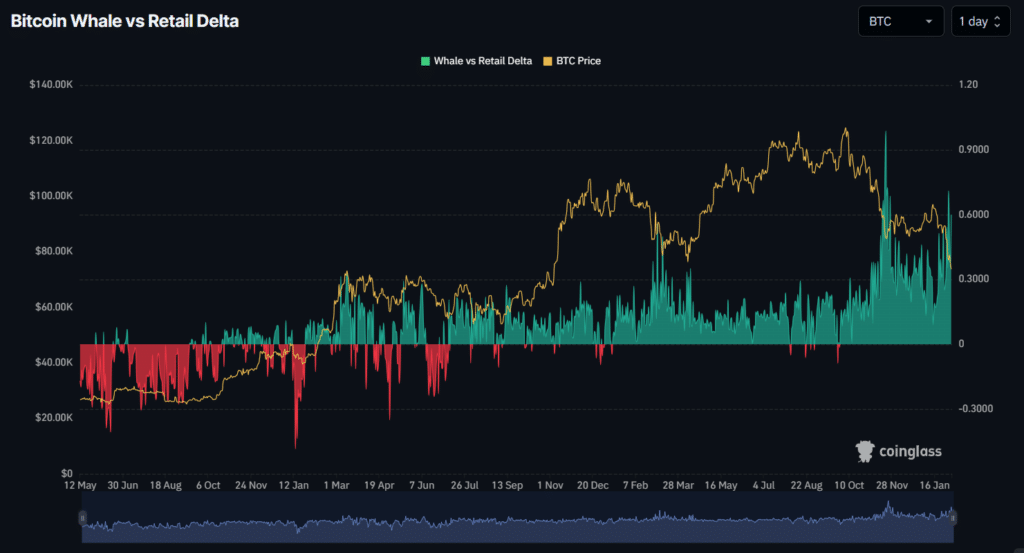
The Delta Whales vs Individuals, an indicator following the comparative behavior of large and small players, shows a closing of long positions by whales over the last 24 hours, with a net opening of short positions. This positioning suggests an anticipation of a correction or price stagnation.
João Wedson, founder of Alphractal, explains that this behavior fits into a classic pattern linked to volatility. Whales frequently adopt mixed strategies, long and short, during times of instability, before reducing their exposure when momentum wanes, he said. Historically, these decline phases often precede a consolidation or resumption of selling pressure.
Price trajectories after similar setups have varied, but two outcomes stand out. Bitcoin could pause in a tight range while traders wait for clarity, or sellers could push prices below the $70,000 zone if pressure builds. Previous whale-triggered outings have sometimes led to sharp drops before stability returns.
Bitcoin short positions increase even as funding rates remain in bullish zone
Despite growing caution, derivatives data shows that long positions still retain a slight advantage. Bitcoin funding rates, which reflect the cost of holding leveraged trades, remain slightly positive around 0.0040%. This reading suggests that long traders continue to pay shorts, even if the balance remains fragile.
Several forces are currently shaping bitcoin's near-term outlook:
- Whale accounts reduced their long exposure while building short positions, signaling defensive positioning.
- Short side trading volume on perpetual futures continues to exceed long volume.
- US-based demand has weakened, according to falling price premiums.
- Institutional appetite is showing signs of cooling as investment products trade below spot prices.
Downward pressure remains active even with funding rates in positive territory. The increase in short volume suggests that sell-side activity is dominating market flow. A sharp move higher in such conditions could trap late buyers, increasing the risk of sudden reversals if momentum falters.
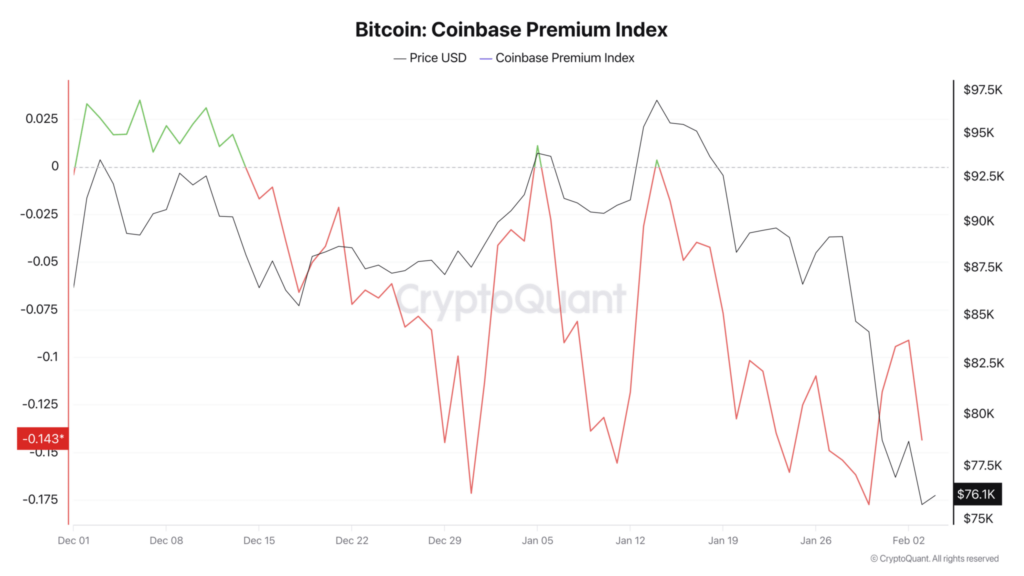
Spot market signals add to the cautious tone. The Coinbase premium index slipped toward levels seen on offshore exchanges, indicating weaker demand from U.S. investors. Such behavior often reflects hesitation among buyers who previously supported rallies during times of stress.
Liquidity withdrawal signals limited near-term potential for bitcoin
Institutional indicators also show limited support. Price spreads between bitcoin-linked funds, trusts and exchange-traded products compared to spot markets have become negative. A reading close to -0.2 indicates that these products are trading at discounts, suggesting reduced interest from large capital pools.
Broader market activity has also weakened. Spot trading volume across crypto markets has fallen significantly, with hundreds of billions of dollars of activity gone since October 2025. Fewer active participants means less demand to absorb selling pressure, making price swings more pronounced.
Stablecoin supply trends reinforce this picture. A recent $10 billion drop in the market value of stablecoins signals a hesitance to deploy new capital into digital assets. Since bitcoin often attracts returning liquidity first, the reduction in the availability of stablecoins could dampen any recovery attempts.
A lack of spot demand and diminishing liquidity could limit bitcoin's ability to sustain bullish momentum. Under current conditions, price action is likely to remain highly sensitive to changes in sentiment among large holders and broader capital flows.
Maximize your Tremplin.io experience with our 'Read to Earn' program! For every article you read, earn points and access exclusive rewards. Sign up now and start earning benefits.