
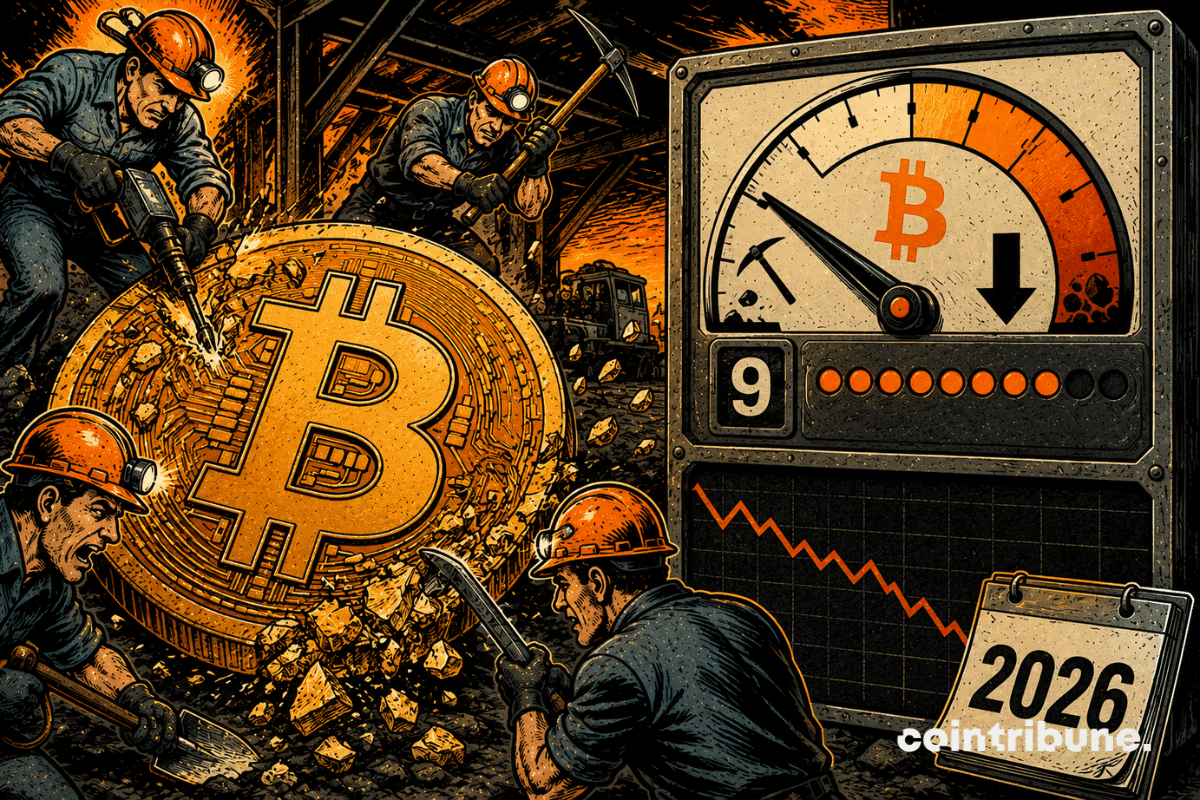
Bitcoin mining difficulty fell 0.74% at block 959616 this weekend and marks the 15th readjustment of the year 2026. Over the first seven months, declines outweigh increases by a ratio of 3 to 2. This self-regulatory mechanism tells of an industry that is experiencing increasing pressure.

In brief
- The Bitcoin network has recorded 9 drops and 6 increases in difficulty since January 2026, for a net decline of 13.82%.
- The hashprice, daily income per petahash, fell from $37.39 to $32.21 in 206 days.
- Bitcoin has lost 26% since January 1, pushing large miners to redirect their power capacity to artificial intelligence.
An adjustment mechanism that leans significantly downwards
Bitcoin difficulty works like an automatic regulator: every 2,016 blocks, or approximately two weeks, the protocol recalibrates the target to maintain an average block time of ten minutes. This mechanism, unchanged since the creation of the network by Satoshi Nakamoto, is a faithful barometer of the computing power deployed by the network’s miners.
However, since the start of 2026, this barometer has indicated almost constant downward pressure. Out of 15 adjustments covering 28,224 blocks, between January 8 and July 25, the network conceded 9 drops for only 6 increases. The average difference per readjustment reached 6.4 percentage points, a magnitude much greater than that of previous cycles.
Cumulatively, the increases in difficulty total 31.04% while the decreases reach 43.96%. Result: the indicator went from 146.47 trillion to 126.23 trillion, a decline of 13.82% in just seven months.
The main cause of this erosion is not a technical failure of the network. It lies in the economic equation of miners, today undermined by the poor performance of bitcoin on the markets. Since January 1, the crypto queen has lost 26% of its value, which mechanically compresses the margins of all operators.
Hashprice, an indicator that measures the estimated daily value of one petahash per second (PH/s) of computing power, illustrates this degradation. In 206 days, it went from $37.39 to $32.21. Each computing unit deployed therefore brings in less than at the start of the year, while energy and infrastructure costs remain unchanged, or even increase in certain jurisdictions.
The silent exodus of miners towards artificial intelligence
Faced with this compression of margins, the major players in mining are activating a lever that few observers had anticipated two years ago: the reconversion of their infrastructures towards artificial intelligence and cloud computing. Companies with long-term electricity contracts and already equipped sites now find it more profitable to rent this capacity to AI clients than to continue mining bitcoins.
This movement is not an anecdote. It is directly reflected in the drop in the total computing power of the network. The equipment does not disappear: it simply changes its use. Servers that used to calculate SHA-256 hashes now process language model inference or graphics rendering for the cloud.
For now, the difficulty adjustment algorithm continues to do its job. It reduces the target as computing power retires and ensures that blocks are still produced every ten minutes. As for the second half of 2026, everything will depend on the ability of bitcoin to regain ground in the markets and the continued appeal of AI for infrastructure operators.
In short, the 15th difficulty adjustment of 2026 is not an isolated event. It is part of a major trend where the fall in the price of bitcoin, the compression of the hashprice and the migration of miners to AI mutually reinforce each other. Regaining price levels and competition with AI revenues remain the two decisive factors for the second half. The difficulty algorithm demonstrates the resilience of the protocol in real time.
Maximize your Tremplin.io experience with our ‘Read to Earn’ program! For every article you read, earn points and access exclusive rewards. Sign up now and start earning benefits.


