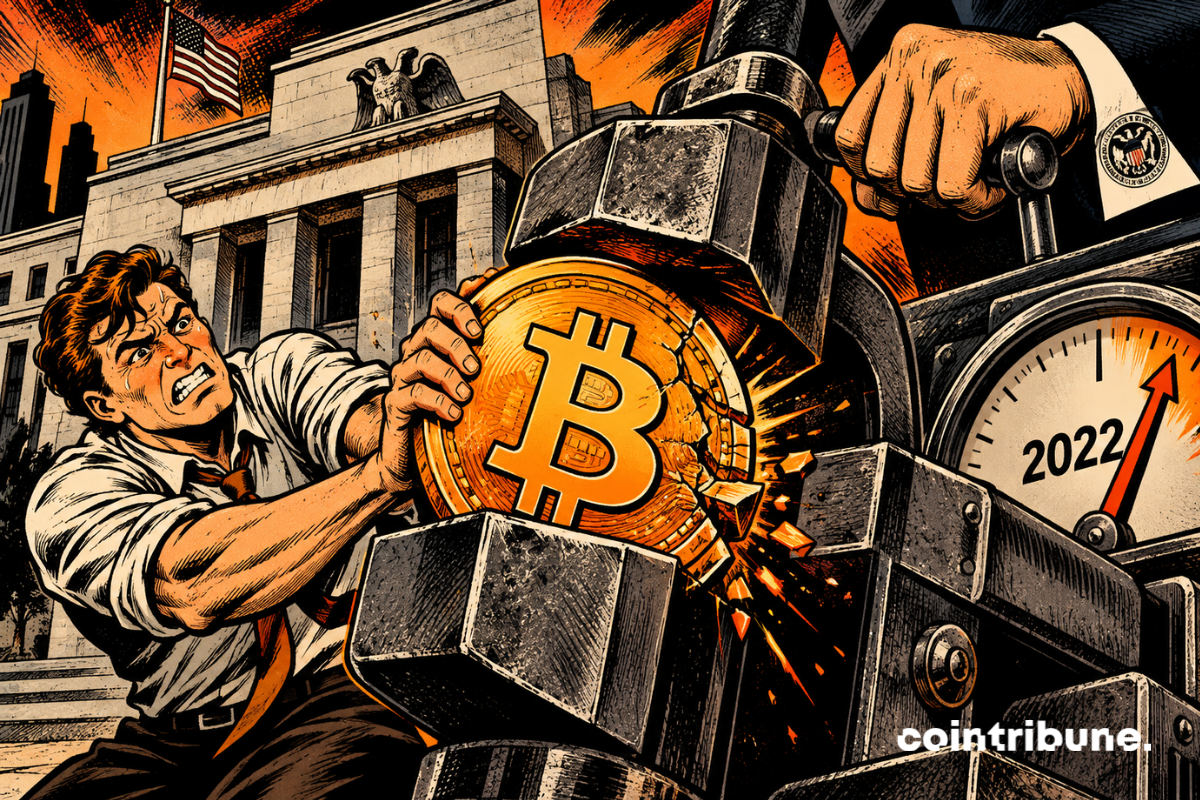
The crypto market is returning to a scenario recently observed during the previous cycle of monetary tightening. After the Federal Reserve’s first rate hike in more than three years, bitcoin is moving in a configuration reminiscent of 2022. At the time, its decline preceded the March decision, before a temporary rebound then a new fall. This comparison, however, remains limited by the maturity of the market. The coming weeks will allow us to observe whether this historical parallel retains a clear significance.
In brief
- The Fed raised rates by 25 basis points, bringing its range to 3.75%-4.00%.
- Bitcoin’s current decline bears several similarities to the period preceding the March 2022 rally.
- After the 2022 rally, bitcoin had rebounded 18% before losing around 50%.
- The energy shock and rising bond yields are now complicating financial conditions.
A rise in rates which revives the parallel with 2022
On Wednesday, the US Federal Reserve (Fed) raised its rates by 25 basis points. Its reference range now reaches 3.75% to 4.00%. This decision marks the first increase in three years. The markets anticipate now 75 basis points more over the next six months.
Historically, an isolated movement remains rare in tightening cycles. Since 1994, the Fed has only made one increase. Since 1955, over twelve periods of tightening, single increases remain rare.
For bitcoin, the comparison with 2022 is therefore of particular interest. The current market has little historical perspective. The cycle started in 2015 is another benchmark, but lower liquidity and a less developed market limit the comparison.
2022 precedent shows rebound before decline
As of November 2021, the price of bitcoin has reached around $69,000. When rates first rose in March 2022, it had already lost almost 40% since that peak. Today, it too is about 40% below its October peak of $126,000.
The movement observed after the March 2022 decision provides another element of comparison. Bitcoin rose around 18% over the next twelve days. It then fell by around 50%, opening a prolonged decline phase.
This sequence therefore supports the hypothesis of a rebound before further deterioration. It does not constitute a certain trajectory. In 2022, the decline was accompanied by losses in stocks, bonds and metals. The crypto sector was also experiencing significant turbulence.
Inflation and energy complicate next steps
The Fed justifies its rate increase by the persistence of inflation. Headline inflation has remained above 2% for more than five years. However, core inflation, excluding food and energy, slowed to 2.4%. This level represents its lowest point in five years.
For bitcoin, this improvement now comes up against a new energy shock. Geopolitical tensions in the Middle East have pushed WTI and Brent well above $100 per barrel. This development threatens to reignite inflation for bitcoin while slowing growth.
Over time, global bond yields have risen. The yield on the 10-year US Treasury bond reached 5%. This increase increases pressure on financial conditions and risky assets. Bitcoin is thus entering a period where macroeconomic data will remain central.
In the short term, the 2022 precedent therefore provides a framework for comparison, without guaranteeing identical repetition. The next behavior of the market will depend in particular on the trajectory of rates, inflation and financial conditions. For investors, the evolution of BTC will above all make it possible to measure whether the historical parallel continues or stops.
Maximize your Tremplin.io experience with our ‘Read to Earn’ program! For every article you read, earn points and access exclusive rewards. Sign up now and start earning benefits.