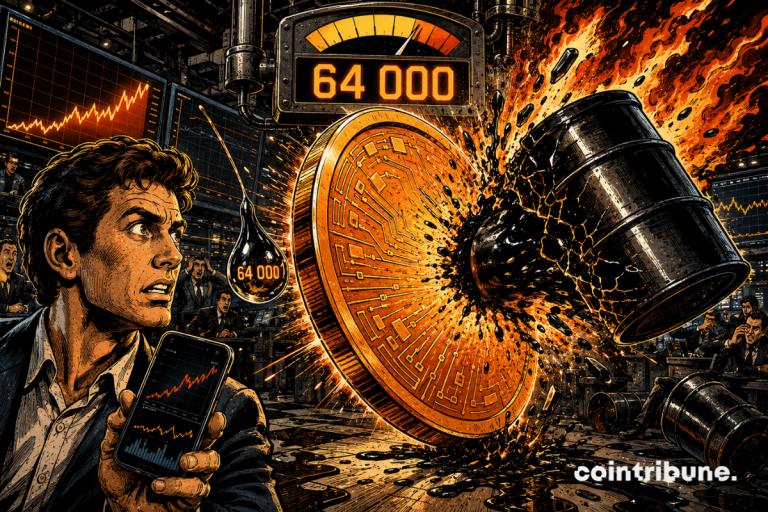
After reaching a historic peak in December, bitcoin suffered a brutal correction, losing nearly 10% of its value in a few weeks. This fall cannot be explained solely by a simple market cycle, but by a tense economic context. American inflation, ever more sustainable, is reducing the Federal Reserve's (Fed) room for maneuver, which is delaying hopes of a rate cut. This situation increases the pressure on risky assets, including bitcoin, which is seeing its appeal diminish in the face of a rising dollar and rising bond yields. The imminent announcement of the consumer price index (CPI) on January 15 could accentuate this trend. According to Steno Research, higher-than-expected inflation could trigger further liquidations, and cause BTC to fall below $85,000. But the danger does not come only from macroeconomic data. The bitcoin derivatives market remains overheated, fueling excess leverage that increases volatility. Between economic uncertainties and the weakening of speculative positions, crypto is evolving in a zone of instability, where each economic announcement could cause a major movement.

A bitcoin weakened by an uncertain economic climate
Since mid-December, bitcoin has been in a bearish dynamic, and has fallen from $106,000 to around $96,000. This decline takes place in a tense macroeconomic context, marked by increased inflation and stricter monetary policy from the American Federal Reserve (Fed). The latest US jobs report, released on January 10, highlighted a robust labor market, reinforcing the case that interest rates will remain high for an extended period. .
This monetary uncertainty has helped strengthen the U.S. dollar, putting additional pressure on risky assets including bitcoin. “Bitcoin appears to be held back by the strength of the dollar, which is rising due to a more restrictive Fed and new threats of tariffs,” says Zach Pandl, head of research at Grayscale. At the same time, yields on 10-year Treasury bonds continue to rise, reflecting investors' concern about the inflation outlook.
Indeed, in this climate of risk aversion, the next consumer price index (CPI), expected on January 15, appears to be a decisive factor. According to Steno Research, inflation above 0.3% forecast could trigger a new wave of sell-offs in the crypto market, potentially pushing bitcoin below $85,000.
Overheated futures markets, an additional risk
If the macroeconomic environment weighs heavily on bitcoin, derivatives markets also amplify the selling pressure. Despite the recent correction, open positions in BTC futures remain at high levels, a sign that many investors remain excessively leveraged. This situation creates additional risk. In the event of a further fall in bitcoin, cascading liquidations could aggravate volatility and accentuate the market decline.
According to Steno Research, the threshold of $85,000 could be reached if US inflation turns out to be higher than expected. “An upward deviation in the CPI figures could surprise the market and generate an additional shock to crypto prices,” explain the analysts. The impact of such a scenario would not be limited to cryptos. A stronger dollar and higher bond yields would lure more investors away from risky assets.
However, this brutal correction would not call into question the long-term bullish outlook. Steno Research estimates that 2025 could be a record year for bitcoin, driven by lower interest rates, a more favorable regulatory climate and the traditional post-halving effect. For now, caution remains in order, as each new economic data could redefine the trajectory of the market.
In the short term, investors face sustained downward pressure, fueled by macroeconomic uncertainties and a stressed derivatives market. However, Steno Research anticipates a strong recovery during 2025, driven by several catalysts. A drop in interest rates, a more favorable regulatory framework and the impact of halving could create conditions conducive to a new bullish cycle. Analysts estimate that bitcoin could exceed $150,000, and reach new all-time highs. Until then, volatility remains a key element of the market. Between economic adjustments and strategic repositioning of investors, bitcoin will have to find a balance before entering a new phase of expansion. Caution remains in order, because each macroeconomic data can influence the trajectory of the market in the short term.
Maximize your Tremplin.io experience with our 'Read to Earn' program! For every article you read, earn points and access exclusive rewards. Sign up now and start earning benefits.