
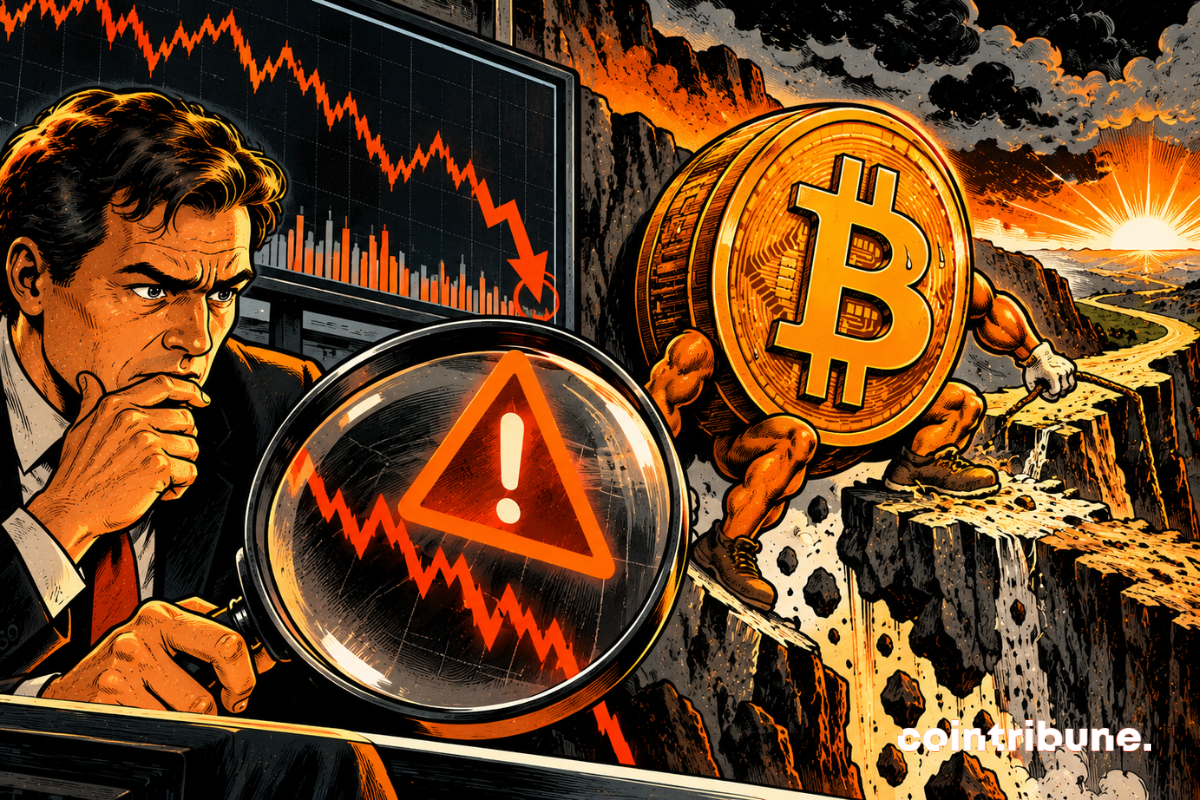
Nearly 4 million BTC held long-term have an acquisition price estimated between $85,000 and $118,000. This concentration makes any rise in bitcoin possible “reimbursement market”where some investors could sell as soon as they regain their stake.
In brief
- Nearly 4 million BTC have an estimated cost price of between $85,000 and $118,000.
- These Bitcoins represent approximately $325 billion, or nearly 20% of the circulating supply.
- Some investors could sell as soon as they regain their purchase price, which risks slowing the recovery.
- The threshold of 85,000 dollars constitutes a major resistance that bitcoin is struggling to cross in the long term.
- Demand remains fragile, with buyers now favoring the $78,000 to $79,000 zone.
Four million BTC await their return to balance
Long-term holders own around 4 million bitcoins whose on-chain cost price is between $85,000 and $118,000 according to Glassnode. The majority of these coins would have been acquired in 2025, before BTC fell back to around $81,000.
These investors are considered long-term holders because they have held their bitcoins for at least 155 days. Their patience, however, does not guarantee that they will continue to wait. After several months of latent losses, a return to their purchase price could encourage them to sell without seeking a profit.
Several figures allow us to measure the importance of this potential offer:
- The 4 million BTC are worth around $325 billion at current prices;
- They represent nearly 20% of bitcoins already in circulation;
- More than half of the assets of long-term holders would have been acquired above the current price;
- The threshold of $85,000 constitutes the lower part of their cost price zone;
- Bitcoin has only closed five days above this level since January;
- No series above $85,000 has exceeded three consecutive sessions.
Glassnode estimated :
If the price rises towards $85,000, many of these holders could sell to recoup their stake.
The analysis company therefore does not necessarily predict a massive sale, but identifies a reservoir of bitcoins likely to gradually arrive on the market.
This pressure would be different from capitulation. Investors would not sell out of panic during a fall, but out of relief during a rebound. The market should then find enough new buyers to absorb the outflows without interrupting the recovery.
The $85,000 threshold may overestimate actual supply
The cost price indicator nevertheless deserves significant caution. It is based on the price of bitcoin at the time each coin was last moved on the blockchain. A transfer does not always correspond to a purchase.
Glassnode thus indicates that 864,520 BTC, or 4.3% of the total supply, moved between 84,000 and 85,000 dollars. However, a large part of this volume would come from a single holder having transferred their funds between their own wallets on November 22, 2025. This operation did not necessarily create hundreds of thousands of new buyers at this price.
The level nevertheless retains technical importance. The zone had served as support in December 2025, before giving way on January 31. Bitcoin then lost around 20%. Since then, several attacks have failed near this strip, notably in May, September and October 21.
The risk therefore does not come only from the 864,520 BTC moved during the same day. It results from the superposition of several factors: old buyers close to equilibrium, sell orders, chart resistance and collective anticipation of a new failure.
A one-time close above $85,000 would remain insufficient. Glassnode believes that a series of daily closes above this threshold would be necessary to sustainably transform this resistance into support.
Between 78,000 and 85,000 dollars, demand remains too low
Below the current price, the situation appears more favorable, but buyers have lowered their orders. On Binance, only $3.4 million in purchases would remain positioned at $80,000, compared to around 42 million between $78,000 and $79,000.
This migration shows that investors are not yet looking to chase the price. They wait for a drop before coming back. The average price for active investors is around $77,900, while that of short-term holders is around $75,800. These levels could form the next supports in the event of a pullback.
On the upside, the average cost of US bitcoin ETFs is estimated at $81,500. A sustainable return above this threshold would put the average investor in these funds back into profit. But recent entries remain irregular and are not yet enough to absorb the entire supply located between 85,000 and 118,000 dollars.
However, the market shows no clear signs of capitulation. Net losses realized during the pullbacks fell from around $630 million in August to just $27 million around October 24. Sellers are becoming less aggressive, but buyers are not yet taking over.
The real bullish signal will therefore not be the simple crossing of 85,000 dollars. It will be necessary to observe whether bitcoin can stay there for several days, with volumes and entries into ETFs high enough to absorb investors who finally wish to exit in balance.
Maximize your Tremplin.io experience with our ‘Read to Earn’ program! For every article you read, earn points and access exclusive rewards. Sign up now and start earning benefits.