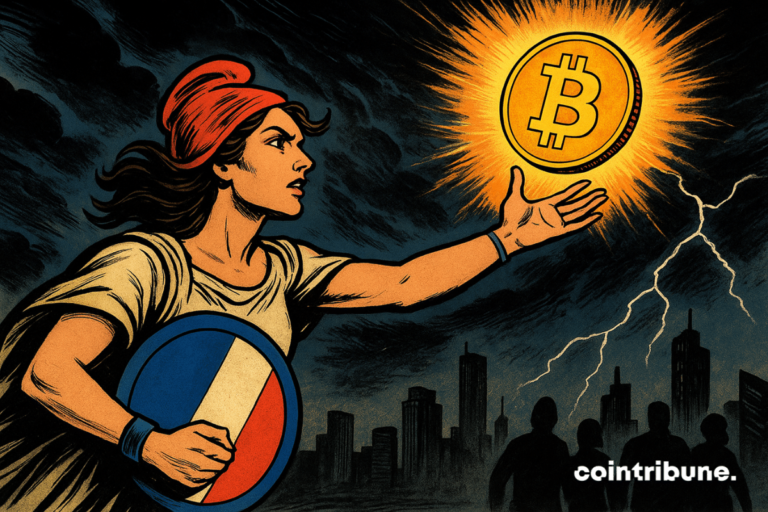
The Bitcoin (BTC) universe is in full swing as VanEck, a world-renowned asset management firm, has released a dizzying forecast. By 2050, according to their most optimistic scenario, the price of Bitcoin could reach $52 million.
VanEck Scenarios: A Vision for 2050
VanEck has developed three scenarios for Bitcoin's performance by 2050: bearish, basic, and bullish. In the bearish scenario, BTC would “only” reach $130,000.
This assumption is based on moderate adoption of Bitcoin, hampered by increased competition from other digital assets and restrictive government regulations.
Concerted crackdowns on BTC and growing demand for energy are also critical factors factored into this scenario.
In contrast, the base case, where BTC is adopted as a global medium of exchange and 10% of international trade is conducted in Bitcoin, projects a price of $2.9 million per coin. VanEck here assumes that central banks could hold up to 5% of their reserves in BTC, cementing its role as a reserve currency.
Finally, the bullish scenario, which investors dream of so much, predicts a dizzying price of 52 million dollars.
This prediction is based on a massive adoption of Bitcoin, where it would not only represent a significant part of international trade, but also a safe haven asset in the face of the fiscal imprudence of governments, particularly those of the G7, accused of having abused money printing since the global financial crisis.
The Challenges Facing Bitcoin
However, these predictions are not without risk. One of the major challenges for the future of Bitcoin lies in its energy consumption.
Indeed, with the increase in the network hash rate needed to secure transactions, energy demand could explode.
According to some estimatesby 2050, the Bitcoin network could consume up to 15% of the world's energy production. This astronomical figure raises the question of the sustainability of the current model, especially in a context where environmental regulations are becoming increasingly strict.
Besides energy concerns, VanEck also identifies the risk of concerted government crackdowns.
As some countries begin to consider heavily regulating or even banning the use of cryptocurrencies, Bitcoin could face significant regulatory hurdles. Overregulation could hamper its adoption and limit its growth potential.
Finally, competition from other digital assets could also slow BTC’s progress. As new technologies emerge, such as central bank digital currencies (CBDCs), Bitcoin will need to prove its superiority in terms of security, speed, and transaction costs to maintain its dominant position.
Whether it reaches $130,000 or $52 million, one thing is for sure: Bitcoin will continue to spark debate and passion. For investors and market watchers, the future of Bitcoin will be exciting to watch, with profound implications for the global economy and the financial system as we know it. In the meantime, the September storm is coming.
Maximize your Tremplin.io experience with our 'Read to Earn' program! For every article you read, earn points and access exclusive rewards. Sign up now and start earning benefits.