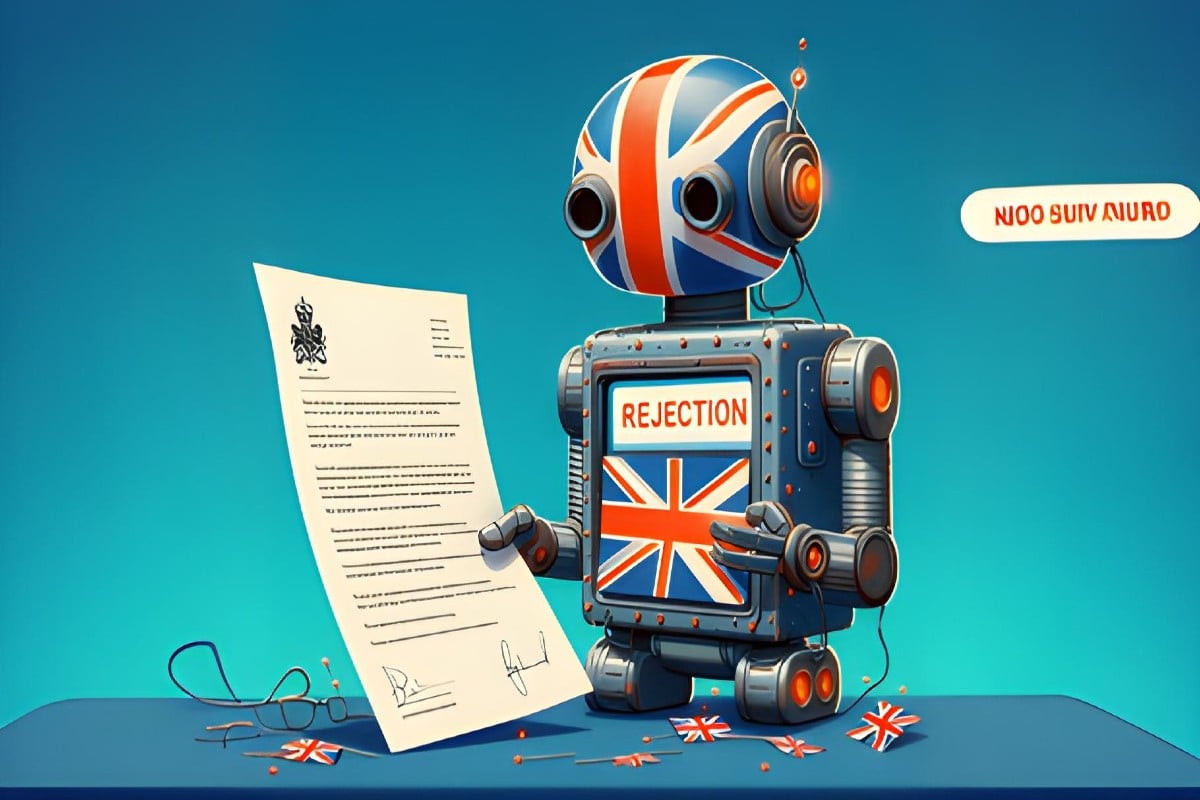
The UK Supreme Court has ruled: AI cannot be considered the inventor of a creation. A decision that is making a lot of noise as AI takes up more and more space in our daily lives. A computer scientist wanted to patent inventions designed by his AI-powered machine, but the Supreme Court said no. It’s a case that raises many questions about the future of technology and intellectual property. We dive into the details of this captivating case.
Artificial intelligence cannot hold patent rights
Stephen Thaler, was seeking two patents in the United Kingdom for inventions designed by his creative machine, an artificial intelligence (AI) called DABUS. This computer scientist then requested the registration of the patents, but theBritish Intellectual Property Office objected. According to the Office, the inventor must be a human being or a company, and not a machine or AI.
Mr Thaler then appealed to the UK Supreme Court. This one delivered its verdict this Wednesday by unanimously rejecting this request. Under UK patent law, the inventor must be a “natural person”. According to Judge David Kitchin, this appeal does not address the question of whether technical advances generated by AI should be patentable. These machines act in particular autonomously.
The position of law in the face of AI
Judge Kitchin adds that the appeal also does not concern the possible broadening of the meaning of the term “inventor”. This would include AI-enabled machines that generate new and non-obvious products and processes. It cannot be assumed that they offer advantages over already known products and processes.
Stephen Thaler’s lawyers expressed their opinion in a statement. They believe that UK patent law is currently inadequate to protect autonomously generated inventions. This is not an isolated case. Indeed, Stephen Thaler had already lost a similar request in the United States at the beginning of the year. The US Supreme Court also refused to issue industrial property titles for inventions created by AI.
It is likely that this decision is just the start of a broader debate about how the law should address inventions created by AIs.
With the emergence of technologies such as blockchain, it is clear that AI and crypto may well collide in the near future. Perhaps patent laws will also need to take these new technological frontiers into account. To be continued!
Maximize your Tremplin.io experience with our ‘Read to Earn’ program! For every article you read, earn points and access exclusive rewards. Sign up now and start earning benefits.