

“The four-year cycle is dead” The statement signed by Arthur Hayes definitively buries a stubborn myth: that of a bitcoin condemned to periodic collapses after each halving. Discover the new pillars that are now redefining the future of BTC and what this changes for crypto investors.

In brief
- Arthur Hayes claims that the 4-year bitcoin cycle is obsolete and that the planned fall is no longer relevant.
- Investors must now monitor interest rates, inflation, while exploring Bitcoin ETFs to adapt to this new dynamic.
- Three scenarios for bitcoin: Mass adoption as a store of value, increased regulation limiting transactions, or technological integration.
Bitcoin: the end of the four-year cycle and the era of new rules
For more than a decade, bitcoin seemed condemned to a relentless four-year cycle: spectacular rises after each halving, followed by brutal crashes that discouraged investors.
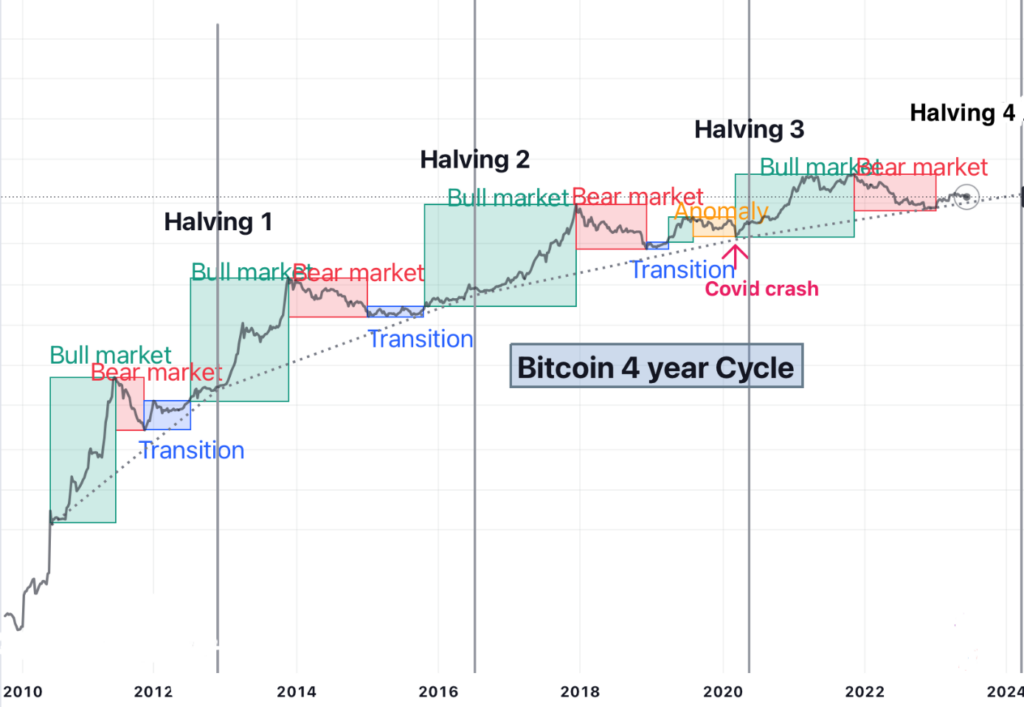
This pattern, linked to the planned scarcity of the asset, has long fueled market psychology – and fears of predictable corrections. However, according to Arthur Hayes, this era is over and the traders who cling to it ignore the macroeconomic forces that are now redefining its evolution.
Why is the four-year bitcoin cycle a thing of the past?
Historically, bitcoin crashes occurred after post-halving price peaks, when speculation subsided. Now, the monetary policies of major powers, such as the United States and China, directly influence the price of BTC. Between 2021 and 2025, decisions by the Fed and the People's Bank of China (PBOC) have redefined the rules of the game, rendering traditional forecasts ineffective. In his analysis, Arthur Hayes points out that traders blindly apply historical patterns without understanding that current dynamics are driven by monetary policy, not predictable cycles.
To this end, the Fed alternated between monetary tightening and easing, while China attempted to revive its economy after a period of deflation. These fluctuations have created an environment where bitcoin now reacts to global economic announcements, rather than a pre-established schedule.
What consequences for investors and the crypto market?
Warning: no total immunity, but a new deal. Indeed, the end of the four-year cycle does not mean that bitcoin is immune from any correction. Only crashes linked to cyclical speculation disappear. Investors should now monitor macroeconomic indicators, such as:
- Interest rates;
- Inflation;
- Credit policies.
For individuals, this means diversifying sources of information and adopting a more flexible approach. Bitcoin ETFs offer regulated exposure, while staking and DeFi platforms allow you to generate passive income. However, the risks persist:
- Volatility remains high;
- Regulators could toughen their stance against the massive adoption of cryptocurrencies.
Towards a new model for bitcoin: scenarios and opportunities
As the 4-year bitcoin cycle fades, what scenarios are emerging for BTC? Here are three main possibilities:
1. Mass Adoption
If monetary policies remain accommodative, bitcoin could become a global store of value, particularly in countries in economic crisis such as Argentina or Nigeria. Less volatility = fewer brutal crashes
2. Increased regulation
Governments could impose strict restrictions, limiting the freedom of transactions. This could stabilize the market, but also slow its growth.
3. Technological integration
Thanks to advances like the Lightning Network, bitcoin could become a mainstream payment method, rivaling fiat currencies. Thus reducing the risk of collapse.
Bitcoin is therefore entering a new era: crashes linked to the four-year cycle are no longer a threat. From now on, its value depends on geopolitical and economic decisions – and no longer on a predictable timetable. Despite BTC's recent decline, its fundamentals remain strong and the crypto queen is far from disappearing. And you, do you think this is really the end of the 4-year cycle?
Maximize your Tremplin.io experience with our 'Read to Earn' program! For every article you read, earn points and access exclusive rewards. Sign up now and start earning benefits.


