
64,000 Bitcoin mining machines were hacked and remotely redirected during the night of November 14 to 15, 2026. A spectacular hack which coincides with a major technical relief on the network, the sudden drop in mining difficulty by 9.13%.

In brief
- 64,000 Bitcoin mining machines (ASICs) representing 13 EH/s were diverted to the OCEAN pool during the night of November 14 to 15, 2026.
- No blocks were validated during the hijacking, depriving the attacker of any reward.
- The Bitcoin network recorded a saving 9.13% drop in mining difficulty, bringing the metric down to 134.82T.
64,000 Bitcoin mining machines hijacked
Hosting company CoreX Hosting has revealed that a surgically precise cyberattack is targeting Bitcoin mining infrastructure. Between November 14 and 15, 2026, approximately 64,000 mining machines (ASICs) had their connection parameters modified without the knowledge of their owners. The attacker managed to redirect a colossal computing power of 13 EH/s directly to the OCEAN mining pool. This, by configuring a Bitcoin address under its control.
On OCEAN’s dashboards, the overall bitcoin hashrate experienced an abnormal and dazzling peak, briefly approaching 50 EH/s before containment measures were taken. According to the first field feedback shared by operators, the breach could come from a compromise of the mining park management software Luxor Commander.
| Incident parameter | Technical data recorded |
| Date and time of attack | Night of November 14 to 15, 2026 (start around 8 p.m. CT / alert at 4:08 a.m.) |
| Compromised hardware | Around 64,000 mining machines (ASICs) |
| Diverted power | 13 EH/s (fall below 100 PH/s after intervention) |
| Destination pool | OCEAN (global peak approaching 50 EH/s on the dashboard) |
| Suspected vector | Management software Luxor Commander (track currently being verified) |
0 gain for the hacker, but deadweight losses for BTC miners
According to initial on-chain reports, the attacker ultimately did not win any Bitcoin rewards. No blocks having been found by the compromised mining machines during the hacking window… The expected loot therefore turned out to be zero. This, thanks to the responsiveness of structures like CoreX Hosting which quickly isolated the corrupted programs and reassigned the miners to their original configurations.
The diverted power then quickly dropped to below 100 PH/s. However, the Bitcoin mining farms victimized by the intrusion suffered an irrecoverable deadweight loss. Notably, hash hours lost and potential revenue vanished forever in the middle of a tense operational period.
Bitcoin mining difficulty drops 9.13%
While the industry digested this major hack, the protocol offered a welcome breath of fresh air to its miners. On November 14, Bitcoin mining difficulty dropped 9.13%, settling at 134.82T (after peaking at 148.36T in late October).
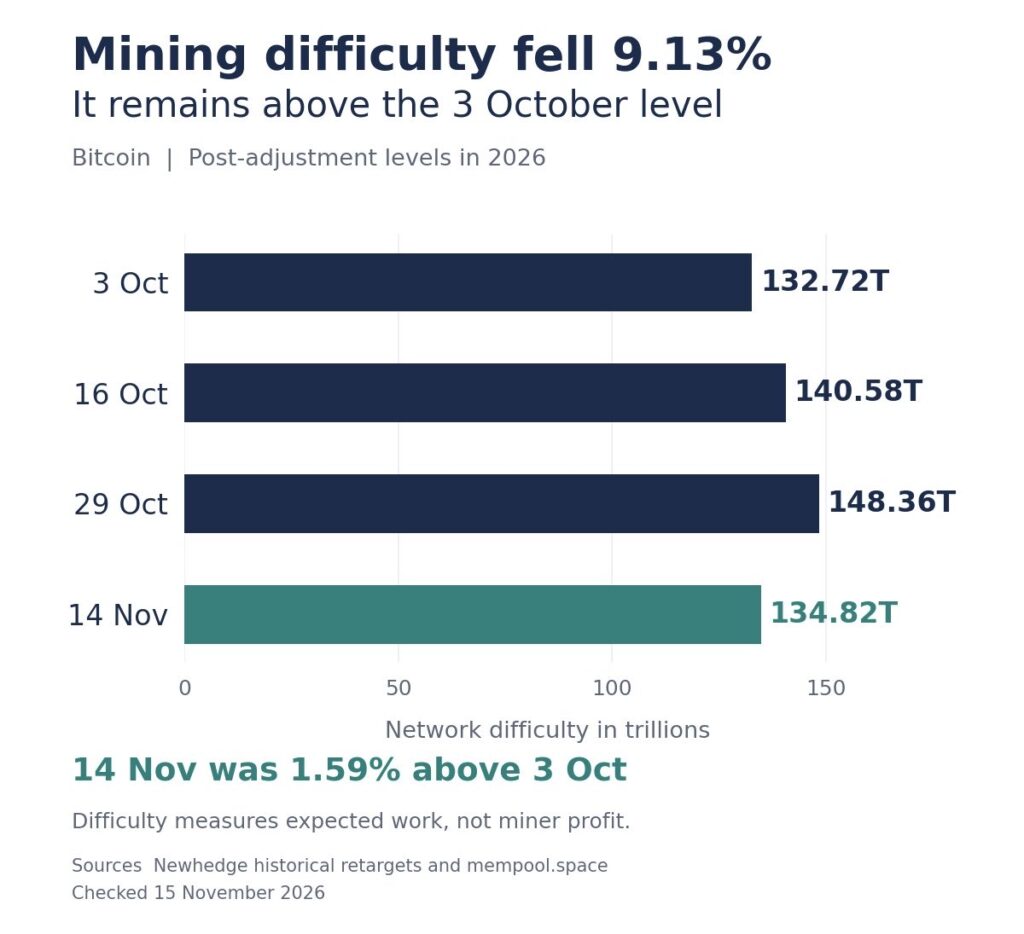
This automatic regulation counterbalances the continuous increase of previous weeks and gives margin to operators under pressure. Like the recalls analyst Shanaka Anslem Perera on X :
Bitcoin automatically adjusts the work required to mine a block, targeting an average interval of around 10 minutes. The adjustment responds to block times, not miner bills. Given equal computing power and running time, lowering the difficulty increases the expected bitcoin yield by approximately 10%, assuming the block reward remains unchanged.
This mechanical lowering of Bitcoin mining difficulty alleviates the mathematical workload required to find a block. But the final profitability of bitcoin miners remains dependent on market volatility and the cost of electricity.
Between this hack targeting 64,000 machines and the respite brought by the drop in difficulty, Bitcoin mining once again proves its resilience in the face of digital threats. Do you think that mining park management software represents the weak link in BTC infrastructure security today?
Maximize your Tremplin.io experience with our ‘Read to Earn’ program! For every article you read, earn points and access exclusive rewards. Sign up now and start earning benefits.