

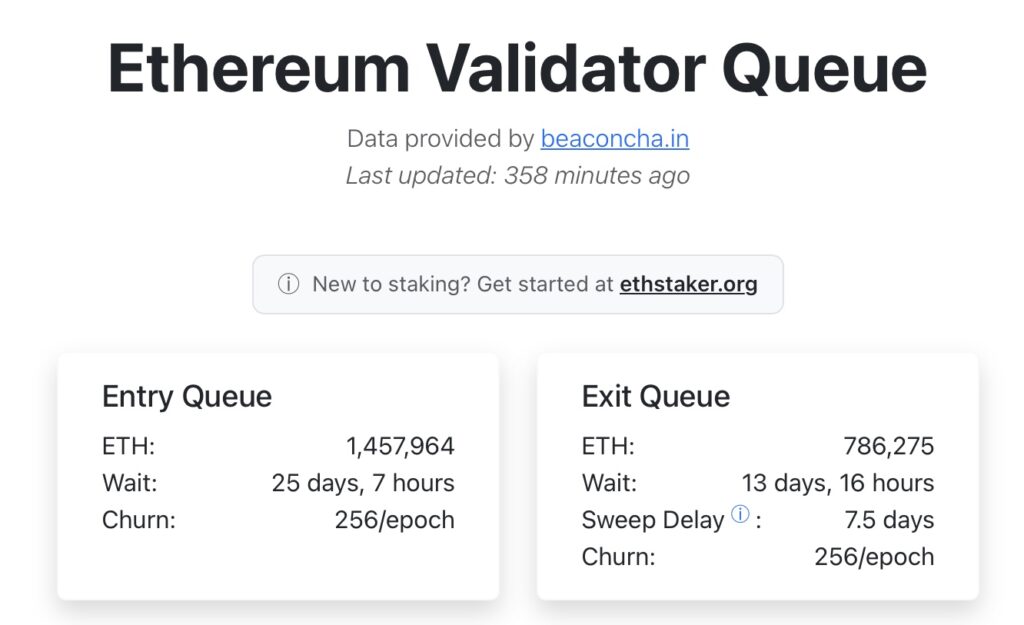
On October 5, 2026, approximately 1.5 million ETH, or nearly $4 billion, were waiting to be staked on Ethereum, for an estimated wait of 25 days. In the other direction, 786,000 ETH was waiting to be released, after a peak at 851,000 ETH on October 2, largely fueled by the security incident announced by MetaMask on September 30. Here’s why these two lines don’t tell the same story at all.

In brief
- 1.5 million ETH (nearly $4 billion) in the entry queue as of October 5, 2026, for approximately 25 days of waiting (validatorqueue.com).
- Entry queue shrinking: almost 2 million ETH and around 35 days of waiting at the beginning of September.
- Exit queue: around 166,000 ETH on September 29, peak at 851,000 on October 2, 786,000 on October 5.
- Protocol cap: approximately 57,600 ETH per day each way.
Ethereum: why are 1.5 million ETH waiting to enter staking?
Quite simply because Ethereum limits the rate of entries. As of October 5, 2026, approximately 1.5 million ETH, or nearly $4 billion, were waiting to be activated in staking for an estimated period of 25 days, according to data from validatorqueue.com. The operation of staking on Ethereum is based on this bottleneck since it consists of immobilizing ETH to help secure the network, in exchange for remuneration. Validators, the computers that verify crypto transactions, cannot all join the network at the same time. As a result, around 57,600 ETH can enter each day, and just as much exit.
Since the Pectra update, a validator can now hold up to 2,048 ETH, and large operators are supplementing existing validators. Part of the queue therefore concerns ETH already engaged in staking. In July, when the entry queue reached around 2.5 million ETH, Thomas Brunner, head of custody and staking at Sygnum Bank, formulated the nuance as follows:
The inlet queue measures both the piping and the demand.
Why are 786,000 ETH coming out of Ethereum staking after the MetaMask incident?
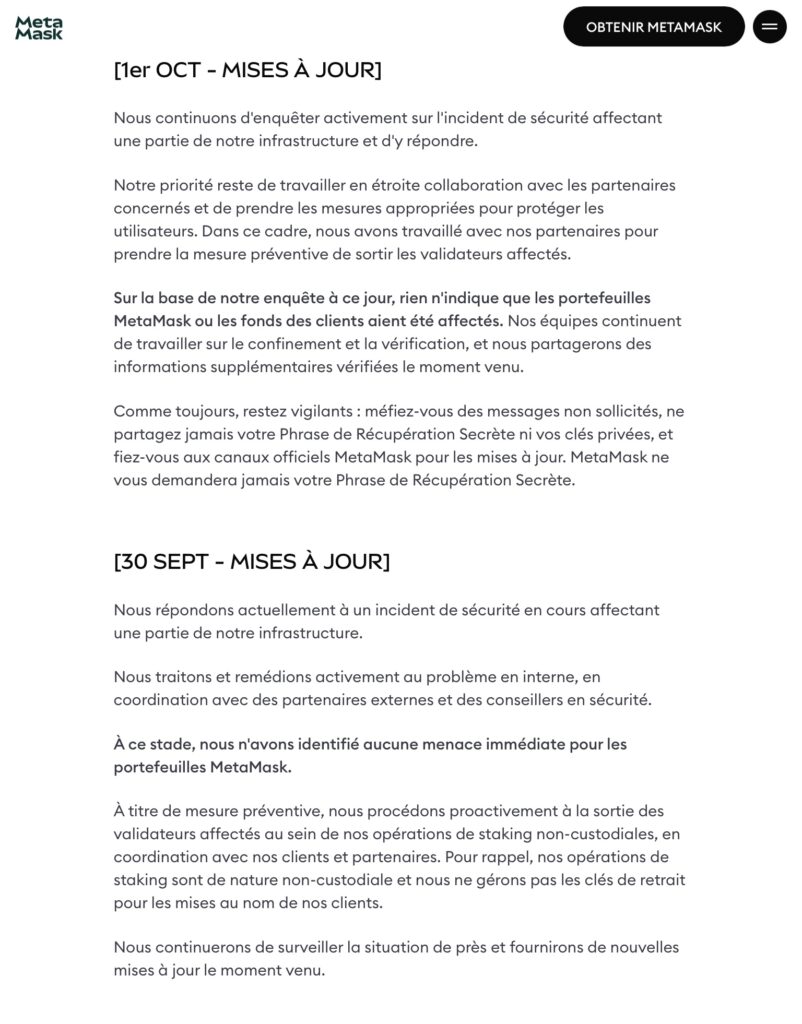
Because MetaMask Staking, formerly Consensys Staking, withdrew its validators after a security incident announced on September 30, 2026. The queue increased from around 166,000 ETH on September 29 to a peak of 851,000 ETH on October 2, its 2026 high, and then to 786,000 ETH on October 5. MetaMask Staking runs validators within Lido, a service that pools its users’ ETH.
According to Lidothe last affected validators should have completed their exit from the validation process by October 7, without necessarily being fully removed by that date. Lido expects these ETH to gradually return to the protocol after their exit, their withdrawal and then their possible re-entry into staking, within a period of up to 45 days. MetaMask insists on the non-custodial nature of its staking and specifies that it has not identified any immediate threat to MetaMask wallets.
What do the two lines side by side say?
They don’t tell the same story. The entry queue reflects a strong demand for activation, but does not alone measure the new demand for Ethereum staking. The outflow queue, approximately 786,000 ETH as of October 5 (nearly $2.1 billion at $2,720), is largely fueled by a single operator. This suggests a technical movement related to MetaMask Staking rather than a widespread wave of disengagement.
Except that the figure of 1.5 million reads with its trend: at the beginning of September, the entry queue had almost 2 million ETH, for around 35 days of waiting. The time is shortening, the line remains long. In July 2026, the exit line was almost empty, according to Sygnum.
| Date | Input Queue (ETH) | Output Queue (ETH) |
| Early September 2026 | almost 2 million (around 35 days) | not noted |
| September 29, 2026 | not noted | approximately 166,000 |
| October 2, 2026 | not noted | approximately 851,000 (2026 peak) |
| October 5, 2026 | approximately 1.5 million (approximately 25 days) | 786,000 (approximately 14 days) |
The files tell the on-chain story, the $2,800 threshold tells the market story. ETH is trading around $2,720 this October 5, 2026, according to the analyst’s weekly chart Ted Pillows on According to him, a weekly close above $2,800 with sustained spot demand would change the reading.
What we know, what we don’t know
We know that an incident affected the MetaMask Staking infrastructure and that both queues became deformed within a few days. It is not clear what was compromised, or how: at this stage, MetaMask has not detailed the origin of the incident. Security researcher Kaden estimates on
On October 7, 2026, we expect the completion of the release of the latest MetaMask validators, and then the weekly ether close above or below $2,800. The entry line will say in the coming weeks whether its decline continues. In the meantime, the toll barrier does not move with its 57,600 ETH per day and not one more.
Maximize your Tremplin.io experience with our ‘Read to Earn’ program! For every article you read, earn points and access exclusive rewards. Sign up now and start earning benefits.


