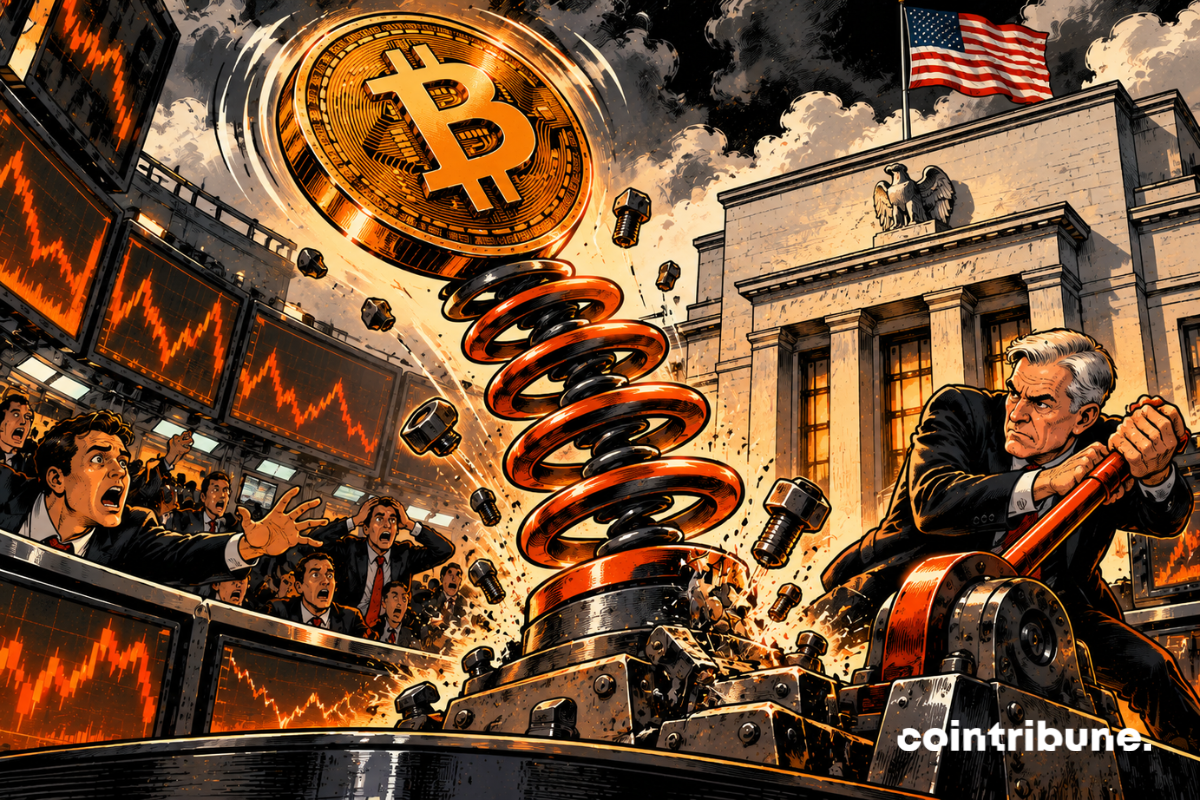
The price of bitcoin fell back towards $83,200 after crossing the $86,000 threshold at the start of the week. Indeed, the rise in bond yields and the likelihood of a Fed rate hike put an end to this recovery.
In brief
- Bitcoin falls back to around $83,200 after surpassing $86,000.
- The rise in US yields is slowing BTC’s rebound.
- Markets are increasingly anticipating a further rate hike from the Fed.
- Oil also reinforces fears of persistent inflation.
- The $81,000 to $83,000 area becomes a key support to watch.
The price of bitcoin erases part of its gains
This Monday, bitcoin was around $86,054, its highest level in eight months. This movement was based on capital inflows into ETFs, a renewed appetite for risk and the forced redemption of short positions.
Then the dynamic reversed. BTC briefly returned to around $83,200 during Asian trading, after a rejection near $87,000. Despite this decline, it has maintained an increase of nearly 7.35% since the beginning of September.
Many numbers justify the return of macroeconomic tensions:
- Bitcoin has fallen more than $3,000 since its recent high;
- The US ten-year yield exceeded 5.1%, a level not seen since 2007;
- The thirty-year rate reached 5.44%, its highest level since 2004;
- The probability of a rate hike in October now exceeds 75%;
- This probability was still around 49% a week earlier.
Apart from bitcoin, other assets have also been penalized. Nasdaq 100 futures lost nearly 1%, while S&P 500 futures fell 0.6%. This development confirms a risk reduction movement simultaneously affecting cryptos and technological stocks.
The Fed could raise rates again
The Federal Reserve raised its key rate by 25 basis points on September 16. The target range is now between 3.75% and 4%, after the first US increase in more than three years.
The monetary committee justified its decision by still high inflation. He also highlighted the strength of economic activity, domestic spending and the labor market. These elements reduce the need for rapid easing of financial conditions.
The latest data on business activity reinforced this reading. They suggest that American demand remains sufficiently resilient to maintain price pressures. At the same time, the rise in oil prices revives the risk of energy-related inflation.
A barrel of WTI rose towards $93.57, while Brent exceeded $105. More persistent inflation could prompt the Fed to intervene again at its October 28 meeting.
Bond yields weigh on cryptos
Rising US yields are increasing competition between bonds and risky assets. When federal debt offers a return above 5%, some investors reduce their exposure to stocks and cryptocurrencies.
High rates also increase the cost of credit and can support the dollar. However, bitcoin often moves more difficult when the greenback and real yields increase simultaneously.
BTC nevertheless shows some resistance. James Stanley, macroeconomic analyst at FOREX.com, observes:
Bitcoin is holding up well despite soaring rates and the strength of the dollar.”
This solidity remains relative. The recent rally benefited from significant liquidations of short positions. Once this technical effect is exhausted, the market must rely on spot purchases and regular flows into ETFs to extend the rise.
The zone of 81,000 to 83,000 dollars becomes decisive
James Stanley identifies $82,833 as the next level to watch. Other analysts place the main support zone between $81,000 and $82,000, the old resistance breached during the rally.
Maintaining above this zone would preserve the possibility of consolidation before a new attempt towards 86,000 or 87,000 dollars. A clear break would weaken the movement and place the psychological threshold of $80,000 back at the center of trade.
However, this reading is a matter of technical analysis, and not a guaranteed result. In the short term, employment statistics, oil prices and bond yields should carry more weight than chart patterns.
The next movement in the price of bitcoin will therefore depend as much on flows specific to the crypto market as on expectations surrounding the Fed. A decline in the likelihood of rate hikes could revive risk appetite. Their progression would, on the contrary, expose BTC to a deeper correction.
Maximize your Tremplin.io experience with our ‘Read to Earn’ program! For every article you read, earn points and access exclusive rewards. Sign up now and start earning benefits.