
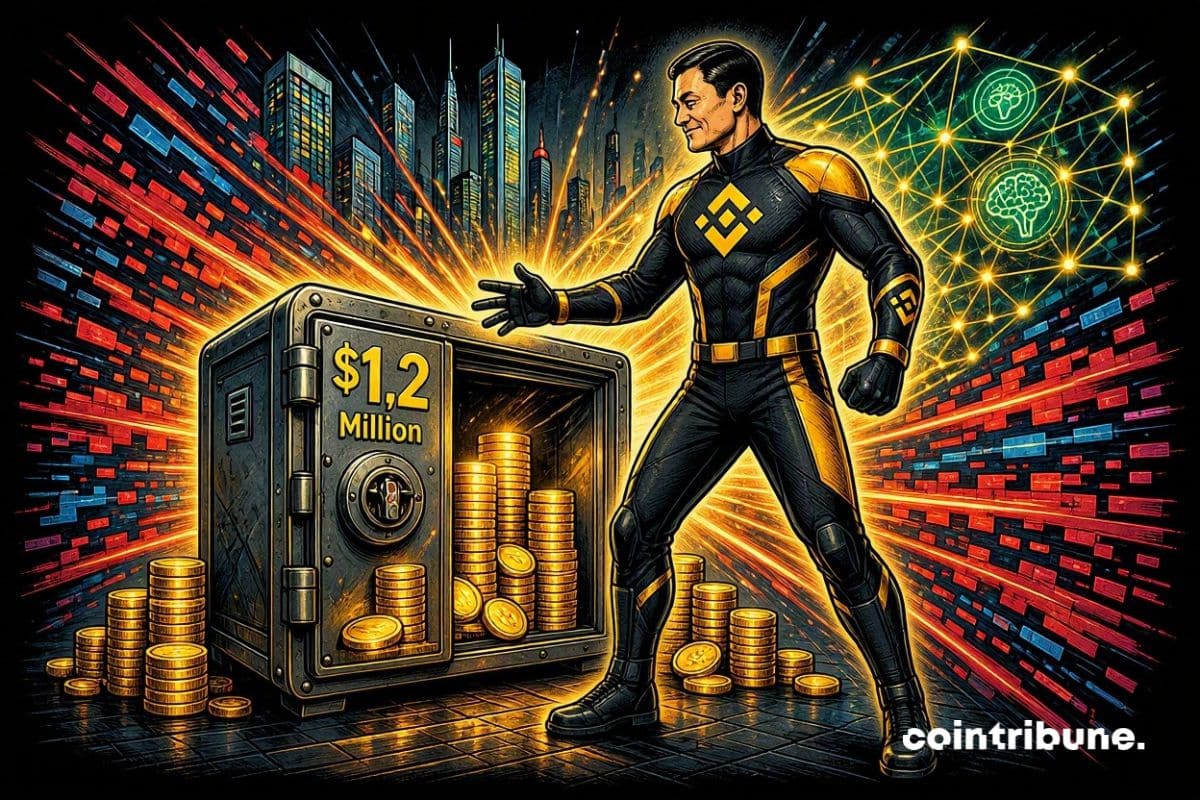
Binance spots a trap in a governance proposal and acts in less than 48 hours to save $1.2 million. The crypto exchange not only defended its own platform this week, it also tightened the noose on sixteen sanctioned platforms, and gave AI agents the keys to its infrastructure. Three fronts. Only one logic: anticipate before the damage is done.
In brief
- $1.2M Protected: Binance detected a malicious governance proposal targeting a DAO’s treasury, before it could execute.
- Crypto exchange Binance alerted the DAO project and coordinated the closure of deposits with other platforms, in less than 48 hours.
- No external security vendor had spotted the threat before the Binance team, according to its CSO Jimmy Su.
Binance: $1.2 million governance attack neutralized on time
A DAO is a decentralized organization that operates by vote of token holders. Simple on paper, except when the barrier to submitting a proposal is too low. And an attacker understood this well and constructed a malicious proposal targeting the cash flow of an unnamed project. With the aim of stealing around $1.2 million in tokens. Binance’s security team detected the threat first and took action in less than 48 hours:
- Immediate alert on the project;
- Closure of deposits with centralized exchanges that listed the concerned token;
- The project, votes against;
- The attack stops abruptly, before it can even be executed.
Jimmy Su’s team therefore identified a threat that no external provider had spotted, and acted to protect the ecosystem beyond its own crypto platform. All this makes sense when we look at what happened elsewhere. Particularly with BonkDAO in July, where 20 million dollars were lost due to lack of rapid detection. KelpDAO which saw 292 million dollars leave via a compromised bridge, before a rapid reaction managed to freeze part of it.
Binance, policeman on all fronts of the crypto ecosystem
There DAO security is just one piece of the puzzle. The same week, Binance tightened the noose on sixteen crypto platforms deemed to be at risk. Among which Shelbit and Aban Tether Exchange, cut off on August 7. A7 Nigeria, A7 Africa and PilotFinance, on the 13th. Then, from August 23: HTX, EXMO, Rapira, and eight other entities. The reason? Sanctions. The European Union targeted HTX and the majority of these platforms in its 21st package against Russia, accusing them of helping to circumvent financial restrictions imposed on Moscow.
The US Treasury, for its part, sanctioned Shelbit and Aban Tether for alleged links to Iran. Binance therefore does not just observe. The crypto exchange also blocks any direct or indirect transactions to these platforms, at the risk of seeing the wallets concerned frozen.
AI also under surveillance
Binance has just launched Agent OS, an infrastructure designed to connect AI agents directly to its tools:
- Trading;
- Payments;
- Real-time market data;
- Wallet dedicated to automated transactions.
All this compatible with Claude Desktop and other agentic environments. The idea behind this is to allow an AI agent to monitor a market, react to a signal and execute a trade within the limits set by its user. One more step towards the total automation of crypto finance. But also, potentially a new playground for previously unseen attacks? Because a poorly configured or compromised AI agent could become a much faster gateway than a human distracted in front of his screen.
Binance stops $1.2 million governance attack in record time. A clear success in the most critical area of the sector, namely trust. But this reactivity is no longer an isolated blow. Between sanctions, compliance, and AI infrastructure, Changpeng Zhao’s crypto exchange is methodically building a multi-layered safety net. However, will it hold up as threats become automated?
Maximize your Tremplin.io experience with our ‘Read to Earn’ program! For every article you read, earn points and access exclusive rewards. Sign up now and start earning benefits.


