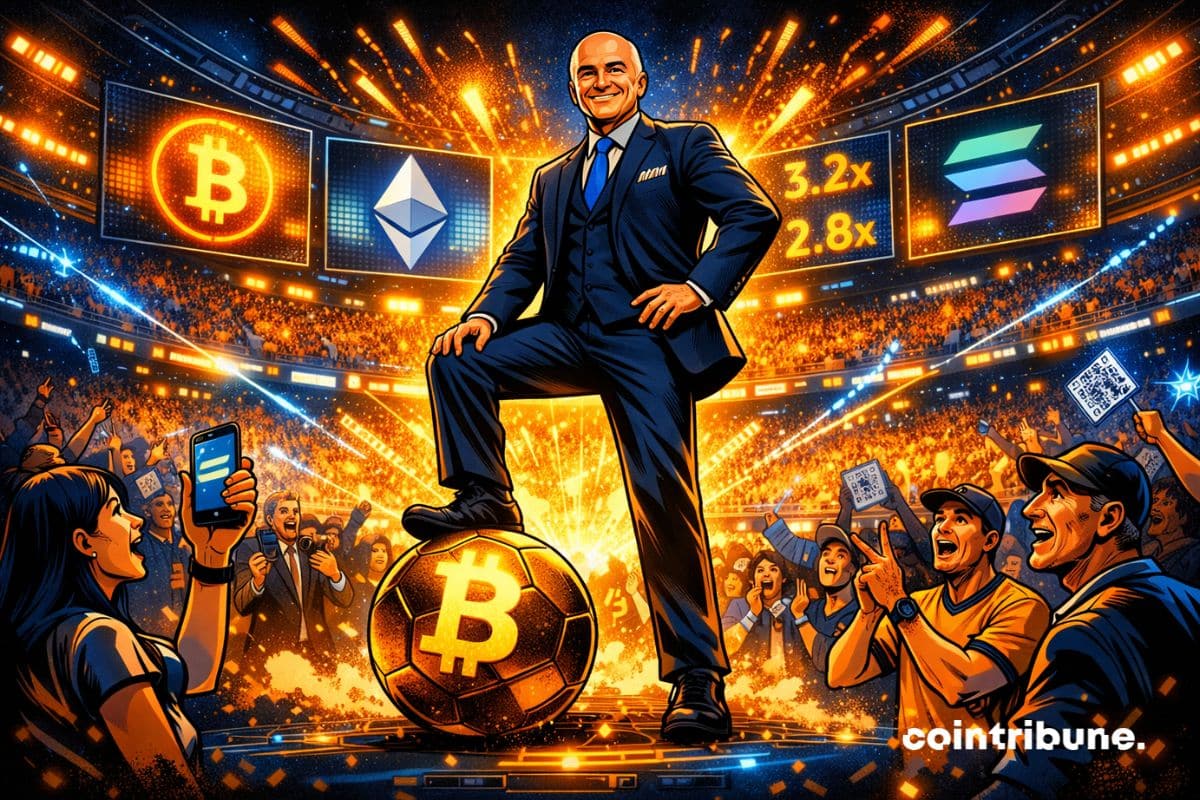
The 2026 World Cup is not just played on the pitch. With Kraken as official sponsor, fan tokens on fire and anti-scalping NFTs, FIFA is writing a new page in the history of sport… and finance. But is this alliance a stroke of genius or a long-term trap for crypto?
In brief
- Kraken becomes the first official crypto sponsor of the 2026 World Cup, marking a historic adoption of blockchain by FIFA.
- Fan tokens and NFTs (via Chiliz and Avalanche) are revolutionizing fan engagement and ticketing, eliminating scalping through traceability.
- Between changing regulations and asset volatility, this alliance could turn against sport and crypto.
Kraken and Fan Tokens: FIFA (finally) embraces crypto
FIFA has crossed the Rubicon. Kraken, one of the largest crypto exchanges, is now the “Official Crypto Exchange Supporter” of the 2026 World Cup. A historic partnership announced on June 9, 2026, which seals the alliance between football and digital assets. But that's not all! Indeed, national federations like that of Belgium are launching their own fan tokens, notably $BELG, which offer supporters voting rights on key decisions and exclusive experiences.
Behind this excitement, a reality:
- Chiliz, the blockchain specializing in sports tokens, is seeing its activity explode;
- Fans are no longer simple spectators, but engaged actors, with unprecedented power of influence.
However, the shadow of doubt remains. These crypto tokens often criticized for their volatility, will they manage to maintain interest beyond the euphoria of the tournament?
NFT and Oracles: Blockchain against Scalping and rigged bets
For the 2026 World Cup, no more tickets being sold at high prices by unscrupulous resellers. Thanks to FIFA Collect, a platform based on Avalanche, tickets for matches are now tamper-proof NFTs. The objective here is to eliminate scalping by guaranteeing full traceability of transactions. Each ticket is linked to a digital identity, making counterfeiting or fraudulent resale almost impossible.
But blockchain doesn't stop there. Indeed, Chainlink, leader in decentralized oracles, powers the tournament prediction markets. Its smart contracts, fed in real time by match results, enable automated and transparent betting. With 48 teams and 16 stadiums spread across Canada, Mexico and the United States, the volume of transactions could shatter records. However, what if technology, as revolutionary as it may be, became a playground for speculators?
Crypto and Sport: a risky marriage in a politicized world?
Sport has never been as politicized as it is today. Between geopolitical boycotts, pressure from sponsors and ethical issues, the 2026 World Cup promises to be a minefield. In this context, the integration of crypto by FIFA could well become a liability. Let's imagine, yes, just imagine, a host country suddenly bans crypto transactions or bans bitcoin. What happens to fan tokens and ticketing NFTs?
Furthermore, if a scandal breaks out… such as a flaw in a smart contract, market manipulation via hacked oracles… FIFA's credibility would take a hit. Not to mention the EU or the United States which could tighten their laws on digital assets at any time. Worse, crypto, often associated with speculation and opacity, could harm the image ” own “ that FIFA is trying to give itself. Platforms will therefore have to navigate between innovation and compliance.
The 2026 World Cup could well be the turning point for crypto in sport. But between technological opportunities and political risks, a question persists: is this revolution lasting or just a fleeting coup? And you, will you trust an NFT ticket to attend the final?
Maximize your Tremplin.io experience with our 'Read to Earn' program! For every article you read, earn points and access exclusive rewards. Sign up now and start earning benefits.