
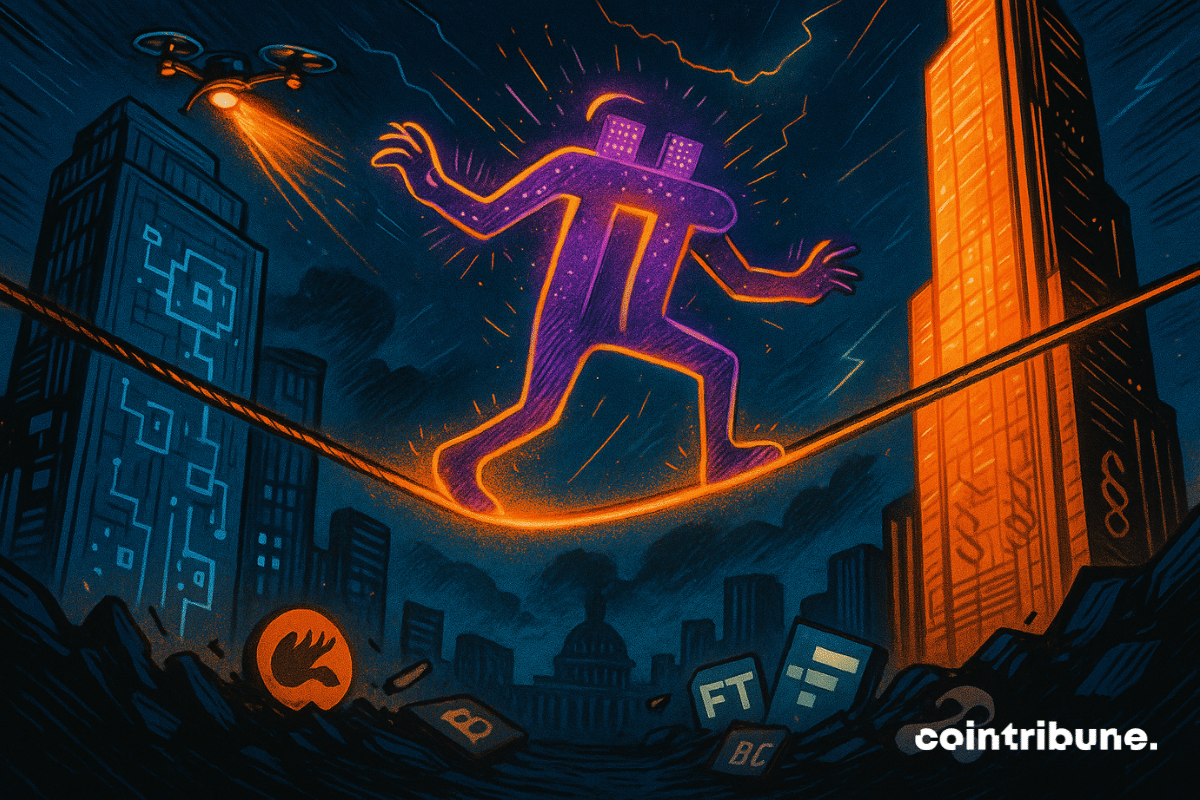
The balance of a decentralized protocol is ensured by an invisible, but absolute synchronization between the alignment of its validation infrastructures and the financial structure of its assets on the markets. Pi Network is going through one of these pivotal phases where technological imperatives come up against the speculative dynamics of its community. The native token PI, although it displays some technical resilience by bouncing back on critical chart support after a particularly difficult start to the month, sees its founding team issue an urgent alert that recalls the underlying operational fragility of the project.
In brief
- Pi Network is urging node operators to migrate to the v25 protocol or risk being excluded from the Mainnet network.
- The PI token is trying to stabilize after a sharp fall, with a technical rebound observed on a support level considered strategic.
- The Core Team strengthens the ecosystem with new tools and applications intended to increase the real utility of the network.
- The future of IP now depends as much on the success of this technical transition as on its ability to overcome key resistance in the markets.
The Core Team's ultimatum: forced upgrade to Protocol v25
The operational requirements of blockchain do not allow for any extended delays, and the Pi Network technical team has just strongly reminded all of its validators of this, following the launch of SLICE.
Here are the milestones of this transition:
- February 2026: the initial launch of major infrastructure updates, occurring according to pre-established schedules and sometimes ahead of established deadlines;
- The deployment of version 24: the appearance of the first logistical setbacks on this upgrade, which is nevertheless essential for optimizing the nodes and supporting Mainnet activity;
- The deadline of June 18, 2026: this is the deadline set for the installation of version 25, for which the Core Team had anticipated and notified the community of the risk of delays.
Two days after this deadline, management clearly and unambiguously outlined the operational situation in a public statement. If a large part of the validators met the requirements, a strict warning was given to latecomers, under penalty of immediate architectural sanctions.
By an official message dated June 20, 2026, the Core Team clearly noted : “Reminder to all Mainnet Pi node operators: the majority of you have already successfully migrated to Protocol v25. If you have not yet upgraded your node, we encourage you to do so as soon as possible to ensure you remain on the network ». This injunction highlights a major risk for the integrity of the network. Unresponsive node operators expose themselves to outright disconnection from the central infrastructure, threatening effective decentralization and block validation on the Mainnet.
Technical analysis of the Pi Network price
These structural movements accompany the fluctuations of the PI token on the financial markets, which are trying to stabilize in the short term after a particularly destructive macroeconomic sequence. During the widespread crash of early June 2026 affecting all cryptos, the price of PI sank to a new historic low, falling below the $0.12 mark. The asset made several attempts to surpass the immediate resistance located at $0.14, but failed temporarily, and therefore tested the strength of its critical support at $0.13.
Buyers ended up defending this pivot level, leading to a daily rebound of over 4% to bring the current price to around $0.135. Although this technical rebound marks a 15% advance from the all-time low, the long-term outlook remains severe with a 95.4% collapse from the all-time high of February 2025. A promising token unlock schedule for July 2026, however, could reduce immediate selling pressure, limiting issuance to a daily average of 4.2 million units.
The levers of the ecosystem: application utility as a pillar of growth
To escape this dependence on simple cash flows, Pi Network seeks to replace speculation with concrete use value, by expanding its catalog of applications. The architecture of the ecosystem has just been enriched by an overhaul of its mechanism of “Ecosystem Directory Staking” (Ecosystem directory staking), designed to boost the visibility of applications developed on the network.
Unlike traditional financial models, this system does not distribute traditional staking rewards, but motivates users and developers to lock tokens in order to improve project visibility. In addition to this SEO tool, the beta rollout of GalaxyPi, a strategy and base-building game, quickly filled its initial allocations. Supported by the promotional campaign “Genesis Carnival”this launch illustrates the Core Team's effort to densify transactional activity and anchor the price of the token in real application utility within its short-term bullish channel.
The interaction between the rigorous alignment of infrastructures and the reconquest of financial thresholds places Pi Network at a decisive moment in its technical history. Crossing the major distribution zone located at $0.14, former technical support which became resistance during the bearish phase, remains the real test of confidence for investors.
If buying pressure manages to confirm a bullish breakout above this critical level, the return of pending capital could allow a rapid extension towards $0.16 during the second half of the year. Conversely, the inability to maintain cohesion of v25 protocol nodes combined with failure in the face of resistance will inevitably result in profit-taking and a prolonged return to consolidation. The project's ability to convert its application dynamics into commercial viability will decide whether Pi Network can establish itself as a resilient network, despite price falls.
Maximize your Tremplin.io experience with our 'Read to Earn' program! For every article you read, earn points and access exclusive rewards. Sign up now and start earning benefits.


