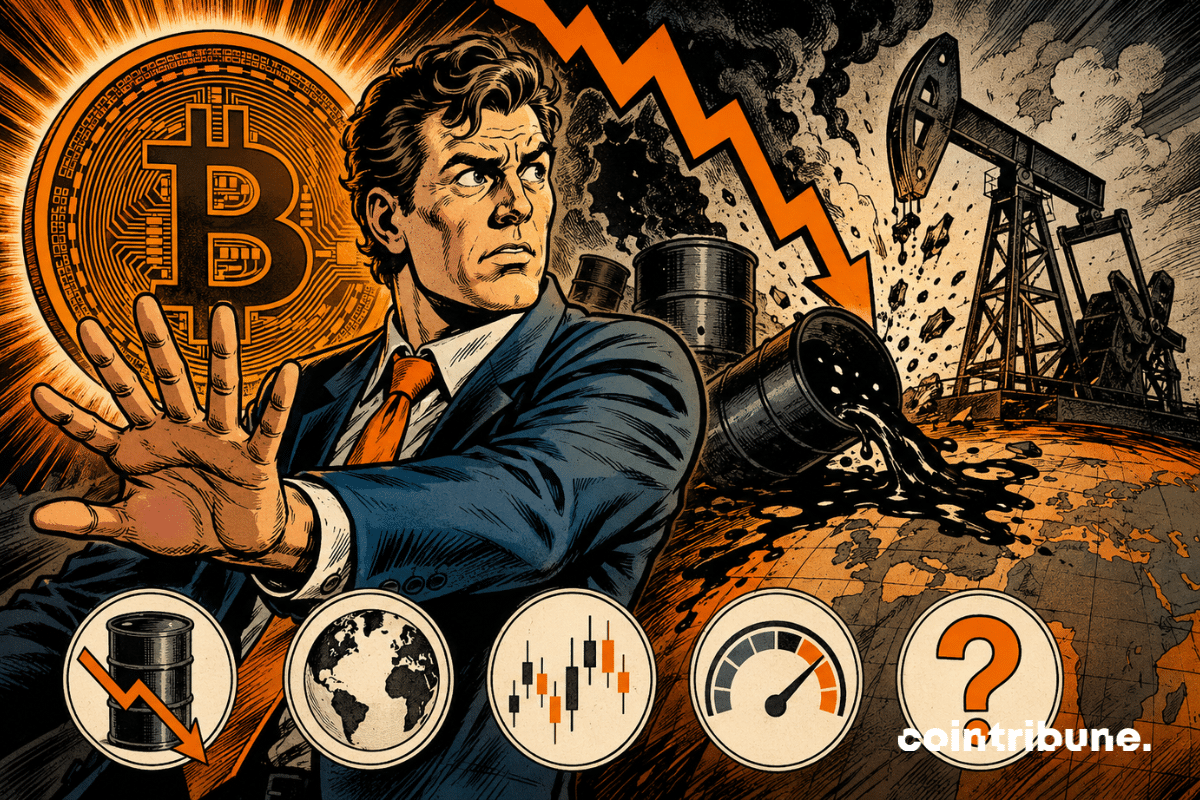
Global financial markets hate geopolitical uncertainty, but they react with deadly speed whenever a glimmer of stability appears on the horizon. With Donald Trump signing a key deal re-opening the Strait of Hormuz and the price of oil plummeting, we are witnessing one of those watershed moments that can transform the global map of capital flows. The conflict triggered on February 28 by the American-Israeli offensive, which froze the real economy and plunged investors into a rigorous wait-and-see attitude, was followed by this highly strategic agreement between the United States and Iran.
In brief
- The agreement signed between the United States and Iran marks a major geopolitical turning point with the reopening of the Strait of Hormuz, a strategic passage for global oil trade.
- This easing causes a rapid fall in the prices of Brent and WTI, while Gulf producers prepare for the gradual resumption of exports and energy production.
- The decline in crude oil prices is already starting to be reflected in fuel prices in Europe and the United States, fueling hopes of a slowdown in inflation and a return of consumer confidence.
- Reducing tensions in energy markets could encourage an easing of monetary conditions and support the return of capital to risk assets, including bitcoin and the Web3 ecosystem.
The US-Iran deal and the collapse of oil prices
The relief on world stock markets led to an immediate and spectacular correction in the main international reference energy indicators.
Here are the main events of this trading day:
- The price of a barrel of Brent from the North Sea plunged below the symbolic bar of 76, erasing the geopolitical risk premium;
- West Texas Intermediate (WTI), the American equivalent of crude oil, fell below the $75 threshold at the same time, marking a clear return to its level before the war in Iran;
- The memorandum of understanding signed by the US administration officially lifts the naval blockade on the Strait of Hormuz, a vital artery through which nearly 20% of global oil consumption passes daily;
- Analysts point out that a full return to normal transit volumes will inevitably require several months of complex logistical readjustments for commercial fleets.
This dynamic of technical standardization is based on massive hydrocarbon reserves which are only waiting for a green light to once again flood global distribution circuits. As well summary Saxo Bank analysts, “attention is now focused on the pace of resumption of traffic in the Strait of Hormuz, in the face of this situation of imminent congestion. An estimated 100 million barrels of crude oil and refined products are already loaded onto tankers and ready to leave the Gulf, as regional producers take steps to restart halted production..
At the same time, sector specialists predict an unbalanced restart of pumping capacities in the Middle East. For Homayoun Falakshahi, in charge of crude oil analysis at Kpler, the Iranian production system could prove surprisingly reactive. Indeed, he specifies that the lifting of military restrictions should “enable a rapid recovery of exports and support a rapid rebound in production and loadings”.
The deceleration of inflation at the pump and the return of economic confidence
This diplomatic detente goes beyond just the trading terminals in London or New York and is already starting to have direct repercussions in the daily lives of European and American consumers. In France, fuel distribution networks have started a price readjustment, resulting in a recovery in the price of diesel below the critical threshold of 2 euros per liter at many service stations across the country. This rapid decline led the Minister for Energy and government spokesperson, Maud Brégeon, to speak out publicly to exert increased pressure on industrial players, declaring that prices “have started to fall and they must continue to fall”.
This pragmatic position is also that of Serge Papin who, during his appearance on Public Senate, underlined the psychological release induced by the agreement by declaring: “we can regain confidence and leave the wait-and-see attitude behind”. A note of moderation, however, came from Bercy through the voice of the Minister of the Economy, Roland Lescure, who wanted to temper excess optimism by recalling that a generalized return to a rate of 1.70 euros per liter would necessarily take “a little time because there will still be uncertainties”.
On the other side of the Atlantic, within the world's leading crude oil producer, the repercussions of this signature broke down psychological resistance with serious consequences for monetary policy. Basic gasoline has indeed fallen below the $4 per gallon mark, to exactly $3.999 according to data published by the American Automobile Association (AAA), while the average price of diesel fell to $5.13 from $5.63 a month earlier.
To measure the importance of this decline, we must remember that these prices rose from 3 dollars to more than 4.50 dollars under the effect of the Hormuz conflict, pushing overall American inflation to its highest level in three years. Thus, the current energy correction offers crucial breathing space for the US Federal Reserve (Fed) to reassess its rate trajectory.
The macroeconomic outlook and the realignment of liquidity towards Web3 assets
The simultaneous fall in the barrel of Brent and pump prices in the United States is profoundly changing the allocation of capital on an international scale. On a strictly financial level, global disinflation for the moment pushes back the risk of prolonged monetary tightening, opening the door to a gradual return of liquidity to risky markets, of which bitcoin and the Web3 sector are naturally the first beneficiaries.
Furthermore, a lasting stabilization of energy costs at the global level provides a major breath of operational oxygen to crypto mining companies, whose margins had been severely affected by peaks in geopolitical tension.
Ultimately, this deal shows that the ties between traditional energy and cryptos have never been closer, requiring extreme macroeconomic vigilance from crypto investors in the face of upcoming geopolitical moves.
Maximize your Tremplin.io experience with our 'Read to Earn' program! For every article you read, earn points and access exclusive rewards. Sign up now and start earning benefits.