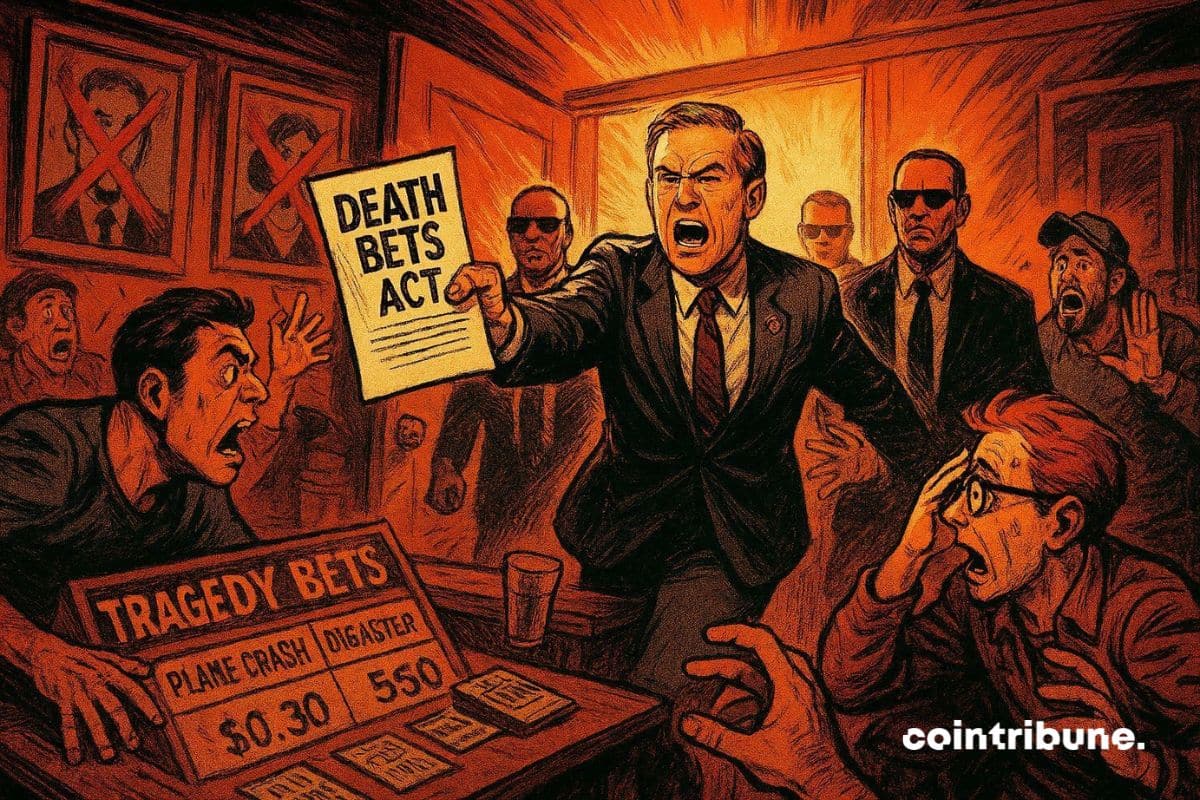
Prediction markets, where people bet on future events, have sparked heated controversy in the United States. A new law, the “Death Bets Act”proposes banning betting on war, attacks and disasters. Deciphering a debate which opposes economic freedom and ethics.
In brief
- The Death Bets Act proposes to ban betting on war, death and disaster, deemed immoral and dangerous to the security of the United States.
- Platforms like Polymarket and Bubblemaps have already sparked controversy by allowing betting on tragic or sensitive events.
- Between necessary regulation and fear of excessive censorship, the Death Bets Act raises the question of the limits of prediction markets.
Death Bets Act: a legislative response to the excesses of prediction markets in the United States
American Democrats Mike Levin and Adam Schiff presented a bill to regulate prediction markets. Baptized “Death Bets Act”, this text aims to prohibit betting on sensitive events such as wars, assassinations or terrorist attacks. According to its initiators, these markets create perverse incentives, allowing individuals to profit from human tragedies.
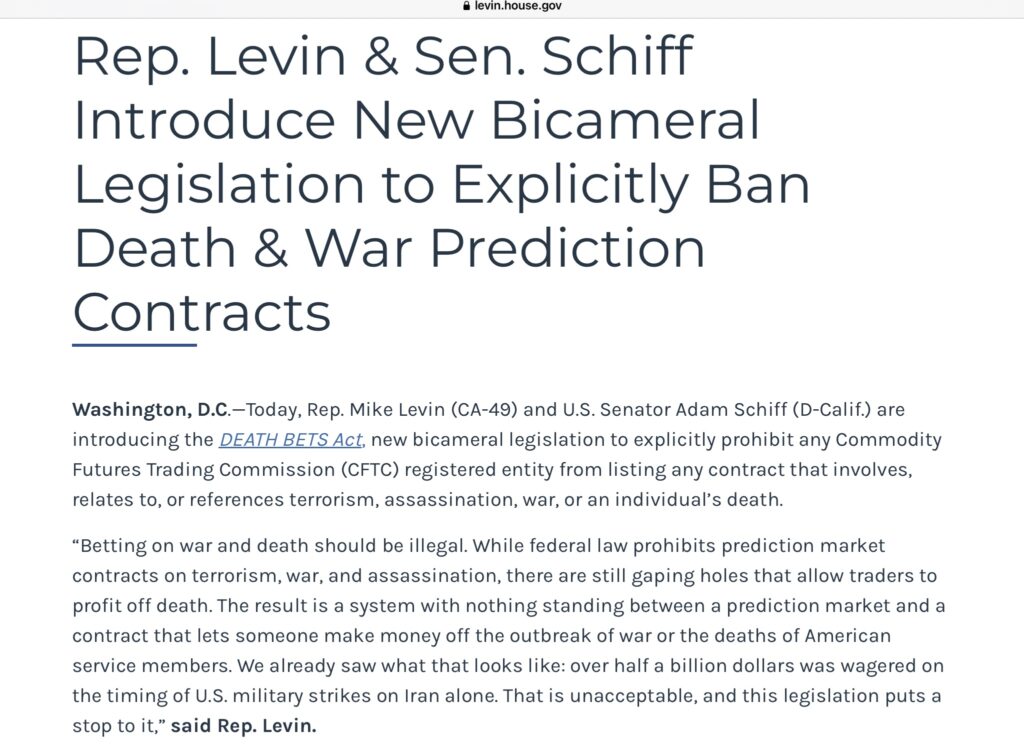
This proposal comes in a context where the Commodity Futures Trading Commission (CFTC) already has discretionary power to block certain contracts. However, lawmakers believe this flexibility is insufficient. Indeed, the “Death Bets Act” seeks to make these bans automatic, removing any legal ambiguity.
United States: Market Predictions Are National Security Risks
Prediction markets pose major ethical challenges. Indeed, by allowing you to bet on tragic events, they risk trivializing human suffering and encourage opportunistic behavior. For example, individuals could be encouraged to spread false information to influence prices and make profits.
Legally, these markets conflict with local laws. To this end, states like Kansas and Ohio have already challenged their legitimacy, arguing that they violate gambling regulations. Legal actions are increasing, particularly against platforms like Polymarket, accused of circumventing existing laws.
Crypto prediction: a healthier alternative or another speculative trap?
Betting on cryptos like bitcoin is often seen as less controversial than betting on war or death. However, their extreme volatility makes them risky territory, where thousands of investors lose fortunes. Unlike tragic events, these are based on financial assets. Although legal, they remain a dangerous game where price manipulation can distort results.
THE “Death Bets Act” marks a turning point in the regulation of prediction markets in the United States. As lawmakers seek to regulate these controversial platforms, a problem arises… Should these bets be banned to protect ethics and security, or do they risk depriving the public of a valuable anticipation tool?
Maximize your Tremplin.io experience with our 'Read to Earn' program! For every article you read, earn points and access exclusive rewards. Sign up now and start earning benefits.