
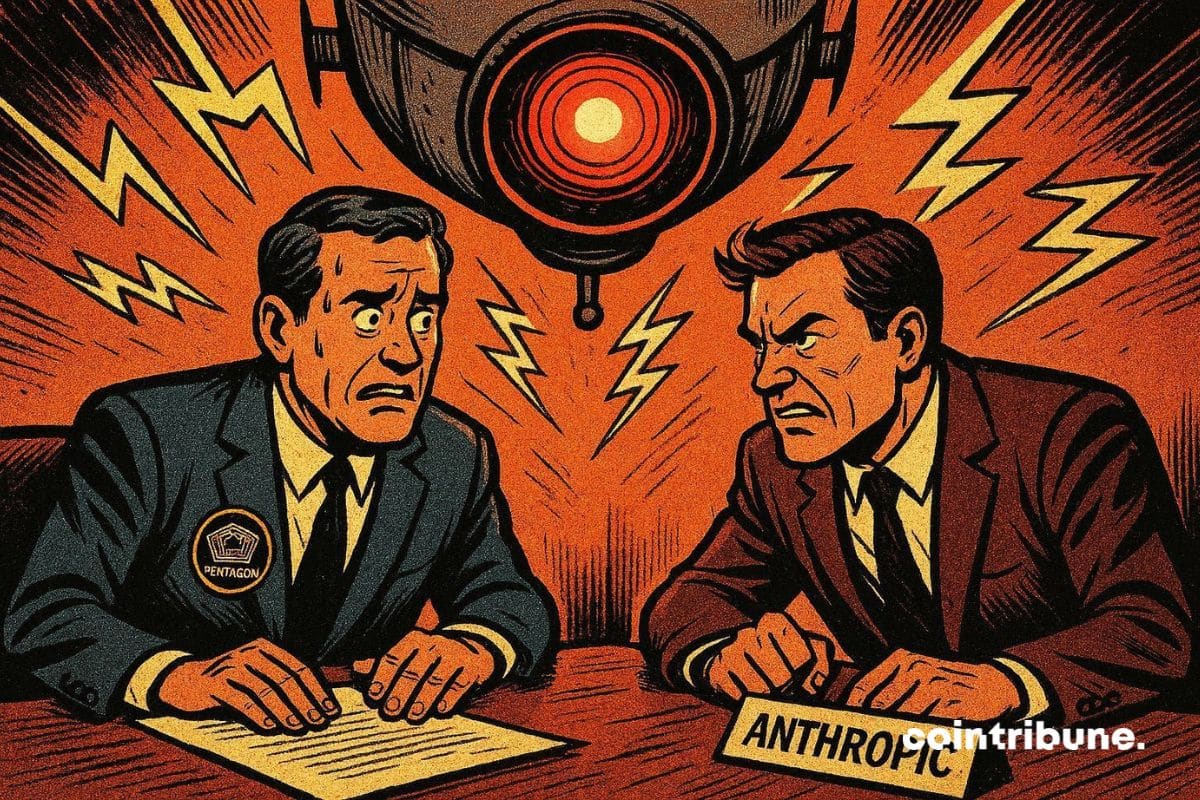
In 2025, the Pentagon used Anthropic's AI including the Claude model for classified operations, including strikes in Iran. A year later, in March 2026, the Trump administration threatens to ban the company for “security risk”. Why could this conflict also shake the crypto ecosystem?
In brief
- In 2025, Anthropic signs a $200 million deal with the Pentagon to supply its AI, used in classified operations including strikes in Iran.
- In 2026, the Pentagon demands full access to AI models, while Anthropic refuses, fearing misuse or mass surveillance.
- Without an agreement with the Pentagon, Anthropic risks being banned from military contracts, a precedent that could extend restrictions to other critical technologies.
AI: the Anthropic-Pentagon standoff intensifies
In July 2025, Anthropic signed a $200 million contract with the US Department of Defense to provide AI models, including Claude AI, for use in classified environments. These tools have been deployed to support military operations, including airstrikes in Iran. This, before the Trump administration ordered a halt to their use.
In March 2026, the Pentagon and Anthropic found themselves at odds over the conditions of access to AI models. Indeed, Secretary of War Pete Hegseth accused the company of arrogance and betrayal, saying it was denying unfettered access to technology for “internal security reasons”.
Anthropic, through its CEO Dario Amodei, countered that these restrictions were necessary to prevent misuse of AI or mass surveillance. A clause that the Pentagon demands to be removed. Negotiations stumbled over a key sentence in the contract that the Pentagon considers too restrictive:
“analysis of mass acquired data”
Military AI and crypto: 3 reasons why this conflict might concern you
The conflict between Anthropic and the Pentagon illustrates how regulation targeting AI can extend to other technological sectors, including blockchain. Here's why:
- Technological interdependence: Projects like Fetch.ai or SingularityNET combine AI and blockchain. If AI is subject to restrictions, these projects could be hampered by audits or bans! Especially, if they collaborate with government actors.
- Regulatory precedents: The SEC has already targeted crypto platforms (Binance, Coinbase) for non-compliance. A similar tightening on AI could extend controls to blockchain tools using advanced algorithms.
- Volatility for AI-related assets: Tokens from projects like Ocean Protocol or Numerai could face selling pressure if their technologies are associated with geopolitical risks. Conversely, decentralized solutions (DAOs, IPFS) could benefit from an influx of users seeking to circumvent these restrictions.
The Anthropic-Pentagon conflict proves that AI and crypto are no longer neutral technologies, but major geopolitical issues. Between regulation and innovation, which side will win? And you, would you be ready to migrate your assets to more resilient ecosystems?
Maximize your Tremplin.io experience with our 'Read to Earn' program! For every article you read, earn points and access exclusive rewards. Sign up now and start earning benefits.


