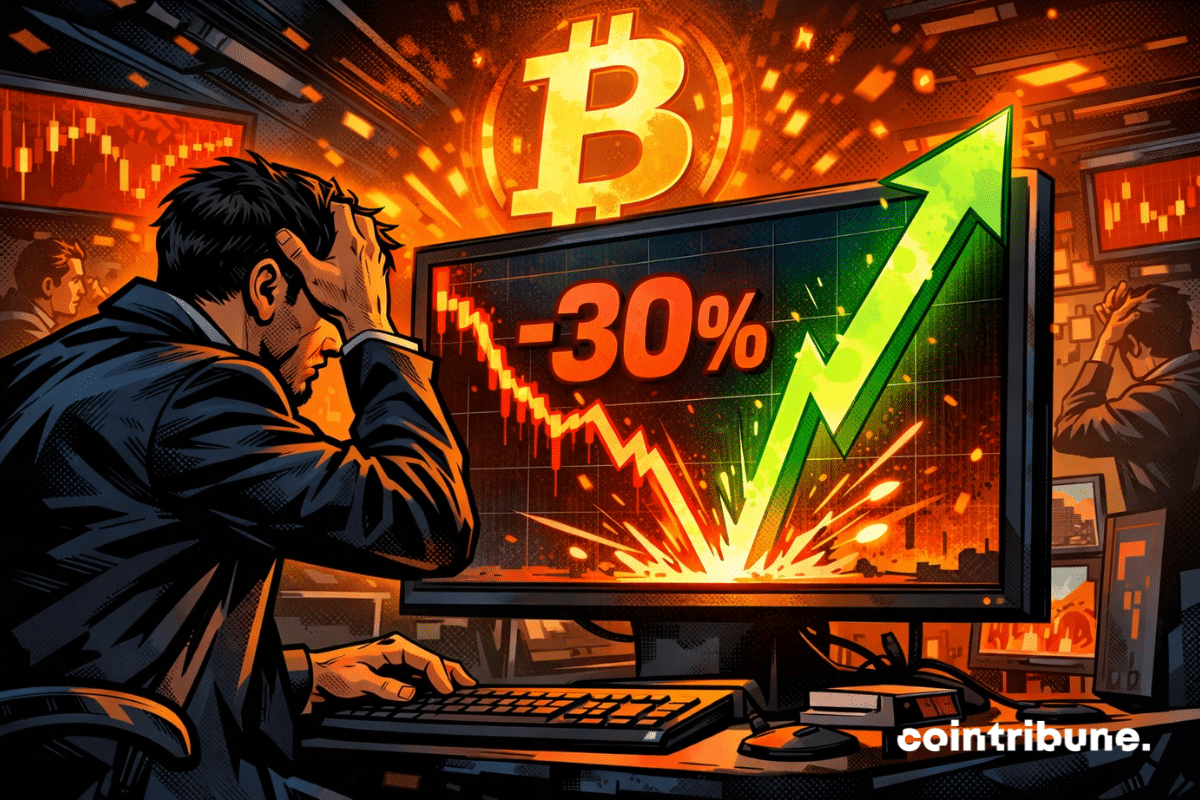
Since the start of this year, a key indicator of the Bitcoin derivatives markets has seen a marked fall. Open interest (OI) has fallen by around 30% from its October 2025 peak. This decline is accompanied by a massive reduction in leverage in the derivatives ecosystem. For many analysts, this movement could signal not only the end of an intense speculative phase, but also the construction of a solid base for a possible bullish recovery.
In brief
- Open interest in Bitcoin derivatives markets has fallen by around 30% since its peak in October 2025.
- This decline reflects a massive purge of leveraged positions, often associated with phases of market correction and stabilization.
Lever bleeding: why it's important
Open interest measures the total value of contracts that have not been liquidated. When it increases, it can indicate that new capital is entering long or short positions. However, when it decreases sharply, as is the case today, it does not go unnoticed. In effect, this often means that highly leveraged positions are closed, either voluntarily or following forced liquidations.
In the case of Bitcoin, OI had reached an all-time high of more than $15 billion in early October 2025. This is almost three times more than at the peak of the previous major bull phase of 2021. This peak reflected extremely high speculation, with massive capital commitments in the futures markets.
Since then, a reduction of more than 30% in RO has taken place, bringing the level to a more moderate point. This contraction occurred alongside a period of price correction and significant liquidations. By removing these high-risk positions, the market would purge excess leverage. It would thus reduce the risks of future waves of violent sales.
Bitcoin: Towards a market bottom?
This type of reduction in open interest has often coincided with the formation of significant bottoms in Bitcoin cycles. According to CryptoQuant analyst datathese phases of deleveraging would frequently have marked the bottom of a market before a healthier and more sustainable recovery.
Indeed, when traders commit too much capital with leverage, the slightest price movement can trigger waves of liquidations. This can lead to panic movements, greatly amplifying the fall in prices. Thus, reducing open interest means removing these fragile positions, bringing back a more stable balance between buyers and sellers.
This “purge” could result in a market less vulnerable to sudden shocks. As leverage falls, prices could have more room to stabilize. They could also rise again without triggering additional waves of liquidations.
Even if this reduction in positions is seen as a potentially bullish technical signal, it does not automatically mean that the uptrend is beginning. Some derivatives market data providers indicate that structural trading is not yet clearly trending toward a bull market. The current environment seems more reactive than anticipatory. Price increases cause some traders to close positions rather than enter new ones.
Long-term investors could see this cleanup as an opportunity for strategic repositioning. More active traders will keep an eye on technical indicators. They will monitor the evolution of market sentiment.
Maximize your Tremplin.io experience with our 'Read to Earn' program! For every article you read, earn points and access exclusive rewards. Sign up now and start earning benefits.