
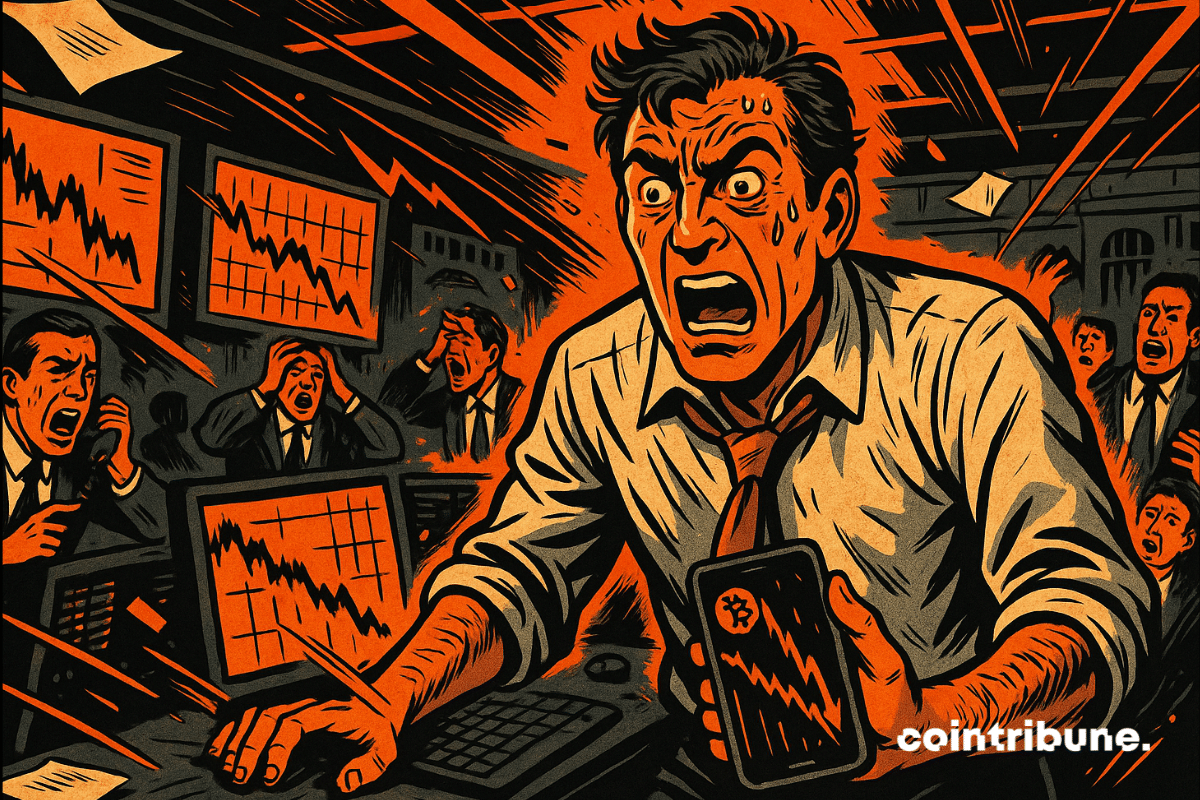
A wave of caution swept through markets Thursday, rattling U.S. stocks and prompting investors to shy away from riskier assets. The movement quickly spilled over into crypto-assets, with bitcoin falling below $85,000, mirroring a general feeling of reduced risk exposure.
In brief
- US markets were rocked by a massive sell-off, with the S&P 500 losing almost $2 trillion in a matter of hours.
- Investor sentiment has deteriorated sharply, with the Crypto Fear and Greed Index falling to 14, a sign of extreme caution.
- According to several analysts, the drop reflects a change in sentiment and a defensive strategy rather than an isolated event.
Stocks and crypto hit by severe setbacks
According to the Kobeissi Letter, American markets experienced one of their fastest reversals since Liberation Day. The S&P 500 lost around $2 trillion in capitalization in five hours, ending down around 4%. Nvidia, despite its recent rally linked to its results, also fell sharply, closing with more than 8% decline.
Broader signals confirmed a climate of concern: the Crypto Fear and Greed Index fell to 14, reflecting extreme caution. This contrast is notable, as the S&P 500 is only 6% off its recent high. Despite relatively modest declines on paper, confidence suddenly evaporated, illustrating how quickly sentiment can deteriorate.
The crypto market followed the same dynamic, with around $829 million in liquidations in the space of a few hours. High leverage exacerbated the fall, pushing bitcoin to around $82,000, its lowest level since mid-April. A stark reminder of the sensitivity of crypto markets to abrupt movements.
Market mechanics and leverage amplify the decline
According to Kobeissi Letter analysts, only one notable news item appeared during the session: the confirmation of the publication date of the monthly report on American employment for November. Even if the selling accelerated afterward, this title alone cannot explain the magnitude of the decline. This would above all reflect internal market dynamics and generalized selling pressure.
Kobeissi also highlights the high use of leverage, particularly in the crypto sector. While previous corrections mainly affected cryptos, Thursday's fall proved to be much more synchronized with the equity markets. Liquidations are now approaching $1 billion per day, amplifying volatility and emotional reactions.
For Tim Sun, principal researcher at HashKey Group, the decline is not linked to any major event. It arises from a change in sentiment and a tightening of liquidity. Many traders adopted a defensive strategy by buying put options ahead of Nvidia's earnings and upcoming U.S. jobs data, which increased the selling as the market reacted.
Sun specifies that “ trend-following strategies further amplified the decline when prices crossed key technical thresholds. »
Fed Moves and Data Will Influence Crypto Markets
According to Chung de Presto, if tensions in the private credit market begin to spread, the Federal Reserve could be pushed to support a rate cut at the FOMC meeting in December. Such a move would likely improve the outlook for risky assets, including crypto. However, rate cut expectations have already fallen to 35%.
Tim Sun emphasizes that market developments will strongly depend on the ability of upcoming economic data to justify monetary easing. A rate cut could calm markets temporarily, but a sustainable rebound would require broader macroeconomic support.
With weakened confidence, investors are now anticipating an increase in trading volatility and are adjusting their positions as the end of the year approaches.
Maximize your Tremplin.io experience with our 'Read to Earn' program! For every article you read, earn points and access exclusive rewards. Sign up now and start earning benefits.


