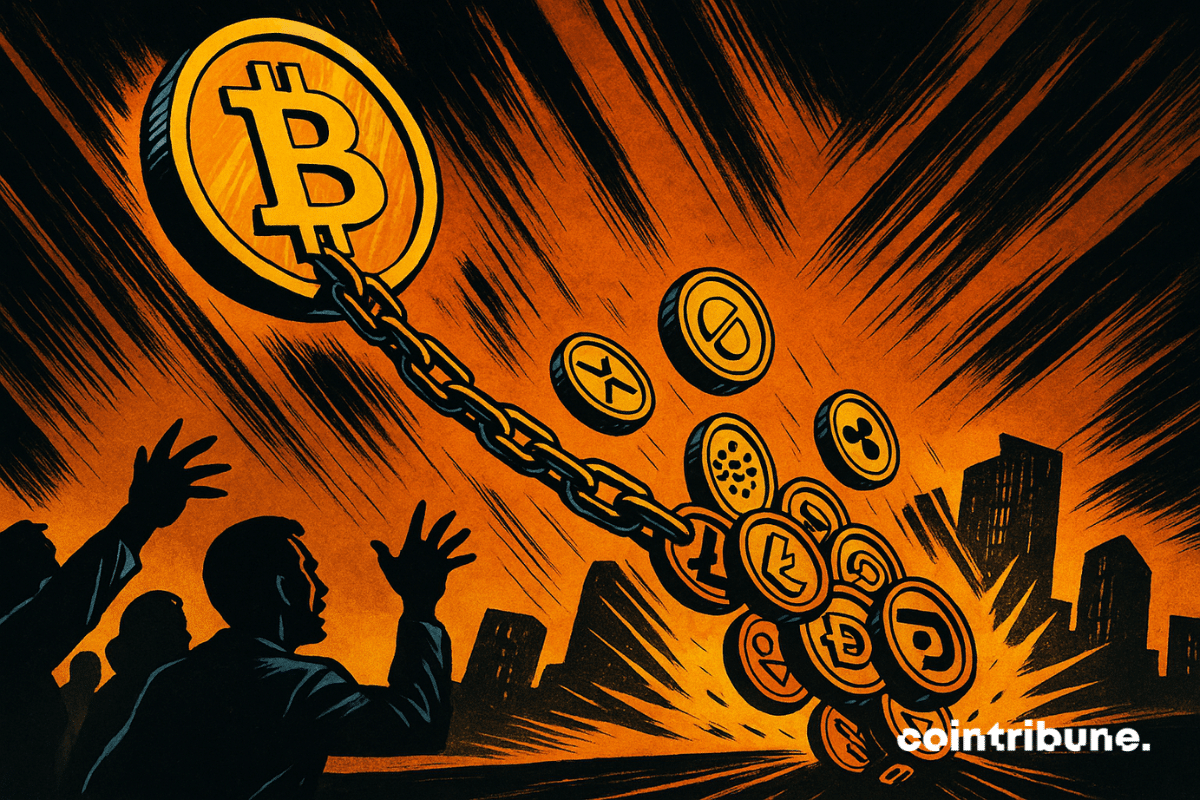
Global crypto markets are under marked pressure after a sharp fall in bitcoin dented sentiment across the sector. Prices are now erasing the majority of gains made earlier in the year, while small-cap tokens are hitting multi-year lows. Investors are reassessing risk, volumes are contracting, and several analysts are warning that further declines remain possible.
In brief
- Bitcoin's fall below $94,000 and low liquidity are leading to high volatility across the entire crypto market.
- ETF outflows add pressure on bitcoin as rate cut expectations wane and uncertainty rises.
- Small-Cap Cryptos Hit 2020 Lows; Weak sentiment limits ETF prospects.
- Analysts still anticipate declines, while emphasizing that the context differs from that of 2022 and that a long-term rebound remains possible.
Bitcoin's fall deepens after liquidations wiped out billions in October
Bitcoin fell below $94,000 on Friday, days after already crossing the $100,000 threshold downward, reversing almost all the progress made since January. Unsurprisingly, this correction aroused concern among traders, often guided by momentum.
Observers say the decline began when many investors rushed to sell as economic concerns intensified. Forced selling then increased, with traders closing positions unable to withstand losses.
According to Alessio Quaglini (Hex Trust), the domino effect dates back to October 10. Rising geopolitical tensions between the United States and China have pushed investors out of risky assets. Soon after, cascading liquidations wiped out billions in leveraged trades. For Quaglini, this is a “liquidity reset” more than a collapse in sentiment towards bitcoin.
The consequences, however, quickly spread: ether has lost more than 35% since its August peak at $4,954, also weakening the broader market.
Although tensions between Washington and Beijing have calmed somewhat, bitcoin still operates in a fragile environment. Peter Chung (Presto Research) points out that liquidity remains thin since October's plunge, making prices sensitive to even relatively small transactions. He also believes that bitcoin's four-year cycle could lose influence as macroeconomic pressures persist.
ETF reversal and geopolitical tensions amplify bitcoin volatility
Economic concerns continue to weigh on overall sentiment. Expectations of a December Fed rate cut have eased, while uncertainty has increased after a recent government shutdown delayed the release of key data. According to Tim Sun (HashKey), this context weighs heavily on bitcoin ETFs.
These products attracted more than $100 billion shortly after their approval, but inflows have slowed sharply. For several weeks, exits have exceeded entries.
This increased caution influences both individual and institutional traders. According to several analysts, volatility is expected to remain high with the combination of three factors: reduced liquidity, concerns about rates, and persistent geopolitical tensions.
Several forces are fueling the current decline:
- sales of risky assets due to tensions between the United States and China;
- forced liquidations resulting from the unwinding of leveraged positions;
- low volumes, which amplify the impact of small transactions;
- the weakening of sentiment with the disappearance of expectations of rate cuts;
- reversal of ETF flows, adding further pressure on bitcoin.
Quaglini estimates that bitcoin could fall as low as $70,000 if equity markets deteriorate further. Jeff Mei (BTSE) agrees, adding that bitcoin still behaves like a high-risk asset. Doubts over tech valuations and rate uncertainty could trigger further declines.
Despite these risks, several analysts insist that the current situation does not resemble that of 2022: no major collapse of lenders, no wave of bankruptcies. Quaglini even anticipates a rebound in bitcoin within 12 to 18 months if global conditions improve.
Retail traders now favor quality coins as small caps plunge
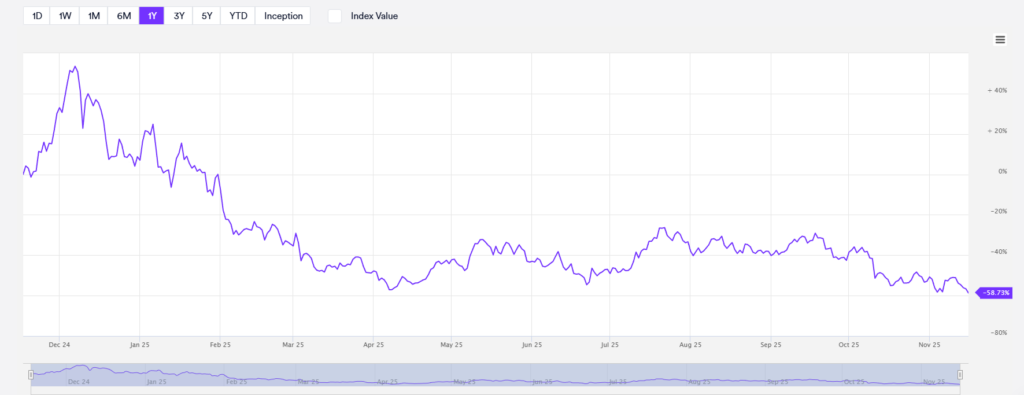
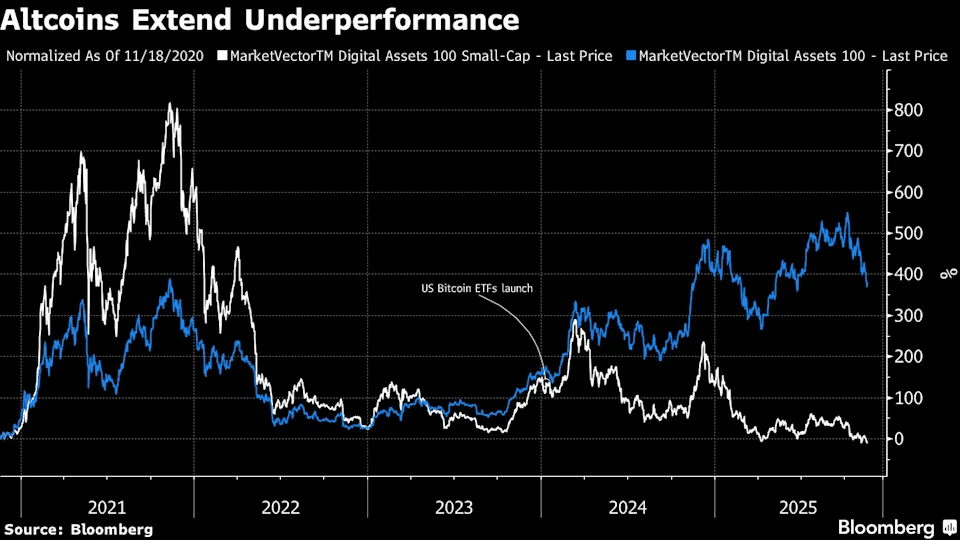
While bitcoin and ether focus most of the discussion, smaller tokens are hit even harder. The MarketVector index, which tracks 50 small-cap cryptos, reached its lowest level since 2020. Many of these coins had seen spectacular rises during bull runs, attracting traders looking for quick gains. But that momentum fizzled last year, when U.S. regulators approved bitcoin and ether ETFs, redirecting institutional attention to major assets.
This weakness now poses a challenge for ETF issuers: approximately 130 applications related to smaller tokens are pending with the SEC. Current conditions make it unlikely that these approvals will attract significant flows.
A Dogecoin-linked ETF, launched in September under the ticker DOJE, has not seen any inflows since mid-October. Dogecoin itself lost 13% over one month.
Over five years, the small-cap index falls about 8%while the main cryptos are growing by almost 380%. For Pratik Kala (Apollo Crypto), retail traders are starting to understand that not all tokens rebound: “ A rising tide doesn't lift all boats, only the best ones. »
The October crash wiped out more than $1 trillion in capitalization and caused about $19 billion in forced sales. Risk appetite remains degraded, and many traders are avoiding the most speculative corners while waiting for clearer economic signals.
Moving forward, Chung advises individuals to avoid short-term bets and favor progressive purchases. Sun recommends that long-term investors primarily monitor global monetary conditions, believing that bitcoin's next recovery will depend on an easing of global liquidity.
Maximize your Tremplin.io experience with our 'Read to Earn' program! For every article you read, earn points and access exclusive rewards. Sign up now and start earning benefits.