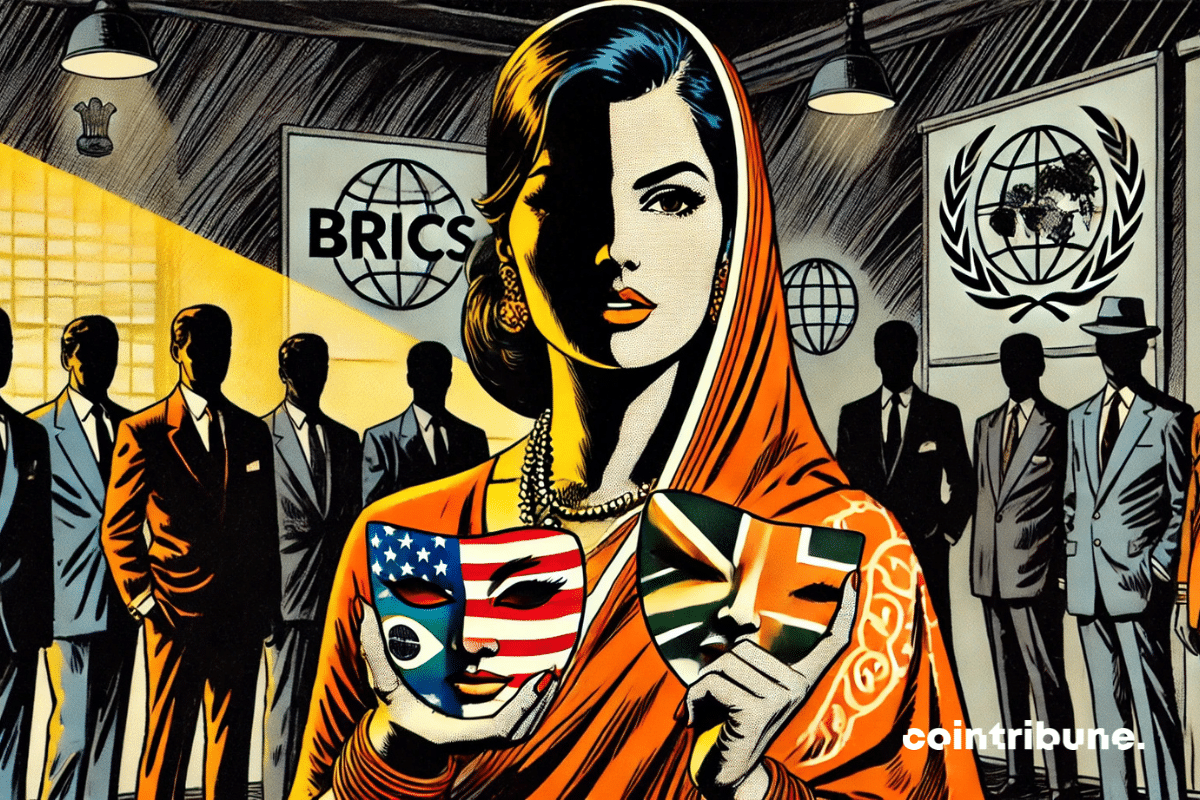
Between Washington and the Brics, India plays a balancing number. Officially attached to the dollar, it nevertheless lets filter signals favorable to monetary alternatives. In a context of geopolitical recomposition where the American motto crystallizes the tensions, the ambivalent posture of New Delhi intrigues as much as it worries. Between displayed loyalty and discreet strategies, India stands out as a key actor in the world monetary showdown.
In short
- India has official support for the US dollar, despite geopolitical tensions around dedollarization.
- The Minister of Foreign Affairs, S. Jaishankar, rejects any desire to weaken the American currency.
- A new trade agreement between India and the United States is strengthening this posture of economic cooperation.
- In parallel, signals suggest discreet support from India to the monetary initiatives of the BRICS.
Public position and official speech: support affirmed to the dollar
During an official statement, the Indian Minister of Foreign Affairs, Subrahmanyam Jaishankar, dismissed any desire to participate in dedollarization. He says:
We have no interest in weakening the US dollar.
This declaration Inserts into a dynamic where international monetary tensions make every word heavy with meaning. It intervenes in a context where the British block countries are accused of wanting to reduce their dependence on the American currency.
In parallel with this declaration, several concrete elements illustrate India's official commitment in economic cooperation strengthened with the United States:
- The finalization of the terms of reference: India and the United States have concluded an agreement which defines the bases of a future commercial treaty;
- The strengthening of bilateral exchanges: this working environment provides for reciprocal negotiations to harmonize commercial practices;
- A readable economic strategy: through this approach, New Delhi sends a clear signal of stability to Western partners, while consolidating its image as a reliable partner in the global economy.
This public posture, combined with the announcement of a new commercial agenda with Washington, returns the image of a determined India not to call into question the current economic order. However, this official line contrasts with other more ambiguous signals.
A dual backstage strategy: signs of a double game?
While official rhetoric reassures the markets, information points to a more nuanced reality. The economist Thiago Bessimo affirm that “India plays a double game”. He suggests that the country discreetly supports alternative settlement mechanisms, especially based on local currencies or on a currency of still hypothetical BRICS.
These initiatives, although little publicized, would testify to an Indian desire to explore the bypass ways of the dollar, in agreement with the strategic ambitions of certain members of the group.
This hybrid positioning responds to a logic of economic and geopolitical diversification. By maintaining its links with the United States while testing alternative solutions, India seeks to secure its interests in the face of a global monetary system perceived as unstable.
Publicly prudent prudence could also be explained by the threat brandished by Donald Trump, who spoke of customs duties of 100 % against countries that promote dedollarization. In this climate, any statement contrary to the dollar could lead to immediate and costly sanctions.
The ambivalent strategy of India questions the solidity of the unit within the BRICS and the real capacity of the Alliance to set up a viable monetary alternative to the dollar. It also challenges a more global problem: the place that the emerging powers wish to occupy in the redefinition of global economic balances. If New Delhi manages to maintain this delicate balance without provoking major diplomatic tensions, it may well become a central player in the emergence of a new multipolar monetary order, more suited to current geopolitical realities.
Maximize your Cointribne experience with our 'Read to Earn' program! For each article you read, earn points and access exclusive rewards. Sign up now and start accumulating advantages.