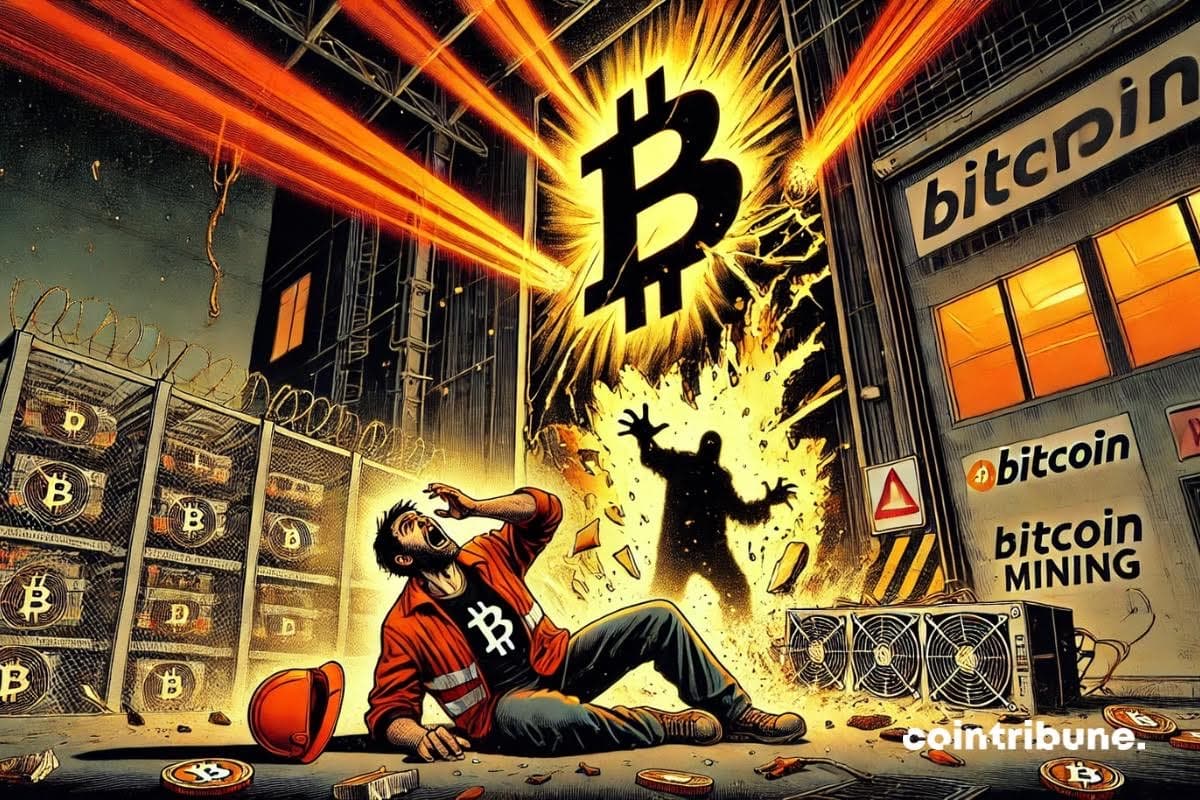
American bitcoin minors are due to face a new hard blow. The Trump administration has imposed heavy customs tariffs on mining equipment from Asia. Result: the costs explode, weakening the competitiveness of local players in a sector already tense by profitability and global competition.
Trump strikes hard: customs tariffs explode
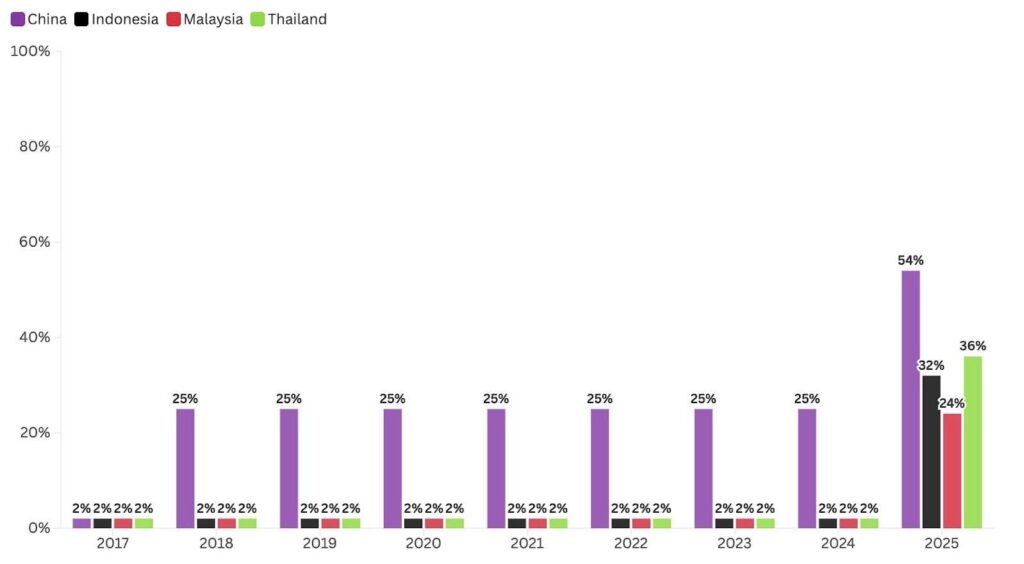
As China imposes an 84 % tax on American products on April 9, the White House replied with a surcharge of 125 % on Chinese imports. This is added to the 20 % already in place, then bringing the total increase to 145 % for the Empire of the community since the return of Trump. Mining Bitcoin machines are particularly targeted, with customs duties from 25 % to 54 %.
In addition, countries like Thailand, Malaysia and Indonesia, also key producers, see their prices climbing from 2 % to more than 20–30 %. Result: American bitcoin minors undergo an increase of 22 to 36 % on the purchase price of their machines. An economic shock for an already ultra-competitive sector.
American bitcoin minors adapt or relocate
Faced with this pricing pressure, the actors of the Bitcoin mining react. Jill Ford, founder of Bitford Digital, stresses that these increases make mining in the United States less and less profitable. Some companies cancel their Chinese orders and try to resell them locally in Asia. Others like Cormint Data Systems accelerate the relocation of their supply chain.
Whatsminer, on the other hand, plans to produce machines on American soil, and Bitmain will open a warehouse in the United States this summer. Meanwhile, Bitcoin minors plan to move their activities abroad, to regions not subject to these taxes. The objective: to reduce costs, preserve profitability and remain competitive in the face of a global market where the slightest percentage of efficiency can change everything.
What impact on Bitcoin?
Despite these turbulence, Bitcoin does not show any sign of immediate weakness. The potential decrease in the American hashrate could slow down the expansion of the overall calculation power, but not make it fall. According to Scott Offord, this could even temporarily improve the profitability of existing minors. However, a migration of the hashrate outside the United States could pose risks in the longer term on the decentralization of the network.
The future of Mining Bitcoin in the United States is therefore changing. Between costs of costs, forced relocation and strategic relocations, minors must reinvent themselves to survive. The BTC remains resilient. But the evolution of the distribution of the world hashrate will be monitored very closely in the coming months.
Maximize your Cointribne experience with our 'Read to Earn' program! For each article you read, earn points and access exclusive rewards. Sign up now and start accumulating advantages.