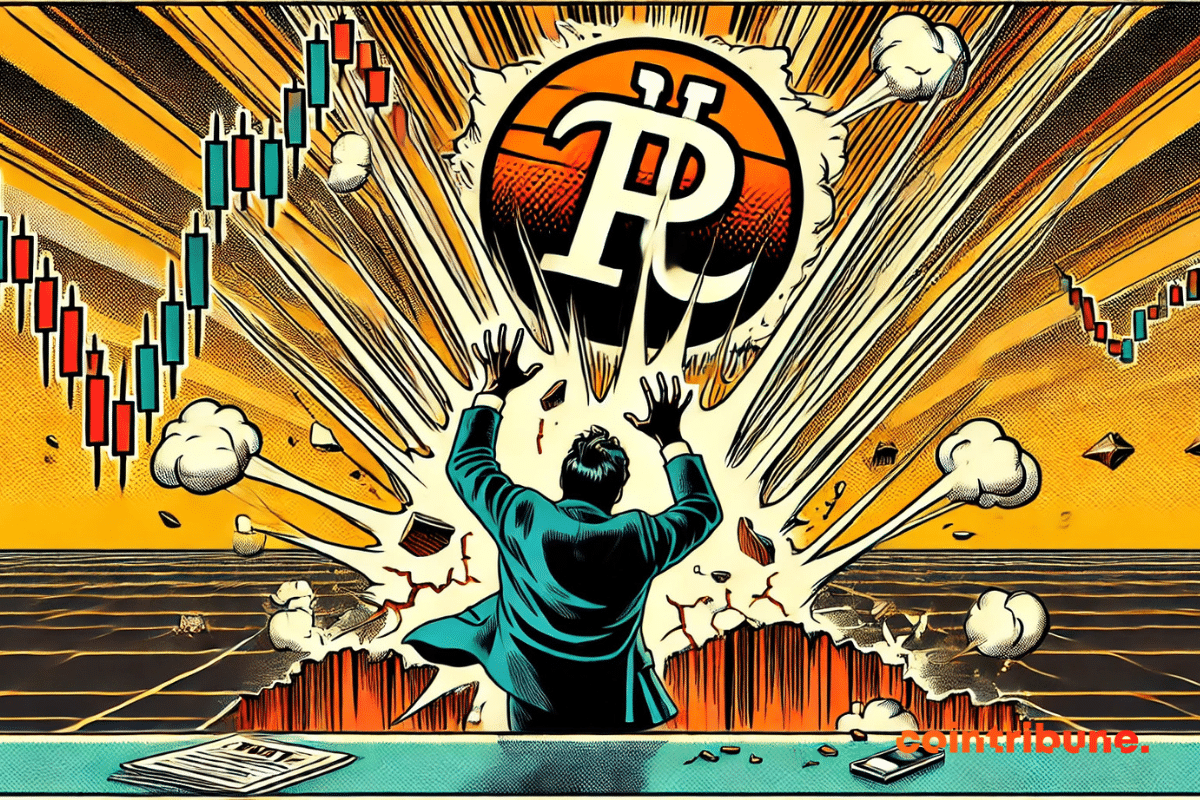
On the cryptos market, where turbulence is common, some falls mark more than others. Pi Network, formerly perceived as a promising project, sees its price collapse at a historic lower low, which has shaken the confidence of investors. While the token struggles to impose itself on large exchange platforms, its volume of transactions falls, a sign of an increasing disinterest. Can Pi still bounce back, or are we witnessing the collapse of a promise never held?
A spectacular fall, declining volumes
The fall of the Network PI integrates into a series of structural blockages which lastingly weaken the dynamics of the project. Indeed, the Token Pi has hit its lowest level this week since February 2022, and reached $ 0.7915, with a drop of more than 74 % compared to its historic summit.
At the same time, the capitalization of the project collapsed, and increased from nearly $ 20 billion to 5.35 billion. This represents “a loss of $ 14.65 billion”. This correction is not trivial because it provides several major flaws.
Among the explanatory factors, there are several key elements:
- The absence of listings on the main exchange platforms. Binance, Coinbase and Upbit (however strategic for global adoption) have still not integrated the token pi into their markets. This lack of visibility considerably slows down the liquidity of the token and limits its accessibility to international investors.
- A massive concentration of tokens in the hands of the foundation. PI scan data indicate “That the seven portfolios of the PI Foundation listed on the explorer currently hold tokens worth 50 billion dollars.” This centralization triggers growing doubts about the real decentralization of the project and its economic balance.
- The volume of trading in high decline. While the token recorded more than $ 1 billion in daily exchanges in February, it only generated $ 213 million last Wednesday, a sign of a net disengagement from investors.
These combined elements create an increased climate of uncertainty around Pi Network. While his Mainnet was officially launched, the absence of powerful relays, the opacity on the distribution of tokens and the low traction on the markets weigh heavily on its credibility.
Contested governance and an uncertain future
In parallel with the fall of the course, more structural concerns crystallize around the governance of the Crypto Pi Network. A significant proportion of tokens is currently in the hands of the PI Foundation, which causes questions about the effective decentralization of the project.
The current evaluation of the tokens held by the Foundation would amount to $ 50 billion. This concentration of the offer nourishes fears as to a possible manipulation of the market or a lasting imbalance in the distribution of tokens.
Another point of tension: the progressive unlocking of new tokens. More than 1.6 billion PIs are expected on the market in the next 12 months, which could accentuate the lower pressure on the price. Without clear management strategy or redistribution plan, these new emissions may further destabilize the ecosystem.
In the short term, the absence of a public roadmap on these major issues adds to the confusion. The project could embark on a more downward slope if rebalancing measures are not taken quickly, especially in terms of governance and communication. As for the future, it will largely depend on the capacity of PI Network to regain the confidence of investors, to diversify its user base and to obtain the support of large crypto exchange platforms like Binance and Bybit. The time is now for strategic choices.
Maximize your Cointribne experience with our 'Read to Earn' program! For each article you read, earn points and access exclusive rewards. Sign up now and start accumulating advantages.