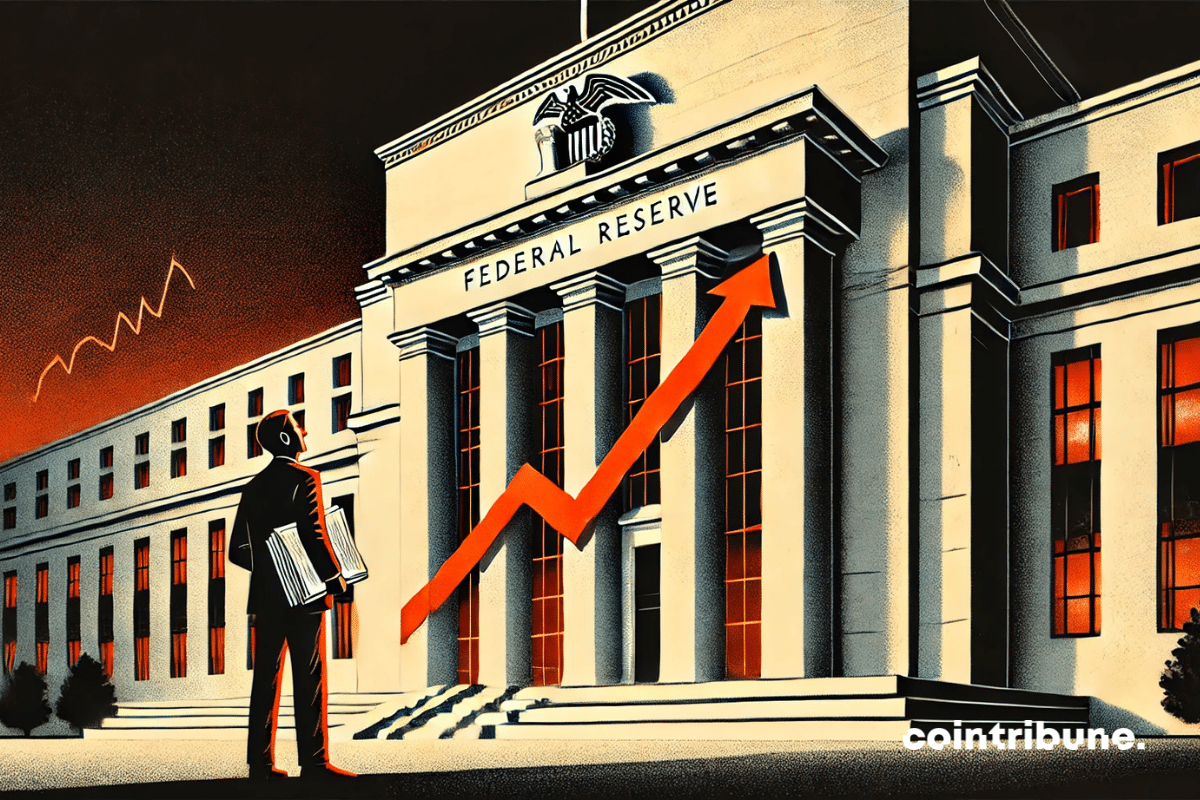
The global economy has its eyes fixed on the United States, where inflation is making a notable return. After months of decline, recent figures show an increase in consumer prices that exceeds expectations. This rebound, captured by key economic indices, places the Federal Reserve (Fed) in a delicate position and fuels speculation about future political and economic impacts.
Inflation figures: renewed pressure on the Fed
Inflation recorded a notable increase in October, with an annual increase of 2.3%, according to the PCE index, compared to 2.1% in September. This rebound mainly reflects the increase in prices of services, a sector which continues to weigh heavily on the average consumer basket. According to the US Department of Commerce, this increase, although expected, serves as a reminder that the 2% target set by the Fed remains out of reach. At the same time, the CPI index, another important measure of inflation, climbed to 2.6%, a first increase in several months.
This data places the Fed in a delicate position. After raising key rates to curb galloping inflation which had peaked at 9.1% in 2022, the American central bank began easing in September. Furthermore, these adjustments, considered necessary to revive a weakened job market, could be called into question if inflation continues on this trajectory. “We have seen considerable progress in the fight against inflation, but this progress is slowing,” he said. noted Michelle Bowman, member of the Board of Governors of the Fed.
Political repercussions: between protectionism and uncertainties
The return of Donald Trump to the White House adds a political dimension to this complex economic situation. Indeed, during his campaign, the president-elect promised protectionist measures such as an increase in customs duties to 25% on products imported from Mexico and Canada. Such a policy, criticized by the opposition, could accentuate inflationary tensions by increasing the cost of basic products. So, “From gasoline to groceries, Donald Trump's tariff threats would drive up prices and erase progress against inflation“, declared Brendan Boyle, elected Democrat in the House of Representatives.
In a context where the American economy remains robust, with annualized growth of 2.8% in the third quarter, these uncertainties increase the pressure on decision-makers. If the Fed opts for another rate cut in December, it could be seen as a signal of support for the economy in the face of political headwinds. On the other hand, maintaining current rates would risk slowing down economic dynamics.
This rebound in inflation sheds more light on the multidimensional challenges facing the United States. Between the management of monetary policy, the protectionist ambitions of the next government, and the need to maintain stable growth, future decisions will be closely scrutinized. As the Fed struggles to maintain balance, the fallout from these developments could reshape economic priorities in the months to come.
Maximize your Tremplin.io experience with our 'Read to Earn' program! For every article you read, earn points and access exclusive rewards. Sign up now and start earning benefits.