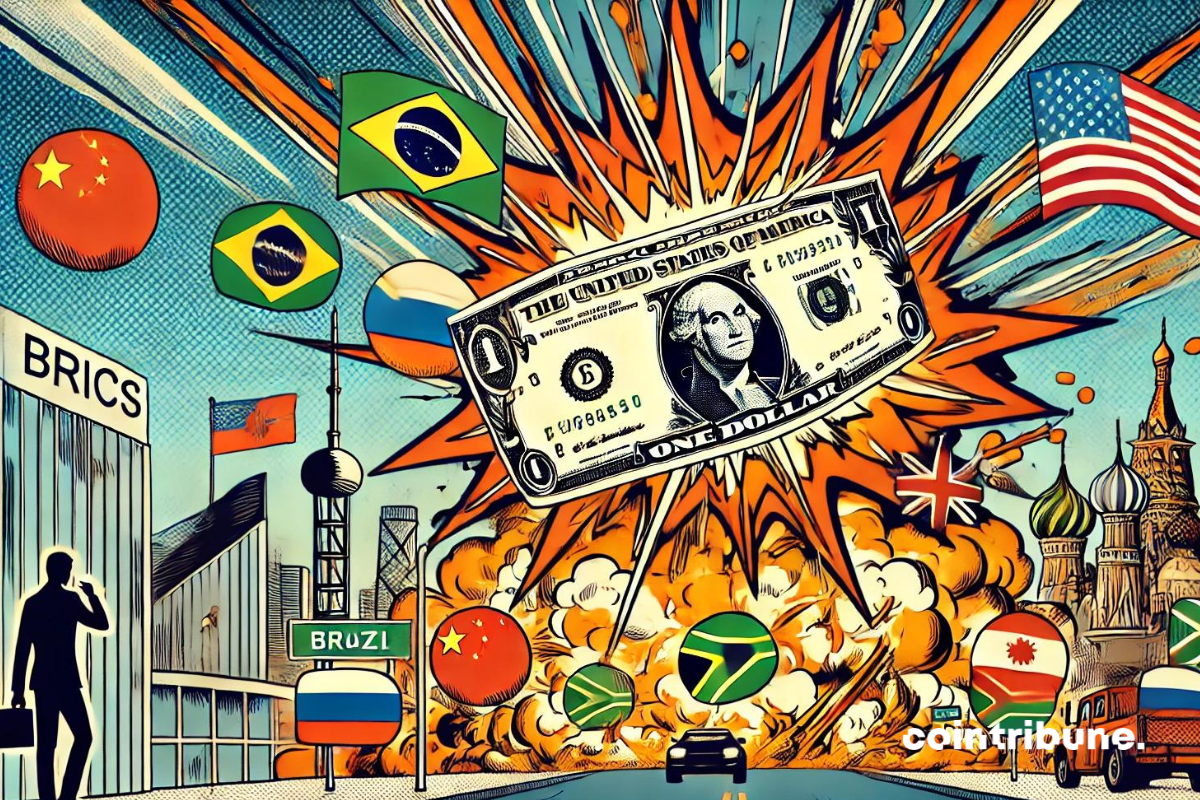
In July, the US dollar dealt a severe blow to the currencies of the BRICS member countries. Despite efforts by these nations to reduce their dependence on the dollar, the latter continues to strengthen.
The dollar's relentless assault on local currencies
Despite an active de-dollarization campaign launched by the BRICS, the US dollar continues to dominate foreign exchange markets. The greenback, a symbol of stability and security, recorded a significant increase last month, leading to a dramatic fall in local currencies.
The impact was particularly felt by the Indian rupee, which hit a record low of 83.74 at the close of trading on Friday. The Chinese yuan also hit a seven-month low, while the Japanese yen is at its lowest level since the 1990s.
Anil Bhansali, executive director, Finrex Treasury Advisors, commented: “Dollar buying will continue. The rupee is expected to depreciate to 83.84 per dollar in the next two days.” This forecast is based on increased demand for the dollar, which leaves little room for stabilisation of local currencies.
Growing pressure on BRICS economies
The worsening situation for BRICS currencies highlights the challenges these economies face in the face of dollar hegemony. The rise of the US dollar increases the pressure on these countries, which see their de-dollarization efforts thwarted. Local currencies, already weakened, continue to depreciate while demand for the dollar persists.
Analysts note that BRICS currencies could remain under pressure in the near term. This could limit economic opportunities for these countries, slowing their growth and complicating their efforts to diversify their foreign exchange reserves. The medium-term outlook suggests that BRICS will need to reassess their economic strategies to counter the dominant influence of the dollar.
In summary, the continued rise of the US dollar highlights the vulnerability of the BRICS nations’ currencies to a pervasive global currency. While de-dollarization has been a long-standing goal for these countries, recent developments show that this process may be more complex than previously thought. The future economic stability of the BRICS will depend on their ability to adapt their economic strategies in the face of this continued pressure.
Maximize your Tremplin.io experience with our 'Read to Earn' program! For every article you read, earn points and access exclusive rewards. Sign up now and start earning benefits.
Join the Read to Earn program