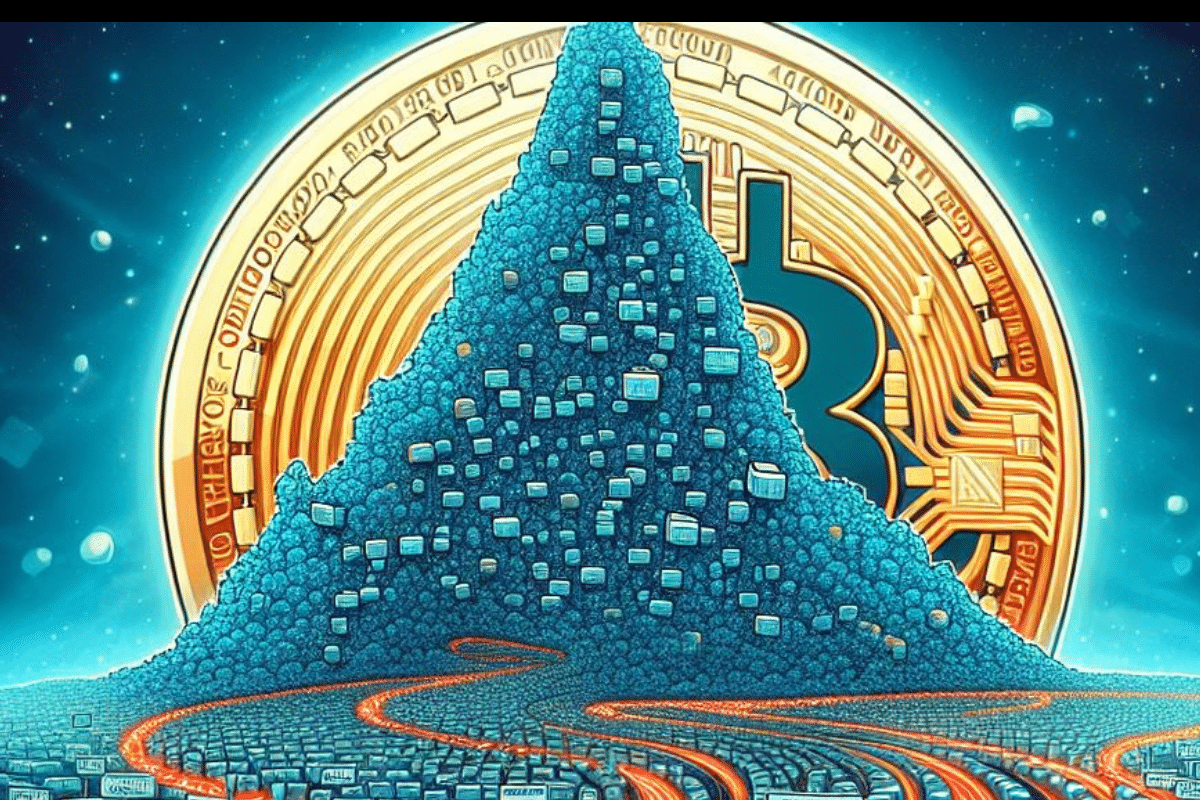
The Bitcoin network is facing unprecedented congestion in recent days, caused by a massive influx of transactions linked to BRC20 tokens. Nearly 300,000 transactions are waiting to be confirmed, saturating miners’ memory and driving fees to record levels.
Controversial patch threatens BRC20 future
The growing popularity of BRC20 tokens has plunged the Bitcoin network into a critical situation. Mempool reports over 280,000 pending transactions, with memory pool usage surpassing 300 MB to reach 1.57 GB. At the same time, average transaction fees climbed by around $14.
The developers point to the exploitation of a flaw in the Bitcoin Core code, allowing inscriptions of ordinals and BRC20 tokens integrated into satoshis to bypass the limits normally imposed on the size of additional data.
Renowned developer Luke Dashjr has confirmed in a December 6 article that the patch applied to Bitcoin Knots, an alternative version of Bitcoin Core, aims to stop this bypass. He expresses hope that this flaw will be fixed in Bitcoin Core version 27 next year
However, controversy persists over the scope of this change, highlighting that the end of this vulnerability would also mean the end of ordinals and BRC20 tokens.
A controversial change
However, such a change is not unanimous. Shenyu, co-founder of f2pool, one of the largest Bitcoin mining pools, reminded that developers do not have all the power on a decentralized network like Bitcoin. Additionally, many users and investors have become excited about the possibilities offered by BRC20 tokens.
Despite these reservations, Luke Dashjr maintains his criticisms. He considers that the damage caused to Bitcoin users is already enormous and irreversible. Indeed, the explosion in transaction fees has a very concrete impact on those who wish to transfer funds. Furthermore, by saturating network capacity, BRC20 tokens harm the adoption of Bitcoin as a means of payment.
“ No one ever allowed ordinals. This has been an attack on Bitcoin from the startt,” he said.
In short, the controversy surrounding BRC20 tokens illustrates the difficulty of reconciling innovation and security on a decentralized network like Bitcoin. If the problem persists, it could lead to a fork in the protocol between those who defend the removal of tokens and those who wish to preserve these new features. Whatever the outcome, this episode will mark a turning point in the turbulent history of Bitcoin.
Maximize your Tremplin.io experience with our ‘Read to Earn’ program! For every article you read, earn points and access exclusive rewards. Sign up now and start earning benefits.