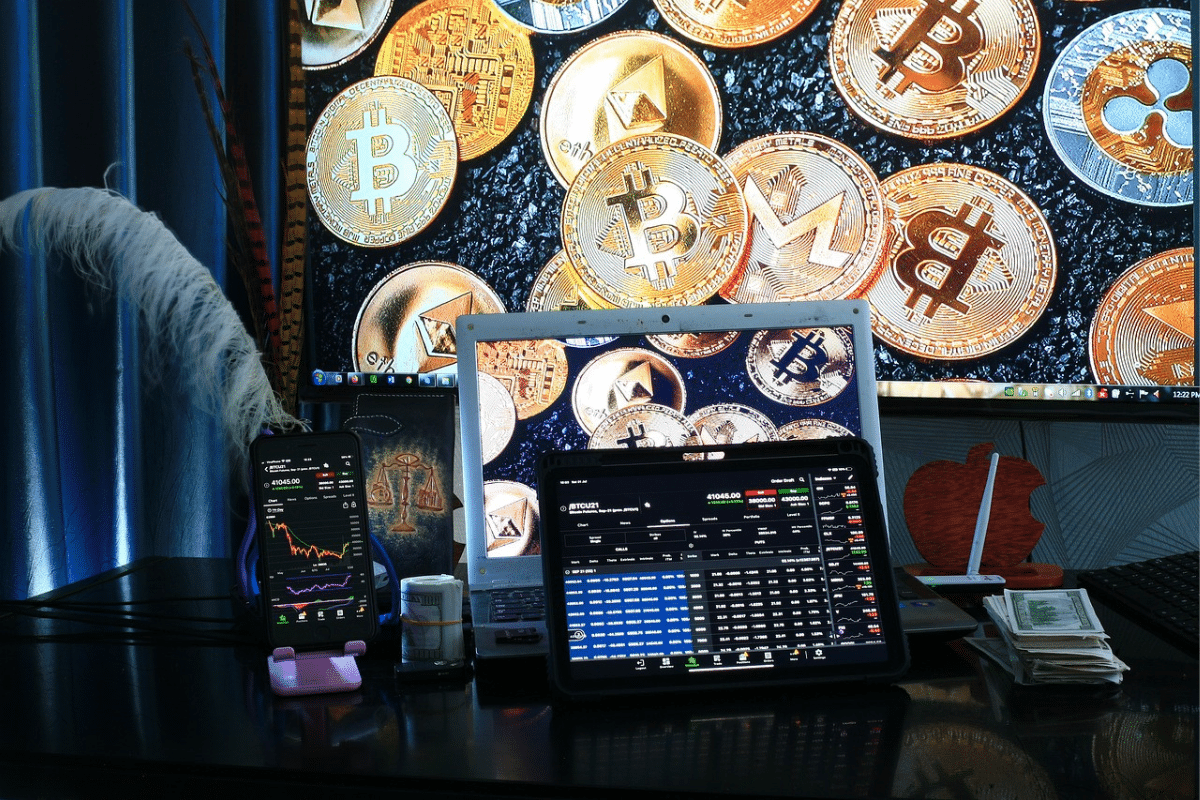
The rapid evolution of the crypto market inevitably attracts the interest of financial regulators around the world, including the SEC. In the United States in particular, the SEC is stepping up its efforts to regulate crypto exchanges. The proof: in recent days, the American regulator has been taking legal action against several crypto companies. He seems to be very interested in exchanges. Recent events then raise questions about the dependence of cryptos on these platforms. The question is simple (or not): can cryptocurrencies do without exchanges?
The SEC steps up its fight against crypto exchanges: the details
Recently, the SEC has raised growing concerns about crypto exchanges. The US regulator highlights a number of issues, including:
- price volatility,
- market manipulation,
- lack of investor protection.
Price volatility on crypto exchanges
Cryptocurrencies are known for their extreme fluctuations. In other words, a crypto investment can cause significant losses.
In this sense, the SEC notes cases of alleged market manipulation on certain exchanges. This raises concerns about fairness and integrity of transactions.
Lack of investor protection on crypto exchanges
Cryptocurrencies are not regulated in the same way as traditional currencies. This means that investors expose themselves to a higher risk of fraud and theft. Through its actions, the SEC would therefore seek to strengthen the protection measures for investors on crypto exchanges. Ongoing legal proceedings are also said to seek to establish more stringent security standards.
As part of its mission to regulate and oversee the financial markets, the SEC therefore decides to take legal action against several well-known crypto exchanges. We mainly cite Binance and Coinbase, accused of violating securities laws.
In his approachthe SEC wishes to establish stricter regulation of the activities of certain crypto exchanges, in particular by:
- demanding transparent financial reports,
- monitoring trading practices,
- imposing more stringent investor protection measures.
Unfortunately, the attacks of the SEC sow doubt among several players in the crypto market as to the long-term viability of exchanges. These have developed a lot in recent years, attracting a growing number of investors and traders.
The announcement of these lawsuits also impacted the crypto market in general, and this, in a significant way. The proof: in recent days, there have been significant price drops to which is added increased volatility.
That’s not all ! Many investors are starting to withdraw their funds from crypto exchangesfearing new regulatory measures and negative consequences on their investments.
The challenges posed by crypto exchanges
Crypto exchanges play a vital role in the crypto ecosystem. The reason is that they allow digital assets to be traded. Specifically, they provide the necessary liquidity to facilitate transactions. They also offer secure storage services. Above all, crypto exchanges serve as an access point for investors.
We must nevertheless admit one fact: crypto exchanges are vulnerable to hacks. They are often prone to technical issues and security risks. Dependence on crypto exchanges can therefore present risks for users and the economy in its entirety.
Faced with the problems associated with centralized exchanges, decentralized solutions have gradually taken over.
- Above all, DEXs ensure secure peer-to-peer exchanges.
- Decentralized finance (DeFi) platforms allow users to trade cryptos without the need for centralized intermediaries. They run on standalone blockchain protocols, eliminating the need to trust a third party.
These decentralized solutions offer an alternative to traditional crypto exchanges. They could potentially reduce dependence on them. But they themselves face several challenges.
First, DEXs and DeFi platforms are still struggling to establish themselves within the crypto community. Accustomed to the ease of use and friendliness of exchanges, users find it difficult to adopt decentralized solutions. Then, the crypto regulations in force constitute obstacles to the use of these solutions. As a result, they operate outside the traditional regulatory framework. Moreover, DeFi protocols are not fully protected from security risks.
Can cryptos do without exchanges?
The answer to this question is closely related to the concept of decentralization. Many cryptos (like bitcoin and Ethereum) are indeed based on decentralized networks. Transactions are verified by users themselves. Many believe that decentralized exchanges (DEX) could offer an alternative to traditional centralized exchanges or CEX.
Reliable exchanges in 2023
According to some crypto analysts, here is the list of reliable exchanges in 2023 :
- E-Toro, the exchange platform for beginners
- ZenGo, the ideal application to buy cryptocurrency
- Binance, the cheaper fee-based exchange
- Crypto.com, the exchange platform offering various cryptocurrencies
- Bitpanda, the easy-to-use exchange platform
- Coinhouse, the French platform in full development
Regulatory retaliation from the SEC inevitably impacts exchanges as well as the broader crypto market. Some exchanges have had to cease operations or limit their services, thus affecting liquidity and user confidence. Crypto companies have also faced SEC investigations. This has created uncertainty and a certain mistrust in the sector. But will the SEC attacks end up completely excluding the exchanges? To be continued…
Receive a digest of news in the world of cryptocurrencies by subscribing to our new service of daily and weekly so you don’t miss any of the essential Tremplin.io!