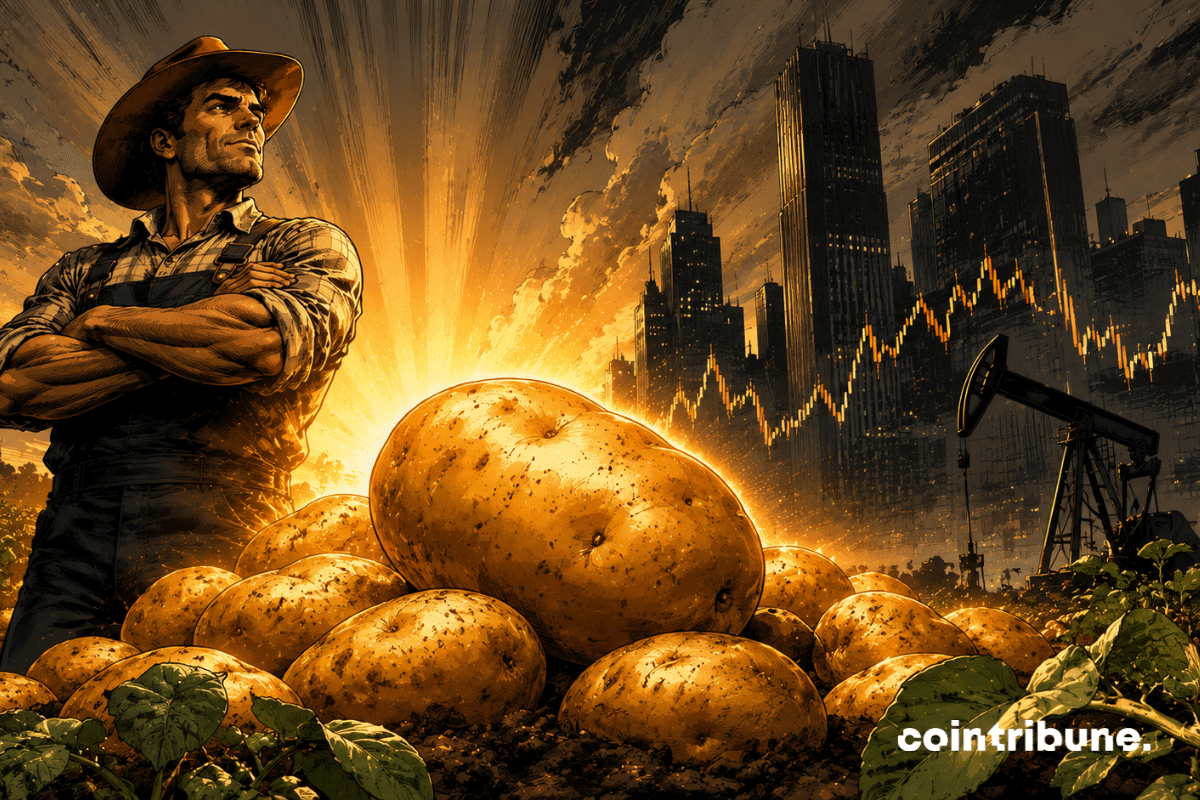
While investors were scrutinizing bitcoin, Nasdaq and oil, a totally unlikely asset had the best performance of the month. In April, potato-related derivatives jumped 705%, taking advantage of market nervousness in the face of geopolitical tensions around Iran. This spectacular surge reveals a global phenomenon: in a climate dominated by global uncertainty, speculative capital is now moving well beyond crypto and technology.
In brief
- Potato-related derivatives recorded a spectacular increase of 705% in less than a month.
- This surge comes in a context marked by geopolitical tensions between the United States and Iran.
- Financial markets have responded to global volatility and risks to commodities.
- Bitcoin, the Nasdaq and oil stocks were overtaken by this unexpected speculative movement.
Geopolitical tensions trigger unexpected surge
While all eyes remained on bitcoin and oil, potato-related CFD contracts recorded the strongest gain of the month. Indeed, potato-backed CFDs jumped 705% in less than a month.
The movement would have started after April 21, during which European prices would have increased from around 2.11 euros to 18.50 euros per 100 kg. This spectacular surge occurred in a context dominated by tensions between Washington and Tehran, as well as concerns surrounding the Strait of Hormuz.
The main elements highlighted are the following:
- A 705% increase in potato-related CFDs in less than a month;
- The increase in European prices from 2.11 euros to 18.50 euros per 100 kg;
- Geopolitical tensions around Iran and the Strait of Hormuz;
- A parallel surge in oil prices;
- The revival of speculation in agricultural raw materials.
This increase is not the result of an immediate shortage. Such an outbreak mainly reflects the reaction of financial markets to the volatility linked to the conflict with Iran, and not a real physical shortage. Markets would therefore have reacted to the prospect of logistical and inflationary disruptions rather than to a real lack of agricultural production.
At the same time, oil continued to rise. Meanwhile, bitcoin returned to the $80,000 threshold. The whole illustrates a climate of extreme tension where each geopolitical risk becomes a speculative catalyst.
Speculative capital temporarily changes ground
Beyond the simple effect of surprise, this sequence also reveals a temporary shift in speculative flows. Even if the crypto market remains dominated by the wait around bitcoin and ETFs, some traders seem to be looking for assets capable of offering much greater variations in the short term. Agricultural and energy raw materials then become prime terrain for opportunistic strategies fueled by geopolitical volatility.
This dynamic contrasts with the dominant narrative of recent months around cryptos. Bitcoin maintains a central position in risky markets, but it no longer monopolizes extreme performances. Investors now appear to favor sectors directly exposed to international shocks, particularly when military tensions threaten global supply chains or transport costs. Even oil stocks benefit from this speculative rotation, as oil stocks trade at a $40 premium.
This situation could mark a global evolution of the financial markets in the coming months. Assets that can respond instantly to geopolitical crises are now attracting some of the capital that previously exclusively fueled crypto. For investors, this episode is a reminder above all that in times of global uncertainty, the most violent movements sometimes emerge where no one is looking.
Maximize your Tremplin.io experience with our 'Read to Earn' program! For every article you read, earn points and access exclusive rewards. Sign up now and start earning benefits.