The year 2024 is notable for significant developments in the cryptocurrency sector. Between the Bitcoin halving, Ripple’s expansion into crypto custody, and strategic collaborations such as Solana and Filecoin, the crypto landscape is experiencing unprecedented momentum. These developments, coupled with Bitcoin’s rise in the global asset rankings and increased Ethereum engagement, as well as calls for tailored regulation of Bitcoin ETFs by US banks, reflect growing maturity and integration cryptocurrencies in the global financial system. Here is a recap of the most notable news from the past week.
Halving Bitcoin 2024: Exceptional forecasts according to Grayscale!
The halving of Bitcoin in 2024 is anticipated with great enthusiasm, notably by Grayscale which predicts an unprecedented event. Grayscale, a major player in digital asset management, emphasizes that, unlike previous halvings, that of 2024 is distinguished by several fundamental developments that could significantly strengthen the Bitcoin ecosystem. The rise of ordinals, the introduction of spot Bitcoin ETFs, and sustained on-chain activity are among the factors that make this halving particularly notable. Reducing Bitcoin issuance from 6.25 to 3.125 BTC per block poses a challenge to miners’ revenues, but miners have prepared by raising funds and selling reserves to compensate.
On the other hand, increasing transaction fees, driven by the rise of ordinals and layer 2 solutions, offer new sources of revenue for miners. With over 59 million assets listed to date, ordinal listing fees have generated over $200 million in transaction fees. This dynamic, coupled with growing interest in Taproot-enabled wallets and exploration of Layer 2 rollups, indicates a collective movement toward improving the scalability and security of the Bitcoin network. Spot Bitcoin ETFs, absorbing some of the selling pressure usually exerted by miners after a halving, could also play a key role in transforming the structure of the Bitcoin market.
Binance: CZ’s sentencing postponed to April 30!
Changpeng Zhao, the former CEO of Binance, convicted of money laundering last year, sees his sentencing postponed until April 30, 2024. Initially scheduled for February 23, 2024, this decision prolongs the uncertainty surrounding the future from one of the largest crypto exchanges in the world. In November 2023, Zhao pleaded guilty as part of a deal with the US government, which also saw Binance pay $4.3 billion in fines. Although prosecutors have raised the possibility of a maximum sentence of 10 years, the guidelines instead suggest a sentence around 18 months, leaving Zhao’s legal future uncertain.
The case had a significant impact on Binance, which saw its dominance in the crypto market erode. From daily volumes exceeding $10 billion in 2021, the exchange saw its transactions drop to $2-3 billion, while its reputation suffered a major blow. The outcome of Zhao’s conviction is crucial to the future of Binance; a lenient sentence could offer the exchange a chance to rebound under the leadership of its new CEO, Richard Teng. However, a hefty penalty could deal a fatal blow to Binance’s reputation and cloud its prospects for future growth.
Crypto: Solana and Filecoin now form a duo!
Solana and Filecoin announce strategic collaboration, promising to revolutionize decentralized data storage. This alliance aims to combine the transaction speed and scalability of Solana with the robustness of Filecoin’s decentralized storage solution. The goal is to make block history more accessible and improve data redundancy, thereby providing increased security and better data accessibility across the globe.
The announcement sparked a mix of excitement and skepticism in the market. Filecoin saw its value increase following the announcement, while Solana saw a slight decline. However, beyond the immediate fluctuations, it is the growing interest in decentralized storage that is making an impression. Solana and Filecoin, despite the challenges, seem determined to strengthen their resolve and contribute to the future of crypto.
Bitcoin becomes the 10th most important asset in the world!
In 2024, Bitcoin made history by joining the top 10 largest global assets by market capitalization, surpassing giants like Tesla and Visa with a valuation close to $1 trillion. This major milestone reflects the growing adoption of Bitcoin and cryptoassets in the world of traditional finance, demonstrating their potential as a store of value in an uncertain macroeconomic environment. With the price approaching $50,000 in early 2024, Bitcoin has not only cemented its position as a major asset but has also sparked bold predictions about its ability to overtake gold in terms of market capitalization in the future.
This global recognition comes after just 15 years of Bitcoin’s existence and highlights its meteoric rise as a new asset class and its remarkable resilience. Bitcoin’s rise also symbolizes the increasing democratization of cryptos among the general public and institutional investors, with more and more companies and investment funds integrating Bitcoin into their portfolios.
Ethereum dries up its supply: 35% of ETH now locked
The Ethereum blockchain has reached a new milestone with over 35% of the total Ether (ETH) supply now locked in smart contracts. This record illustrates the growing utility of Ethereum, reinforced since the adoption of the proof-of-stake consensus mechanism with “The Merge”. The growth in the number of active validators and the increased engagement of ETH in activities such as staking, DeFi protocols, or DAOs demonstrate renewed confidence in the long-term potential of Ethereum.
The hype around Ethereum is likely to intensify with the major “Cancun” technical update scheduled for March 2024, which promises to significantly reduce transaction fees. Additionally, anticipation of a possible SEC approval of spot Ether ETFs is fueling speculation of an imminent bullish move for the ETH price. With a significant portion of ETH supply locked in smart contracts, reduced availability in markets accentuates Ethereum’s upside potential.
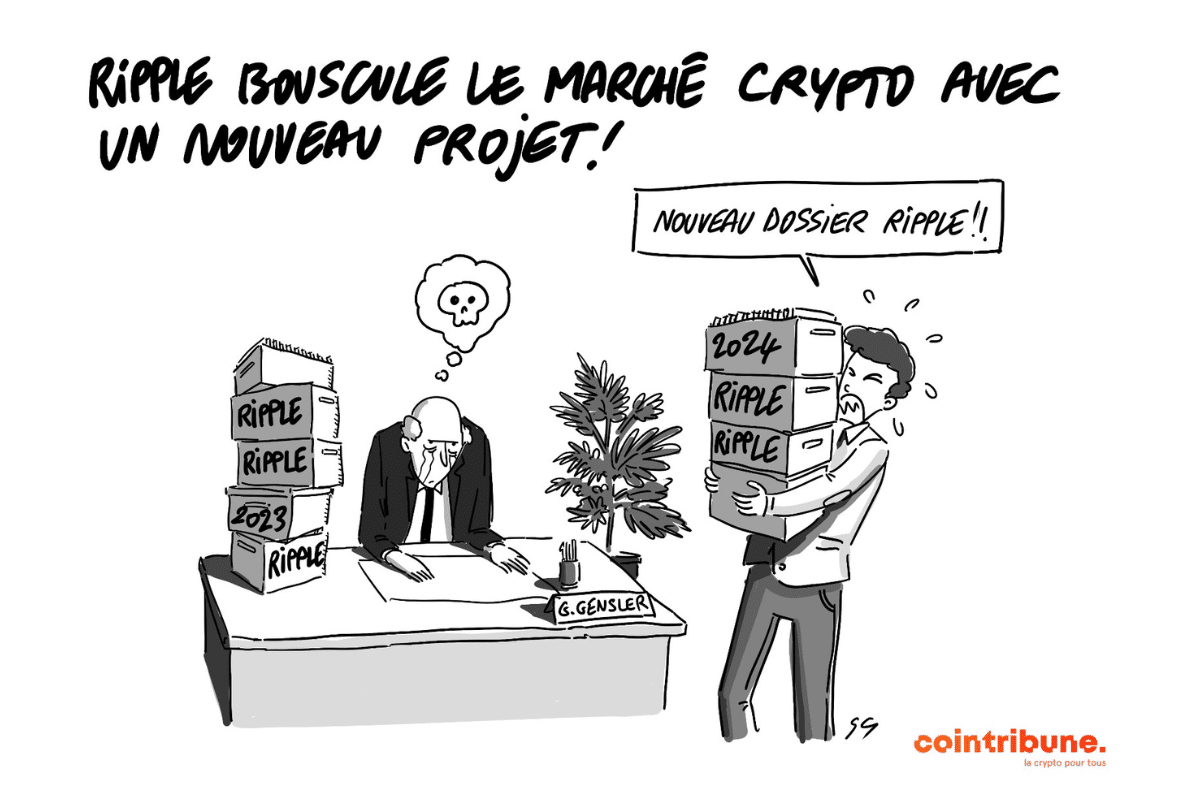
Ripple is revolutionizing the crypto market with a bold project!
Ripple, despite the regulatory and legal challenges it faces, including its ongoing battle with the Securities and Exchange Commission (SEC), is looking to expand its reach by moving into the cryptocurrency custody business. This move marks a significant strategic diversification for Ripple, which is primarily known for its payment solutions. Ripple CEO Brad Garlinghouse announced the company’s plans to expand into crypto custody, highlighting a major shift toward providing services beyond traditional payments. Ripple aims to obtain regulatory approval to acquire Standard Custody and Trust Company, which specializes in digital asset services, representing a step forward in diversifying its offerings and improving its regulatory status.
Ripple’s planned acquisition of Standard Custody aims to strengthen its regulatory licenses, including a coveted New York fiduciary charter, essential for offering a full range of crypto services, including custody and settlement of digital assets. Monica Long, President of Ripple, highlighted the importance of these licenses in providing comprehensive blockchain solutions to financial institutions, combining technology and compliance. The acquisition of Standard Custody, with its New York trust license obtained in May 2021, could strengthen Ripple’s regulatory framework, allowing it to free itself from regulatory complexities and establish its presence globally.
Towards a review of the regulations on Bitcoin ETFs?
A group of US banks recently took the initiative to call on SEC Chairman Gary Gensler to reconsider current regulations regarding Bitcoin ETFs. These institutions, including the Bank Policy Institute, the American Bankers Association, and the Securities Industry and Financial Markets Association, have expressed their desire to actively engage in the Bitcoin ETF market. They point out that current capital and reserve requirements prevent them from providing custody services for Bitcoin ETFs, a role they already play for the majority of other exchange-traded products (ETPs). The coalition highlights the risks to investors and the financial system if regulated banks cannot offer these custody services, pushing investors towards less secure providers.
Banks have also proposed reforms, including revising the definition of cryptos in Staff Accounting Bulletin 121 (SAB 121) to exclude traditional financial assets recorded or transferred on blockchain networks. This distinction would ease certain accounting constraints for banks while maintaining disclosure obligations, promoting transparent and regulated participation in the digital asset ecosystem. These proposals aim to balance the need for transparency for investors with integrating banks into the crypto market in a meaningful way.
This is the main thing to remember for this week. But if you want a more detailed recap and in-depth analysis straight to your inbox, feel free to subscribe to our weekly newsletter.
Maximize your Tremplin.io experience with our ‘Read to Earn’ program! For every article you read, earn points and access exclusive rewards. Sign up now and start earning benefits.