Between revolutionary announcements, technological developments and regulatory turbulence, the crypto ecosystem continues to prove that it is both a territory of limitless innovation and a field of regulatory and economic battles. Here is a summary of the most notable news from the past week around Bitcoin, Ethereum, Binance and Solana, etc.
A record drop in Bitcoin reserves on exchanges
In 2024, Bitcoin reserves held by centralized exchanges reached their lowest level since early 2021. More than 90,700 Bitcoins were withdrawn from major exchanges in the last month, marking a significant drop in available reserves . This massive movement of withdrawals occurs in a context of a general rise in the price of cryptos, which adds an intriguing dimension to this capital flight.
Various factors could explain this downward trend in reserves on exchanges. Increased awareness of the risks of keeping funds on centralized platforms, exacerbated by a recent wave of hacks and bankruptcies, appears to be encouraging investors to opt for more autonomous management of their digital assets. This preference for individual storage on non-custodial wallets (cold wallets) and the growing adoption of decentralized financial protocols could signify a major pivot towards the principles of decentralized finance, reaffirming financial autonomy as a central pillar of the philosophy crypto.
Binance establishes its first board of directors
Binance, one of the largest crypto exchanges in the world, has reached a major milestone by announcing the creation of its first board of directors. This new governance structure includes seven members, including four internal and three independent. Gabriel Abed, former Barbados ambassador to the United Arab Emirates, will chair this council, bringing his expertise in diplomacy and international affairs. The appointment of this council comes in a context where Binance seeks to strengthen its compliance in the face of regulatory challenges encountered in several countries.
The composition of Binance's board of directors is raising discussions within the crypto community. Some experts welcome this initiative as a step towards more transparent and accountable governance. However, concerns remain about the actual independence of the board, particularly due to the predominance of internal members. This situation could potentially limit the board's ability to exercise effective oversight, making it more likely to simply validate management's decisions rather than question them. The presence of independent members is, however, seen as an opportunity to enrich the board with a diversity of expertise and perspectives.
Ripple challenges stablecoin giants
Ripple, the company behind the famous XRP, is boldly launching into the stablecoin market, a sector previously dominated by Circle with its USDC and Tether with its USDT. Ripple's plan is to introduce a US dollar-backed stablecoin, which will initially be integrated on the XRP Ledger and the Ethereum blockchain. The move comes despite recent controversies that have rocked the stablecoin market, illustrating Ripple's ambition to establish a firm foothold in this competitive space.
To distinguish itself, Ripple is taking inspiration from Circle's model by ensuring that its stablecoin will be collateralized by dollar deposits, short-term US Treasury bills, and other liquid assets. In addition, monthly certifications from external auditors will be put in place to reassure investors as to the strength of the reserves. David Schwartz, Ripple's CTO, emphasizes transparency as a key strategy for navigating the often turbulent stablecoin landscape, seeking to establish Ripple's credibility and trustworthiness in a growing market.
Tether invests heavily in Bitcoin
Tether, the stablecoin giant, made a bold move by acquiring 8,889 bitcoins, representing an investment of $627 million. This action marks a strategic turning point and affirms Tether's long-term vision in the crypto ecosystem. With this acquisition, Tether is not only diversifying its reserves, it is also resolutely banking on the value and sustainability of bitcoin.
Furthermore, Tether is not limited to accumulating bitcoins, but also expanding its horizons by investing in cutting-edge technologies like artificial intelligence and bitcoin mining. This strategic diversification towards innovation shows Tether's ambition to become a major player in the digital assets industry and highlights its desire to drive technological progress while consolidating its supremacy in the crypto sector.
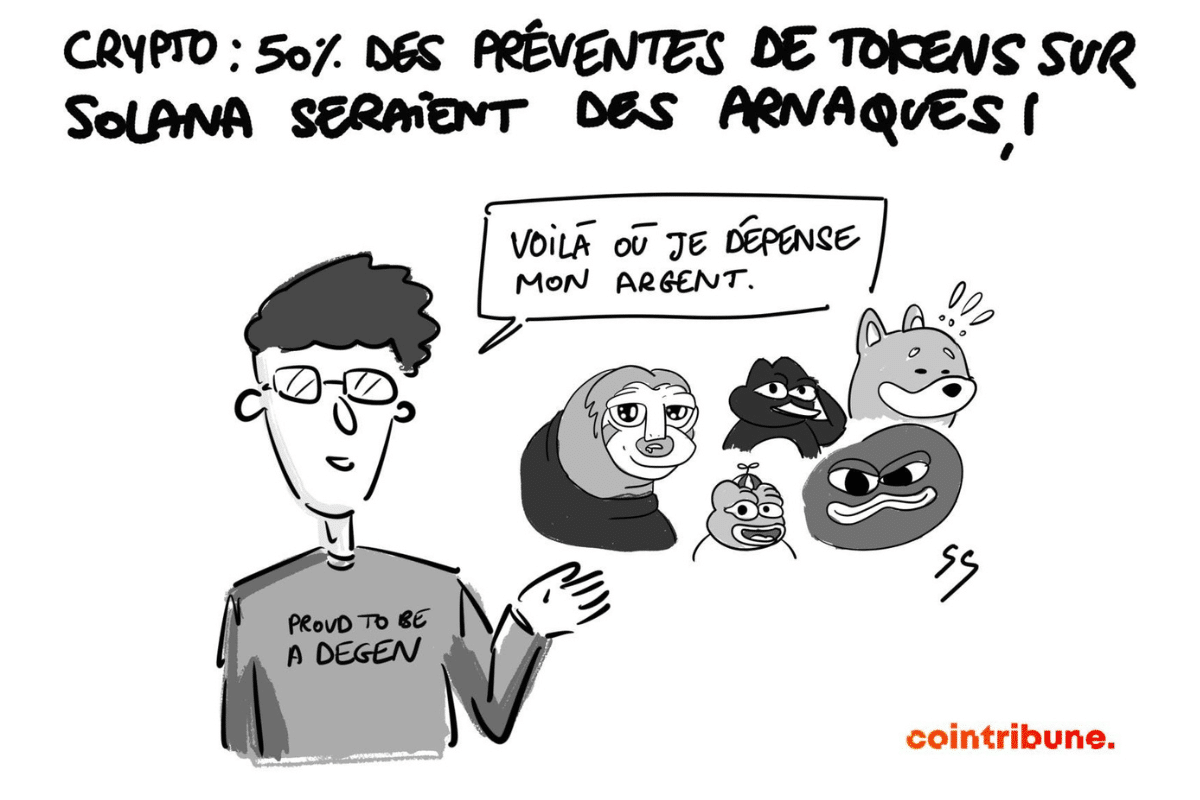
Solana launches offensive against fraudulent memecoins
Faced with the proliferation of memecoins deemed offensive on its blockchain, Solana took radical measures by establishing filters to eliminate inappropriate content. During a panel discussion at the BUIDL Asia Summit, Solana executives announced the implementation of block lists by wallet developers, allowing access to these tokens to be controlled while preserving the open nature of the network.
Solana's approach reflects current moderation challenges in decentralized spaces and illustrates an attempt to respect the principles of decentralization while conforming operations to regulatory and ethical standards.
Ethereum sets new records
Ethereum saw spectacular growth in the first quarter of 2024, tripling its profits to $370 million, with revenue generated primarily by an increase in transaction fees that totaled $1.2 billion. This increase in fees stems from a spike in transaction costs, influenced by the increase in the price of the ETH token.
Despite the high fees, usage of the Ethereum network continued to grow, with total transactions up 8.4%. Decentralized finance (DeFi) on Ethereum has also seen its total value locked increase significantly, demonstrating strong user adoption and engagement despite scalability challenges and transaction costs.
PayPal reinvents money transfers
PayPal introduced a big innovation in cross-border money transfers by allowing its US users to use its stablecoin, PayPal USD (PYUSD), to make fee-free international transfers through the Xoom service. This initiative eliminates transaction fees, providing a cost-effective alternative to traditional methods and reducing the overall cost of sending remittances internationally.
This development is seen as a major step forward in merging traditional finance with blockchain technology. PayPal, by partnering with the Paxos Trust Company for the security of PYUSD, is strategically positioning itself as an innovative player in the financial sector and putting pressure on other market participants to innovate and adopt cryptocurrencies.
This is the main thing to remember for this week. But if you want a more detailed recap and in-depth analysis straight to your inbox, feel free to subscribe to our weekly newsletter.
Maximize your Tremplin.io experience with our 'Read to Earn' program! For every article you read, earn points and access exclusive rewards. Sign up now and start earning benefits.