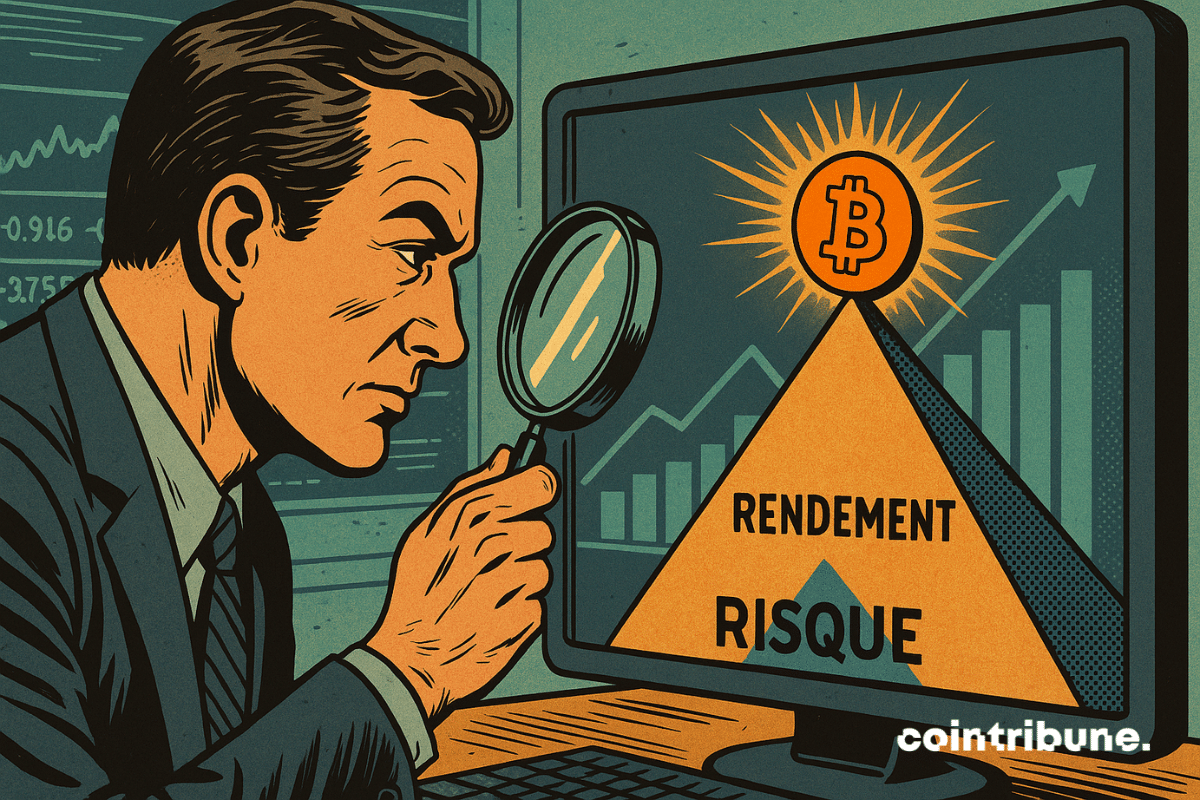
What if the market was seriously wrong about bitcoin? For André Dragosch, head of research at Bitwise Europe, the current context is strangely reminiscent of that of March 2020, during the crash caused by the pandemic. In a tense post-halving climate and faced with contradictory macroeconomic signals, he believes that bitcoin today offers one of its best risk/return profiles since the health crisis. This declaration shakes up certainties and rekindles the debate on the timing of entry into the market.
In brief
- A Bitwise analyst compares the current Bitcoin environment to that of the COVID crash of March 2020.
- He says the market is overvaluing global economic risk, creating a rare asymmetric opportunity.
- Several negative elements are already integrated into the current price of Bitcoin, according to this reading.
- The post-stimulus economic recovery could support growth until 2026, as after the health crisis.
The return of an extreme scenario: when the bitcoin market overestimates risk
While Bitcoin shows a strong negative correlation with USDT, André Dragosch, head of research at Bitwise Europe, said in a post on X (ex-Twitter): “the last time I saw such risk-return asymmetry was during COVID”.
He refers to the month of March 2020, when panic linked to the pandemic caused the price of bitcoin to fall from almost $8,000 to less than $5,000, before the asset rebounded strongly in the following months.
Dragosch sees similarities today with this period, citing a comparable macroeconomic environment, marked by an excessive perception of risk by the market. “We face a similar macroeconomic environment”he insists, believing that the crypto market currently includes a far too pessimistic vision of global growth.
According to Dragosch, market participants are anticipating a major economic deterioration, even though some macroeconomic signals suggest otherwise. He notes that several negative elements are already incorporated into current prices. Among these factorsThere is :
- The prolonged cycle of monetary tightening carried out by the American Federal Reserve since 2022;
- The collapse of the FTX platform, which significantly eroded institutional trust in the sector;
- The perceived slowdown in the global economy, which Dragosch believes is exaggerated in market expectations.
He adds that the delayed effects of post-COVID expansionary monetary policies could support global growth until 2026, as was the case in the years following the health crisis. In this context, Dragosch believes that the market currently offers an asymmetric opportunity favorable to investors in the medium term.
Between market skepticism and alternative scenarios
If Dragosch's reading suggests a potential opportunity, it is not unanimously shared within the crypto community.
Independent trader Alessio Rastani estimated that the current decline in bitcoin does not necessarily mark the start of a prolonged bear cycle. According to him, the observed configuration, a peak followed by a significant correction, historically corresponds to a recurring pattern, which has, in 75% of past cases, preceded a strong recovery. This statistical reading contrasts with prevailing fears, especially since bitcoin has lost more than 17% over the past 30 days, briefly falling below $90,000 on November 20 before climbing back above that threshold.
For his part, Tom Lee, president of BitMine, remains confident in the ability of bitcoin to rebound. During a speech on November 27, he said he expected the crypto to return to $100,000 by the end of the year, or even reach new highs.
This perspective is based, according to him, on a gradual normalization of the geopolitical climate and a return of liquidity to the markets. Such expectations contrast with the current dynamic, marked by a climate of risk aversion, reinforced by the announcement of new 100% customs taxes on Chinese products by the Trump administration, an event which coincided with a liquidation of 19 billion dollars on the crypto market on October 10.
In a still unpredictable market, bitcoin oscillates between hope of recovery and risk of prolonged correction. André Dragosch's analysis predicts nothing, but highlights a latent imbalance. It remains to be seen whether this inflection point will initiate a new bullish cycle.
Maximize your Tremplin.io experience with our 'Read to Earn' program! For every article you read, earn points and access exclusive rewards. Sign up now and start earning benefits.