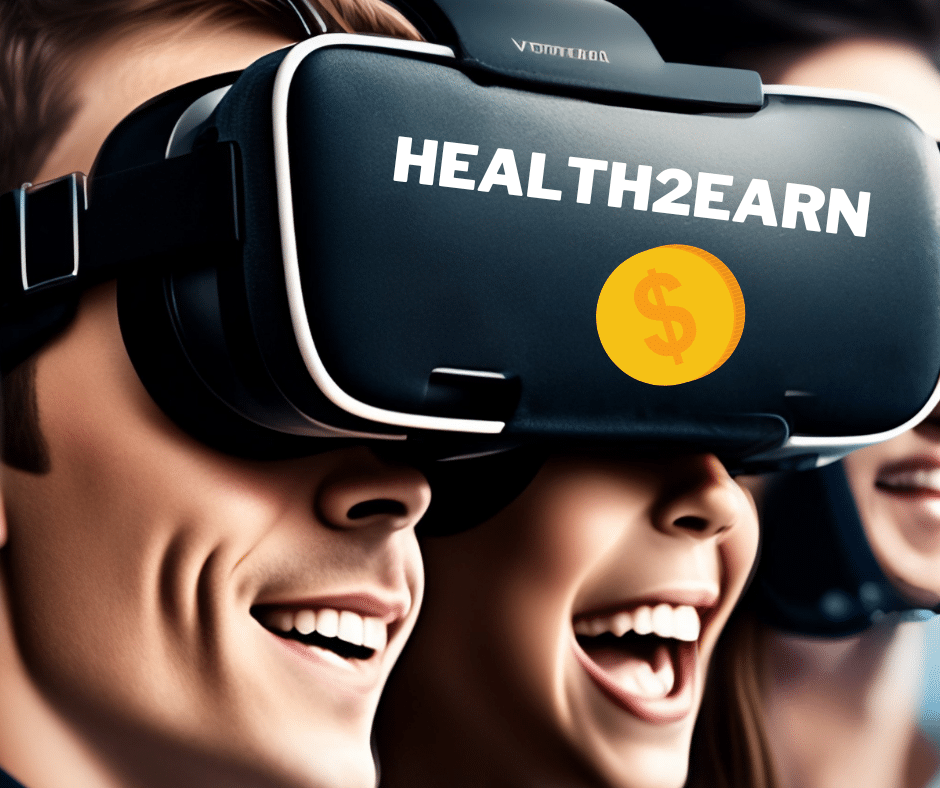
The blockchain and cryptocurrency industry has seen the development of projects related to health and well-being in the last two years. They are known as Move-to-Earn or fitness finance. These public or private initiatives are trying to revolutionize the way we take care of ourselves and others!
Technology at the service of sport
Who has never been demotivated at the idea of playing sports? Who has ever felt guilty by eating a food that is too fatty or too sweet? Obviously, we are not here to moralize or pass judgment. On the contrary, these situations show us that motivation and health behaviors are variable.
For two decades now, electronics and connected objects make it possible to measure our physical activity (e.g. number of steps). As well as the vital constants of our body (eg blood pressure, heart rate, etc.).
So much so that virtual communities have been created in order to compare its results with our friends or our family. Seeing and being seen in its user community has become the norm! That being said, many projects are still struggling to Sustainably maintain user engagement. And this is where cryptocurrencies and blockchain come in.
“I prove a health behavior, I win a token! »
Now it is possible todigitally authenticate information related to our physical activity or nutrition. These will then be used to generate a reward. The reward will be released to the benefit of the user if proof of their action or inaction is proven and validated in the blockchain.
Moreover, and as we will see, the granting of a reward increases an adult’s adherence to the practice of a physical activity during the first 6 months. This reward can be translated into a token of a cryptocurrency. But also by a reduction in a gym or a voucher from an organic products merchant.
Beyond mere financial gain, the possession of a token can also confer a right to vote or an access authorization to its holder. From then on, the latter will have the opportunity to participate in the governance of the project. He can also have privileged access to a sporting event or the presale of a sports item via a so-called service token (utility token). Many opportunities are thus offered to all project leaders wishing to create a data and token economy (token-economy in english) in the world of health, medicine, sport and well-being.
The emergence of Health2Earn
In a constantly changing world, marked by the dazzling development of new technologies and the growing weight of the Internet of Things (IoT), health and well-being have become major topics. This concern for a better quality of life, accompanied by the need to take charge of one’s own well-being, opens up new perspectives and generates breakthrough innovations such as Health2Earns.
What is a Health2Earn?
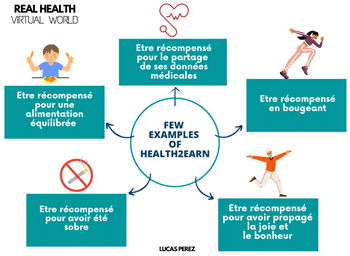
A Health2Earn solution allows a user to earn virtual (token, NFT) or physical (discount, equipment) rewards if he performs an action related to his health. For example, a digital token will be allocated if the user of a Health2Earn application walks, runs, eats healthy or shares their medical data. But how can we prove it?
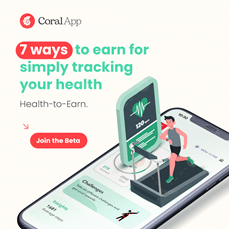
This is where technology and projects like CORALAPP come in. The team behind this Binance Labs-backed solution can use sensors and data in our phones to measure certain walking and running behaviors, but also vital constants related to our heart health for example.
Once the data related to an action is collected and stored in the blockchain, then it becomes impossible to refute it. The fun aspect of these solutions, inspired by the world of games, can be very addictive. This young American startup is trying to breathe new life into physical activity so that it is no longer seen as a chore, but rather as a game.
Despite the media attention in 2022 to “Move-to-Earn” projects based primarily on the number of kilometers traveled, the current trend seems more holistic and focuses on overall health.
NOW, new Health2Earn solutions such as CORALAPP collect medical information such as blood pressure to better understand our bodies and determine personalized goals. Move-to-Earn solutions are gradually shifting to Health-to-Earn models by partnering with hospitals or the pharmaceutical industry to encourage, for example, type 2 diabetics to engage in regular physical activity. The Health-to-Earn revolution is underway!
Between opportunities and ongoing projects
Many projects such as CORALAPP and VOSKALIA are developing and offering original and ambitious solutions to promote physical and mental health through NFTs and for a “token-economy” of happiness.
The 1ʳᵉ app rewarding the overall health of the user with a focus biewellness and fitness
CORALAPP is one of America’s most promising Web3 sports and health companies. The young shoot has developed an application allowing the user to fully control their personal data related to their health and well-being.
As part of the CORALAPP ecosystem, an individual can decide to share their health data in order to earn tokens and NFTs. Adopting healthy behaviors that can help us maintain our physical health and our social relationships is now rewarded. Moreover, the solution could well become in the coming years a public health tool helping to fight against sedentary lifestyles and associated pathologies such as obesity, osteoporosis or depression. Whether in the West, in Africa or in Asia, a question then persists: How to motivate the citizen to practice a physical activity in the long term? Rewarding healthy health behavior is part of the answer, according to a very serious study.
Promoting mental and physical health through NFTs
We live in a fast-paced society! According to the World Health Organization (WHO), since the start of the COVID-19 pandemic, a global mental health crisis has emerged among millions of people around the world. Mental health is inherent to our general well-being. This quest for general well-being is driven in particular by the VOSKALIA project which allows you to earn NFTs by evolving in a virtual world of adventures and fitness. This solution aims to become a true “virtual hub” of physical and mental well-being where NFTs can be purchased by hospitals and health centers to support the VOSKALIA project.
Issuing and distributing NFTs can also allow patients to be tracked beyond the hospitalization period while securing their personal data. Promoting health through blockchain and digital assets seems original at first glance. However, it also helps to tackle the stigma attached to the disease and to a health system that is sometimes out of breath. NFTs confer, for example, voting rights that would allow hospitals to influence the decisions and results of a private project. The value of an NFT will be determined by its adoption and usefulness within the ecosystem.
Towards a “token-economy” of happiness?
Happiness is more related to a state of satisfaction than to any financial wealth. However, money brings serenity and security not only for ourselves, but also for our family, our friends and the charities to which we contribute if this is the case. It is therefore not inconsistent toimagine a “happiness tokenization” where we would be rewarded for spreading joy around us!
Rewarding someone with a token is not a bad idea to motivate them to do the same. Of course, this implies that happiness is measured and quantified in order to allocate a fair number of tokens among the actors of the ecosystem. The notion of community is once again important and projects like CORALAPP have a role to play in spreading happiness through wellness challenges. Why not also “mint” or create an NFT of happiness ourselves? A kind of Happiness2Earn is worth considering to fund mental health initiatives. Would it be possible to imagine a partnership with the WHO? It is certain that such a challenge could finance healthcare access programs around the world. Additionally, we could imagine granting a token for each person who made another person happy. The economy of happiness has a bright future ahead of it!
Opportunities for the insurance industry
In recent years, insurers have taken an interest in the lifestyle of their members. Behavioral data and health data are highly prized today. Moreover, the American insurance company Oscar has offered its policyholders a connected pedometer watch encouraging them to walk or run in exchange for financial compensation. Thus $1 is paid for each daily objective reached. The user therefore becomes active and no longer passive as seen in the current insurance model. Thanks to the Health2Earn incentive model, insurance could very well condition the reimbursement of a subscription to a gym if the blockchain indicates that the insured goes there regularly.
This logic can also apply to the reassessment of an insurance premium if the insured decides to join a Health2Earn program. The approach taken by the insured must be voluntary and not coerced in order to avoid any discrimination between the “good” and the “less good” insured. Therefore, the protection of privacy and respect for certain ethical principles such as beneficence will be necessary to sustainably integrate the Health2Earn logic into the insurance sector.
The final word
Time for Move-to-Earn projects based on a Pay-to-Play model (I pay to access the game) is almost over. From now on, Health2Earn projects reward the user for their overall health like the CORALAPP project does. It is possible to monetize your behavioral and medical data thanks to the blockchain and thanks to the partnerships made with different actors (hospital sector, pharmaceutical industry, sports and fitness industry, etc.).
The mass adoption of Health2Earn will then depend on all the services and all the goods that we can buy, sell or rent through huge virtual marketplaces related to health and well-being. However, everyone today asks the same questions: What is the value of a token or an NFT in health? How long will I be motivated? We are now actor and owner of our digital data whether related to our money, our movements or our body. The success of the new decentralized economy will depend on widespread use and acceptance. say otherwise, the success of Health2Earn is closely linked to the reliability of the blockchain, the use of cryptocurrencies and a vision of an ever fairer internet!
If you want to be part of the CORALAPP community, and participate in future airdrops, you can download app. For more information, and to participate in the Beta release of 1er virtual world VOSKALIAyou can follow the team on Twitter.
At the time of writing this article, the author held the following position: Lucas Perez: Entrepreneur and founder of the expertise company Health My Project, I also host a Youtube webinar on health for the European Union and technology.
Receive a digest of news in the world of cryptocurrencies by subscribing to our new service of daily and weekly so you don’t miss any of the essential Tremplin.io!