
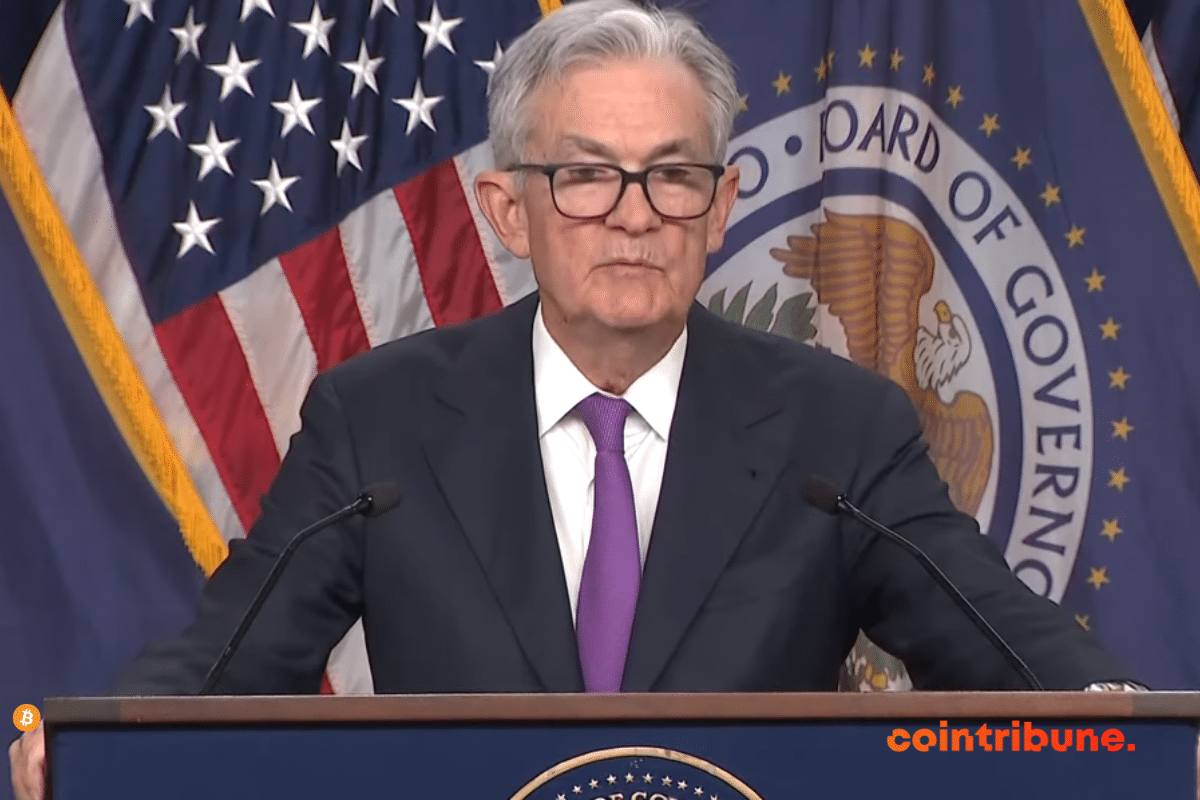
The Fed kept its key rate unchanged, at 5.50% after eleven increases since March 2022.
The Fed slows down
Like the ECB, the American central bank is signaling the end of the rate hike. But if the turn of events was widely anticipated, the famous “dot plot” nevertheless had a surprise in store.
The median projection for the key rate is 5.625% for the end of 2023. We must therefore expect the Fed to further increase its rate before the end of the year. Of the 19 governors, 12 are counting on an additional increase while seven do not anticipate an increase.
Furthermore, two rate cuts are planned for 2024 instead of the four cuts planned in the June projections. Ten governors have indicated they expect two (or fewer) rate cuts. Nine others anticipate three (or more) declines.
Note that a governor, on the contrary, anticipates two new rate increases.
In short, the average of these points suggests only two rate cuts in 2024, compared to four previously anticipated in June.
Jerome Powell warned that rates will remain high for longer than expected, while leaving the door open to more rate hikes:
“We are prepared to raise rates further if necessary. We also intend to maintain our policy at a restrictive level until we are convinced that inflation is sustainably approaching our objective.”
Another very important thing, QT (Quantitative Tightening) continues at the rate of 95 billion dollars per month.
QT
QT refers to the Fed reducing its balance sheet by selling Treasuries and MBS (mortgage-backed securities).
However, you should know that the US government does not pay interest on 5,000 billion in Treasury bonds that the Fed holds on its balance sheet. In short, more QT means more interest to pay for the government.
These monetary tightenings ultimately aim to slow inflation, even if the Fed president wanted to be cautious:
“Rates have increased a lot. They will increase a little more, and once they stop increasing, we won’t reduce them for a while. Inflation has fallen significantly from last year’s peak, but it is still far too high. Things are unpredictable. »
Unfortunately for Jerôme Powell, the Fed does not control the price of a barrel. The latter is approaching 100 dollars, which will quickly cause new inflationary pressures.
This is actually already the case. The Consumer Price Index (CPI) increased by 0.63% in August. This is the largest monthly increase since June 2022.
Raising rates further could trigger a steep recession without being able to control inflation which depends more on OPEC and Russia…
Thus, further rate increases could paradoxically increase the debt of the US government which does not seem to want to reduce its spending, on the contrary. These interests now represent more than 20% of federal government revenue…
The headlong flight into debt continues, strengthening every day the interest of the masses in bitcoin as a store of value.
Receive a summary of the news in the world of cryptocurrencies by subscribing to our new service daily and weekly so you don’t miss anything of the Tremplin.io essentials!


