
Debates around stablecoins are resuming with a vengeance, and tension is rising between bankers and players in the crypto-sphere. While some see it as an innovation capable of modernizing finance, others fear a time bomb. Between alarmist studies, ironic retorts and political blockages, the question is becoming burning: do stablecoins represent a threat to banking stability or simply a new chapter in the crypto revolution?
In brief
- Standard Chartered report predicts massive flight of bank deposits to stablecoins.
- American regional banks appear to be the most exposed to this movement of capital.
- American regional banks appear to be the most exposed to this movement of capital.
- The growing demand for stablecoins comes mainly from emerging markets, far ahead of developed economies.
Stablecoins: the silent bank run that worries the markets
On January 27, 2026, Standard Chartered published a report that had the effect of an explosion: stablecoins, these tokens backed by the dollar, could cause a massive flight of American bank deposits. According to Geoff Kendrick, Head of Digital Asset Research, up to $500 billion could leave bank accounts by 2028.
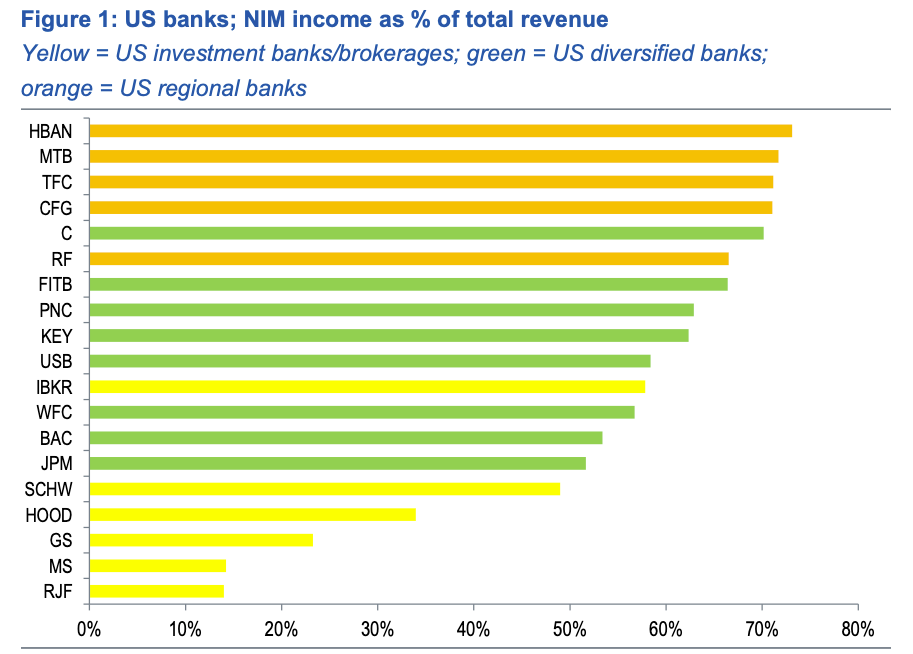
American regional banks, such as Huntington, Truist or M&T, are the most vulnerable: their model is based on the net interest margin (NIM), the engine of their profits. Fewer deposits, less margin, less yield.
The problem is compounded because Tether and Circle, the two largest issuers, keep only a tiny portion of their reserves in banks — 0.02% for Tether and 14.5% for Circle. In other words, funds leave the banking system without returning to it.
Kendrick does not mince his words: for him, stablecoins constitute a real danger for traditional banks, a systemic risk that many still prefer to ignore.
It is therefore no longer crypto bubbles that threaten traditional finance, but the very stability of its deposits.
Crypto regulation broken down: the CLARITY Act and the dollar shooting itself in the foot
At the heart of this silent crisis, a political duel pits traditional finance against the crypto industry. The CLARITY Act, a bill governing stablecoin issuers, is blocked in the US Congress.
It prohibits paying interest on stablecoins – a measure supported by the big banks but rejected by Coinbase, which sees it as an attack on innovation.
Meanwhile, stablecoins are multiplying without a legal framework. They serve as both a refuge from crypto volatility and an alternative to traditional bank payments.
But for Standard Chartered, this expansion is fueling a lasting erosion of deposits and weakening regional banks.
Kendrick makes this clear: domestic demand for stablecoins dries up local bank deposits, while foreign demand does not. He specifies:
We estimate that around two-thirds of current demand for stablecoins comes from emerging markets, and one-third from developed markets.
The paradox is clear: the tokenized dollar strengthens the power of the dollar in the world, but weakens its own institutions.
Key figures from the Standard Chartered report
- $500 billion in US bank deposits at risk by 2028;
- Global stablecoin market projected at $2 trillion;
- Bank reserves: Tether 0.02%, Circle 14.5%;
- Most exposed banks: Huntington, Truist, M&T, CFG;
- Adoption on the rise despite the blocking of the CLARITY Act.
At the Davos Forum, Circle boss Jeremy Allaire put these fears into perspective, saying that the fears surrounding stablecoins are “totally absurd”. According to him, these tools do not destroy finance: they transform it. But through regulatory inaction, governments risk letting the crypto market dictate the stability of the banking system.
Maximize your Tremplin.io experience with our 'Read to Earn' program! For every article you read, earn points and access exclusive rewards. Sign up now and start earning benefits.


