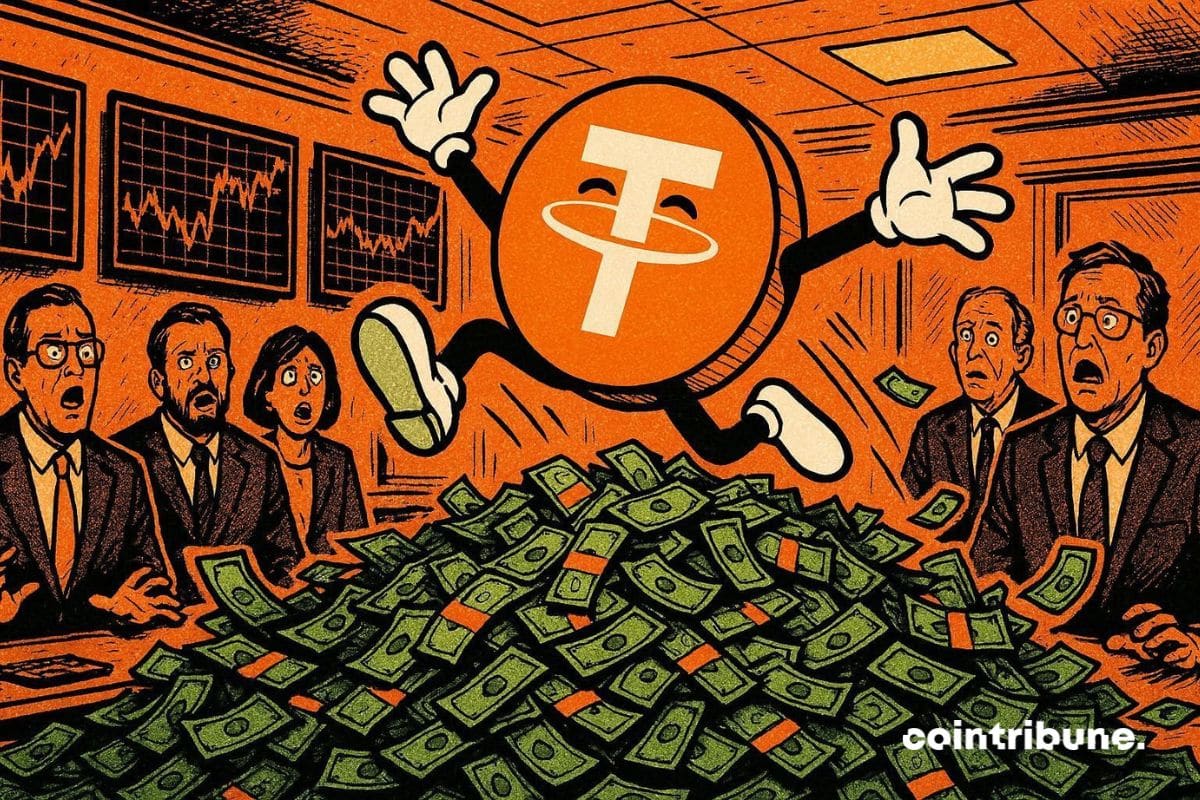
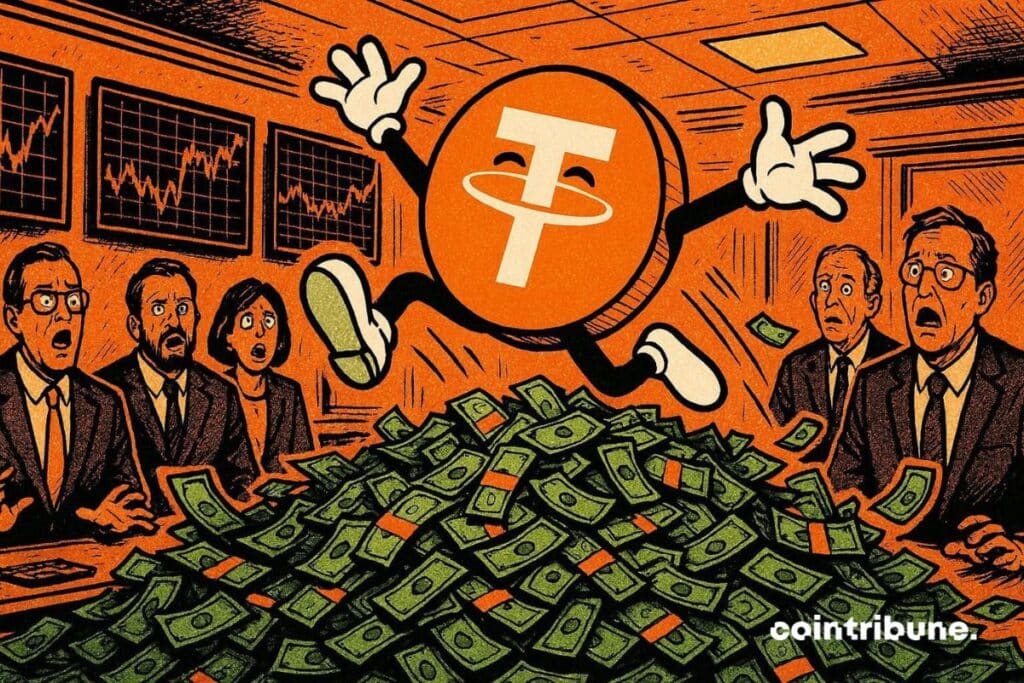
Tether, the issuer of the world's largest stablecoin, USDT, is once again sparking controversy in the crypto sphere. After announcing a fundraising of 20 billion dollars, the company reduces its ambitions to 5 billion dollars and defends a record valuation of 500 billion! Between bold communication and persistent doubts, where does reality lie?
In brief
- Tether cuts its fundraising from $20 billion to $5 billion, calling the original goal a misunderstanding.
- Tether's $500 billion valuation is justified by comparisons to AI giants, but investors are skeptical.
- Despite initiatives like USAt and the accumulation of gold, Tether must convince in the face of increased competition and wary regulators.
Tether: fundraising revised downwards… misunderstanding or strategy?
Initially, Tether targeted a fundraising of $20 billion, an ambitious goal to strengthen its reserves and credibility. However, this announcement was quickly revised downwards, with a target reduced to 5 billion dollars. CEO Paolo Ardoino called the initial goal “misunderstanding”specifying that 20 billion represented a ceiling, and not a fixed target.
This about-face raises questions about the company's transparency. Investors, already wary of stablecoins due to their lack of regulation, see this turnaround as an attempt at communication to mask underlying difficulties. Some crypto analysts believe that Tether seeks to reassure the markets, while avoiding committing too high amounts.
Crypto: a valuation of $500 billion for Tether?
Paolo Ardoino defends Tether’s $500 billion valuation comparing it to that of AI giants like OpenAI. According to him, Tether generates comparable profits, but with immediate profitability, without the initial losses often associated with technology companies. In 2025, the crypto company announced a profit of $10 billion, down slightly, but enough to justify this valuation.
This comparison remains controversial. Indeed, AI companies benefit from a futuristic growth narrative and massive investments in R&D, which is not the case for Tether. Critics then point out that Tether mainly relies on the issuance of stablecoins, a less innovative economic model and more exposed to regulatory risks.
Therefore, to strengthen its credibility, Tether is banking on the diversification of its reserves, including 130 tons of physical gold, and the launch of new stablecoins, such as USAt for the American market. Despite these efforts, crypto investors remain cautious, demanding more tangible evidence before buying into this record valuation.
Between transparency and regulatory challenges… Can Tether convince the market?
Tether faces a major challenge: regaining trust amid widespread distrust of stablecoins. Criticisms mainly focus on the lack of transparency of its reserves and its ambiguous relations with regulators. Despite partial audits and reassuring statements, many believe the crypto company is doing too little to remove doubts.
However, recent initiatives such as the expansion of USDt onto new platforms (Opera's MiniPay) and the launch of USAt under the GENIUS Act, show a desire to comply with regulatory expectations. However, competition is increasing with players like Circle (USDC) and MakerDAO (DAI) gaining credibility through increased transparency. To convince, Tether will have to go further:
- Complete audits;
- Clear communication about its reservations;
- Proactive collaboration with regulators.
Tether plays a central role in the crypto ecosystem, but its future will depend on its ability to provide reassurance. Between excessive ambitions and regulatory challenges, the company finds itself at a crossroads… Will Tether manage to transform its speech into concrete actions to gain the trust of investors and regulators?
Maximize your Tremplin.io experience with our 'Read to Earn' program! For every article you read, earn points and access exclusive rewards. Sign up now and start earning benefits.