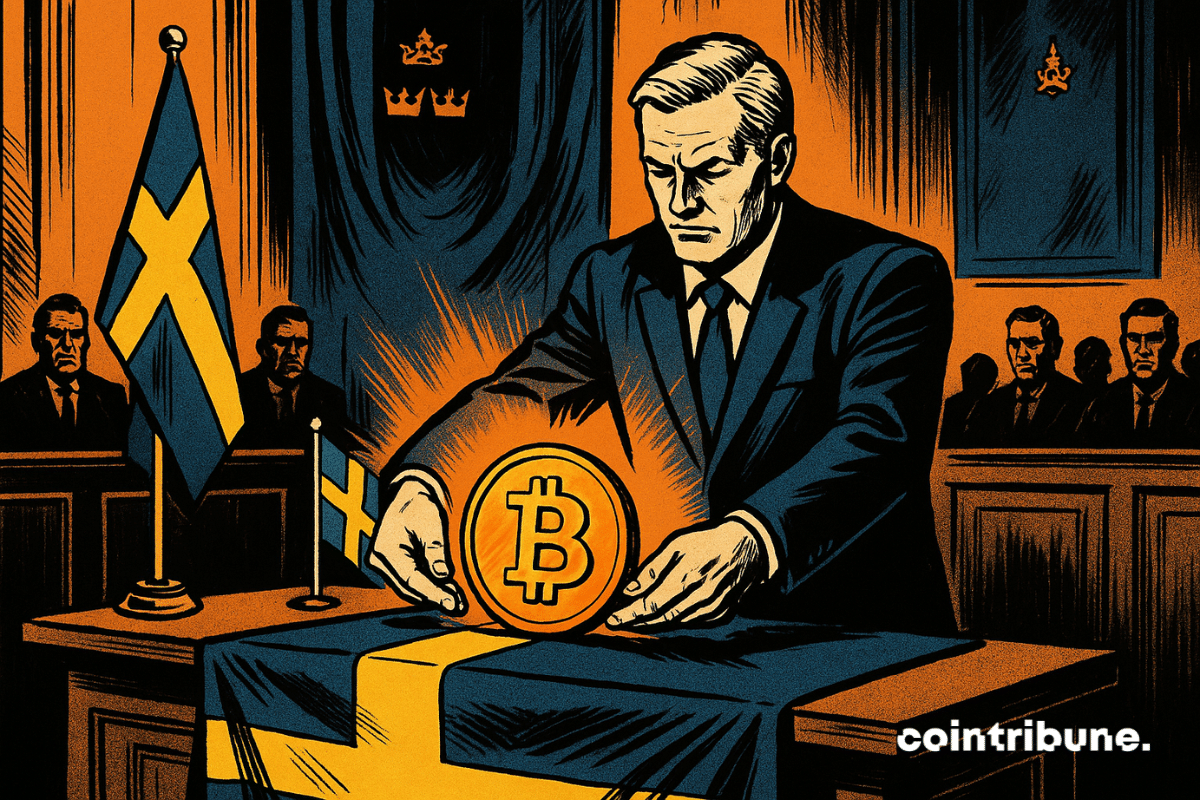
Two Swedish deputies wish to integrate bitcoin into state chests. Behind this initiative, a vision: to transform the role of cryptocurrency in monetary sovereignty. All details below!
In short
- Two Swedish deputies propose a national bitcoin reserve, funded by crisits judicially seized.
- Faced with the internationalization of Bitcoin reserves, Sweden wants to avoid a strategic delay.
Sweden reflects on a Bitcoin national reserve
Dennis Dioukarev and David Perez, members of the Party of the Democrats of Sweden, filed a motion in Parliament on October 1, 2025. Their proposal asked the government to examine the creation of a Bitcoin Strategic Reserve. The idea? Diversify the national reserves currently dominated by gold and foreign currencies.
The reserve could be based on fiscal neutral funding, thanks to the transfer of bitcoins seized by the judicial authorities. Since the end of 2024, the law has also authorized the confiscation of cryptocurrencies even if they do not constitute the heart of an investigation.
The two deputies also want preserve the monetary independence of the Swedish crown. Their text specifies that Sweden must neither modify the definition of his legal currency, nor launch of CBDC.
Why does this strategy gain international field?
This project intervenes in a global context ofprogressive state adoption of bitcoin. In March 2025, former American president Donald Trump signed a decree launching a national BTC reserve funded by confiscated assets. This decision paved the way for other initiatives.
Some countries already have cryptos in public funds. We cite in particular:
- Bhutan;
- El Salvador;
- Kazakhstan.
Others explore this possibility through reservations from legal seizures. This is the case with Latvia, Poland and Finland. In the United States, several states such as Texas, Arizona or New Hampshire have legislated to build their own digital reserves.
For the two Swedish parliamentarians, this trend therefore marks The beginning of a new geopolitical era. They fear that Sweden misses the turn of digital sovereignty, especially in front of its more enterprising Nordic neighbors.
Certainly, the proposal remains under study. However, it opens up a substantive debate on the role of crypto assets (notably bitcoin) in the economic strategy of states. Will other European nations follow this path? To have…
Maximize your Cointribne experience with our 'Read to Earn' program! For each article you read, earn points and access exclusive rewards. Sign up now and start accumulating advantages.