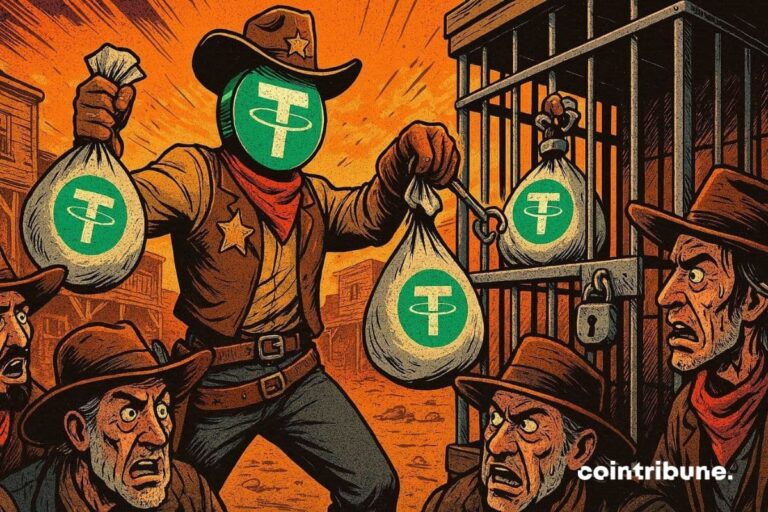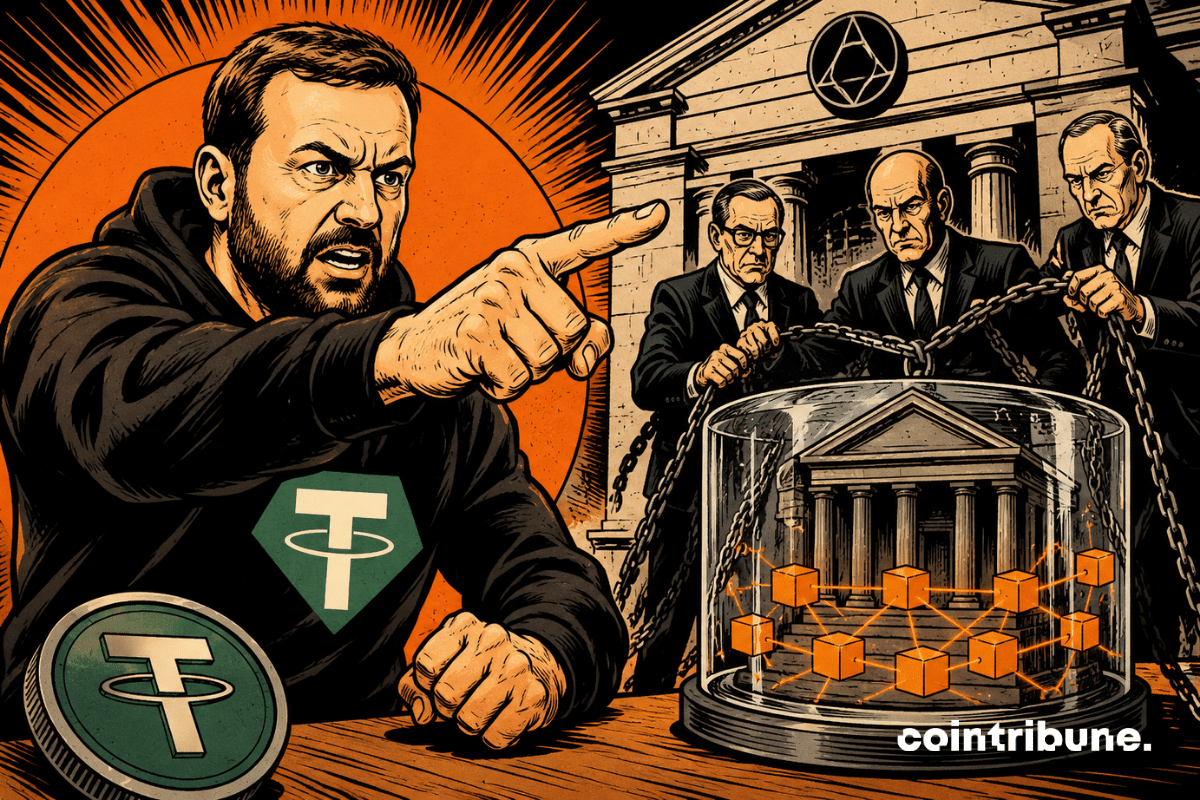
Stablecoins find themselves at the heart of a debate over digital currency. Paolo Ardoino, CEO of Tether, contrasts their model with tokenized bank deposits. According to him, these two forms of money are not based on the same guarantees. He believes that U.S. Treasury reserves provide a stronger hedge. This position responds to criticism from the Bank for International Settlements, which defends tokenized deposits. The debate is about reserves and the future of finance.
In brief
- Tether challenges the BIS over the place of stablecoins versus tokenized bank deposits.
- Paolo Ardoino highlights US Treasury bond reserves as a more solid guarantee.
- USDT exceeds $183 billion in capitalization and is gaining ground in several emerging markets.
- The CLARITY Act revives the debate on a possible transfer of bank savings to stablecoins.
Tether opposes two models with stablecoins
Paolo Ardoino, CEO of Tether, disputes recent statements by Pablo Hernandez de Cos, Director General of the BIS. This one believes that stablecoins encounter several limits to become a widely credible currency. He cites their convertibility, supply and interoperability. The BIS also mentions the risks linked to certain criminal activities.
For Ardoino, the central question above all concerns the composition of the reserves. Stablecoins can, he says, rely almost entirely on US Treasuries. Tokenized bank deposits, conversely, have liquid asset coverage limited to 10%. This difference becomes essential when users compare available warranties.
Pablo Hernandez de Cos defends another approach to financial tokenization. According to the BIS official, tokenized deposits offer a more direct route to exploit this technology. This solution would also retain the foundations of the existing monetary system. The disagreement therefore opposes two visions of digital currency and its reserves.
Reserves and USDT Adoption Fuel Debate
In this confrontation, Ardoino presents stablecoins as an alternative based on a different reserve. He claims that their coverage by US Treasury bonds constitutes a decisive advantage. This comparison directly targets the fractional model associated with tokenized bank deposits. For Tether, the question therefore concerns the assets held and the technology used.
The adoption of USDT brings another element to the debate. Tether proceeds exceed $183 billion in market capitalization according to CoinGecko data. Ardoino also highlights its importance in several emerging markets. According to him, several developed economies rely heavily on USDT for their domestic and foreign trade.
This progression of stablecoins fuels reflection on their financial role. Their development is now attracting the attention of monetary and banking players. At the same time, their detractors point out their difficulties in conversion, interoperability and supply. These criticisms remain at the center of the arguments put forward by the BIS.
The CLARITY Act adds a political dimension
Stablecoins are participating in discussions around the CLARITY Act. Some banks fear a drop in deposits. Their concern concerns the rewards offered by crypto platforms. It could encourage clients to move their savings.
Ardoino directly raises the question of a transfer of savings towards this asset class. He wonders about the consequences for the financial system if users consider them more reliable. This hypothesis opposes complete reserves and fractional mechanisms. He presents this development as still exploratory.
The confrontation between Tether and the BIS should continue around stablecoins. Ardoino insists on coverage by US Treasury bonds. The Bank for International Settlements favors tokenized deposits. Future discussions could clarify the differences between these approaches.
In the short term, the debate should therefore remain focused on reserves, convertibility and the place of banks. The challenge will be to determine how these models can coexist with existing financial infrastructures. The question of trust will remain linked to the nature of the guarantees. For Ardoino, stablecoins can already represent a direct alternative to tokenized deposits.
Maximize your Tremplin.io experience with our ‘Read to Earn’ program! For every article you read, earn points and access exclusive rewards. Sign up now and start earning benefits.