The future of the international monetary system is closely linked to Russian foreign exchange reserves frozen by the West. Bitcoin in ambush.
Saudi Arabia is worried
The international monetary system is at the heart of geopolitical tensions and much will depend on the fate of Russian foreign exchange reserves.
The Financial Times revealed this Monday that the Saudi Finance Minister was alarmed during the last G20 meeting. Do the G7 countries really want to plunder these reserves to finance the war in Ukraine? Do they really realize the consequences of such radical action?
Saudi Arabia and OPEC member countries hold a substantial portion of Western debt. Seizing Russian reserves for good could call into question the international monetary system.
Riyadh has already taken the lead by drastically reducing its US Treasury bond reserves. “The Saudis are very worried”said a European official.
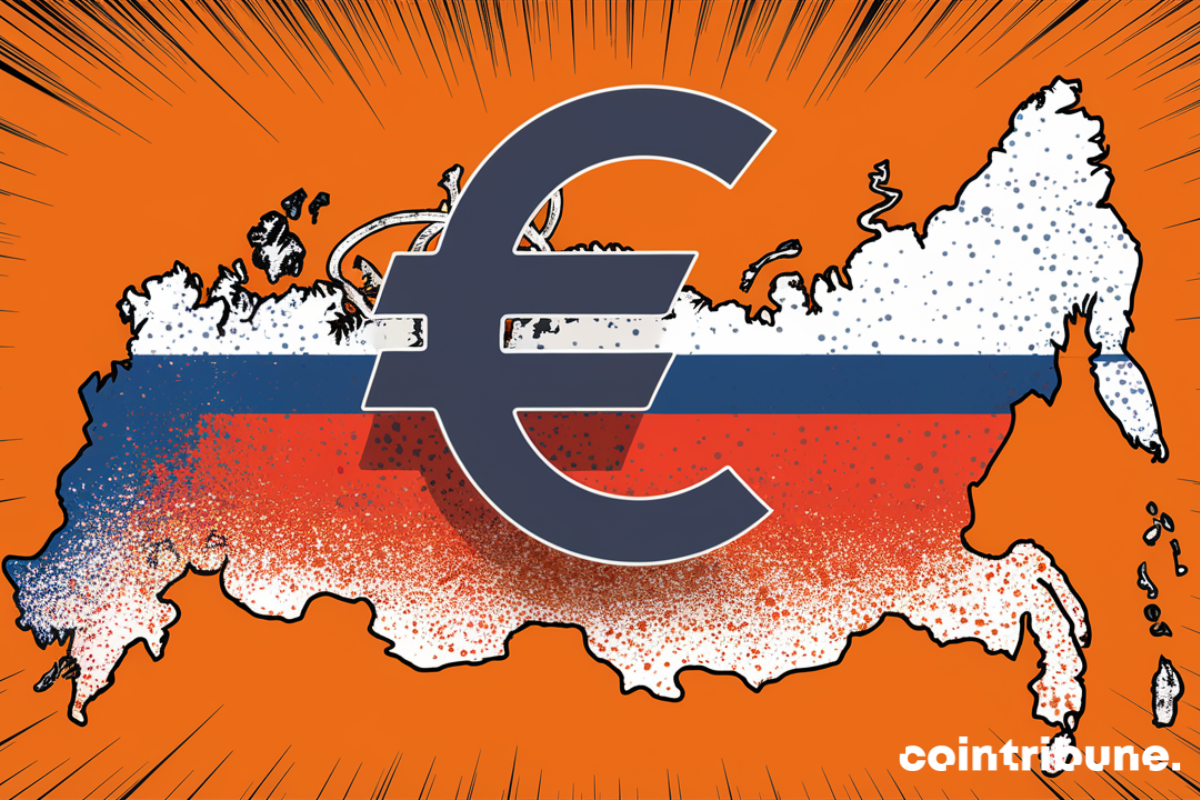
Knowing that seizing Russian foreign exchange reserves would essentially ruin Europe's signature. Indeed, the FT reports that only $5 billion has been frozen by the United States. More than 190 billion are actually euros. The rest being made up of Swiss Francs, yen, etc.
This is why White House advisors say things like: “we have locked the assets together; we would also like to mobilize them together”…
However, G7 central bankers are standing firm, aware of the crucial role that foreign exchange reserves play in the international monetary system. Christine Lagarde warned that “move from freezing of assets to their confiscation, then to their transfer [pourrait comporter le risque de] disrupt the international order that we want to protect”.
Washington ready to sacrifice the Euro
The United States voted at the end of May for a budget of 61 billion dollars to arm Ukraine. The funding bill also grants the White House the right to seize Russian assets held by the United States.
But again, such a measure would be painless for the United States which can only seize $5 billion. “They don’t have much to lose.”declared a European diplomat to the FT.
However, perhaps the United States has the idea of seizing the $770 billion in Chinese reserves… Treasury Secretary Anthony Blinken recently threatened to disconnect certain Chinese banks from the dollar.
In any case, the outright seizure of Russian reserves no longer appears to be on the table. Joe Biden's government is now proposing to release a loan of 50 billion dollars for Ukraine which would be guaranteed via the interest generated by the frozen assets (€2.5 billion per year).
This plan, however, poses a problem if the war ends in the near future. “Russia may agree to make territorial concessions to Ukraine in exchange for its frozen funds. You can't do that if you've already mortgaged those assets.”said a German official.
The EU is instead in favor of directly using the interest generated by Russian assets to jointly purchase weapons for Ukraine. This would be much less risky than directly monopolizing Russian reserves.
The old continent is wary of anything that could negatively affect the euro's status as an international reserve currency. The single currency represents 22% of international transactions and 20% foreign exchange reserves.
Response through BRICS
Let us also not forget that Russia can respond by seizing European assets located in Russia. Foreign companies hold assets worth $285 billion there, according to a study by Armin Steinbachprofessor at HEC.
The largest portion (~$105 billion) is owned by European companies. That’s more than three times the $36 billion in assets held by U.S. companies.
More generally, Russian retaliation will be felt especially through the BRICS and the thirty nations that wish to join the club. Russia chairs the group in 2024 and intends to accelerate the dedollarization process.
However, trading in national currencies has its limits. For example, India has little to sell to Russia in exchange for its oil. Moscow therefore stopped accepting the rupee as payment.
The question of replacing the dollar and the euro remains unanswered. Gold is obviously on the rise, but it is not a payment system. The metal does not travel through the fiber.
If Vladimir Putin truly wants to strip the United States of its exorbitant privilege, it will be necessary to do so with a state-of-the-art currency.
A world where all nations without exception trade on equal terms requires a neutral currency and payment system. Bitcoin is cut out for this role since it is a stateless currency as well as an uncensorable payment network in which everyone is free to participate.
The protection of the petrodollar is largely responsible for current geopolitical tensions. It is time to forge a new international monetary system and bitcoin can become a centerpiece.
Maximize your Tremplin.io experience with our 'Read to Earn' program! For every article you read, earn points and access exclusive rewards. Sign up now and start earning benefits.