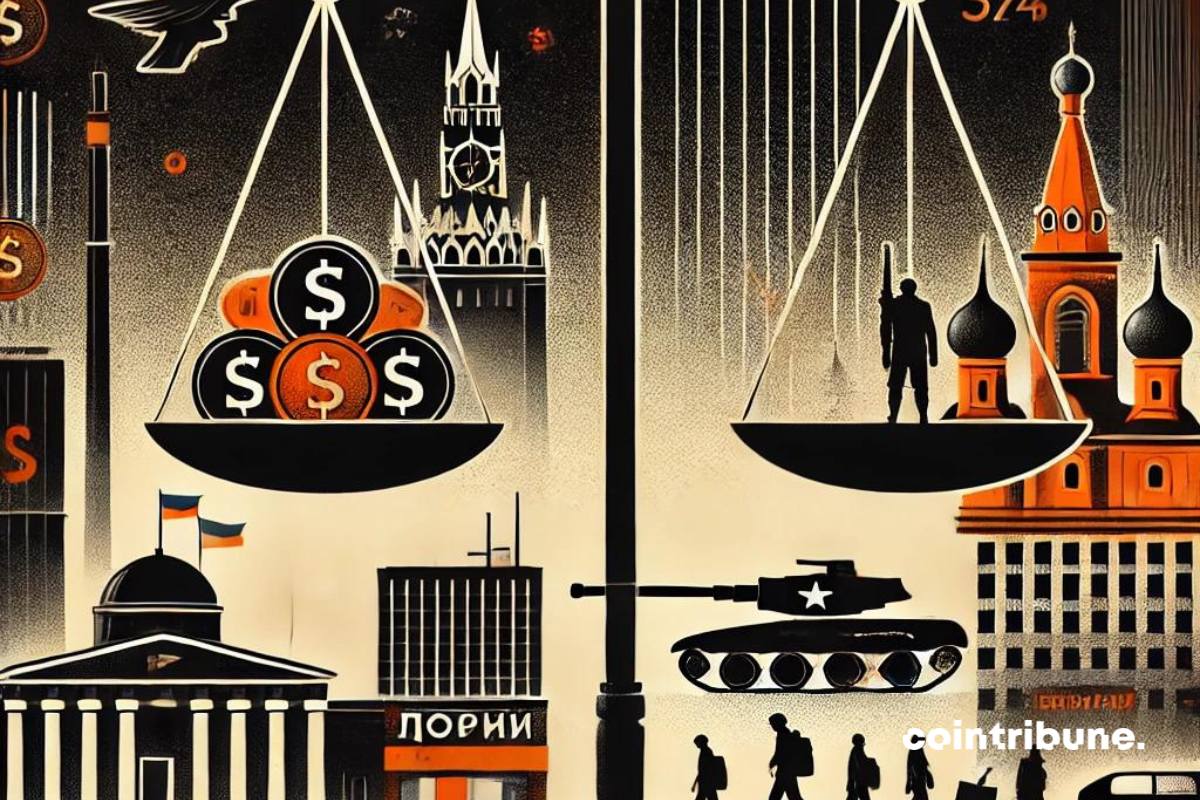
Russia faces a growing threat of stagflation as its economy slows under the weight of massive military spending and soaring inflation. With inflation expected to hit 9% in August 2024 and the economy reeling from massive military spending since the invasion of Ukraine, experts are concerned about the long-term repercussions.
Rising inflation and the threat of stagflation
Russia is facing a steady rise in prices, especially for basic consumer goods. Indeed, stagflation, that is, the combination of stagnant growth and high inflation, is becoming an increasingly plausible reality for Russia. The government’s efforts to stimulate the economy, through massive spending on the military and defense-related industries, have contributed to this overheating. However, these same efforts are creating an inflationary spiral which weighs heavily on the non-military private sector.
In an attempt to correct things, the Russian Central Bank, headed by Elvira NABIOULLINA, announced yesterday, Friday, September 13, 2024, a new increase in its key rate to 19%, after having already raised it from 16% to 18% in July. This monetary tightening aims to counter this galloping inflation which threatens to further weigh down the purchasing power of Russians.
In addition to the immediate impact of inflation on the population, the exodus of Russian workers (whether mobilized or not) leaves millions of jobs vacant. The industrial sector is also penalized by Western sanctions, in particular restricted access to critical technologies, which slows innovation and weakens production chains.
An unsustainable economic model?
Despite warnings from the Central Bank, Russia continues to militarize its economy on a massive scale. Since the start of the war in Ukraine, military spending has increased by 50%, temporarily boosting GDP growth. Wages have risen in defense-related sectors, and unemployment is at a 15-year low. Yet this improvement is far from widespread. International sanctions on Western technologies are holding back innovation and productivity in civilian sectors, limiting the modernization of the Russian economy.
This growing dependence on the war effort and military financing raises questions about the sustainability of the current economic model. According to economist Maxim BOUEV, Russia is trapped in a vicious circle of inflation and military spending: “The stimulus goes to war, the rest of the economy suffers from the rise in prices”. In the long term, this situation could accentuate the demodernization of the economy, already marked by a return to methods and standards inherited from the Soviet era. Even if Russia still has $300 billion in reserves and has a low debt rate, these resources will not be able to compensate for productivity losses indefinitely.
In the short term, Russia appears capable of sustaining its war effort and containing the effects of sanctions thanks to its financial reserves and hydrocarbon revenues. However, the threat of stagflation, combined with excessive militarization of the economy, suggests an uncertain future.
Maximize your Tremplin.io experience with our 'Read to Earn' program! For every article you read, earn points and access exclusive rewards. Sign up now and start earning benefits.