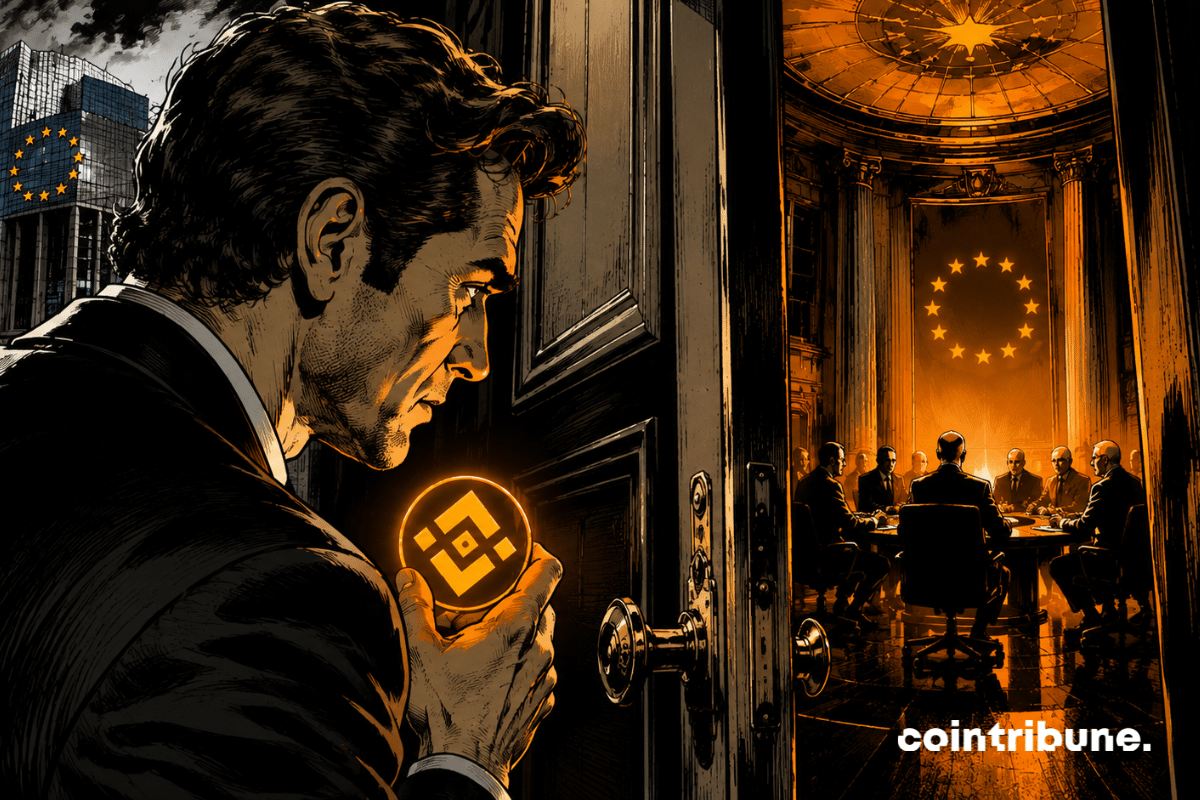
The relentless countdown to alignment with European regulations has just passed a critical phase which could redefine the mapping of exchange platforms within the European Union. Although the global Crypto Market Regulation (MiCA) transition period will end permanently on 1er July 2026, Binance's European infrastructure is shaking on its foundations after major revelations about its license application in Greece.
In brief
- Binance could see its MiCA license application rejected in Greece, compromising its access to the European market.
- However, the exchange claims to meet regulatory requirements and ensures that it has not received any negative signals from the authorities.
- Suspicions of influence from the European Central Bank are fueling the debate around the independence of the approval process.
- Several experts believe that the ECB can indirectly influence the decisions of national regulators despite the limits set by MiCA.
MiCA: the regulatory standoff around Greek approval
The application for approval as a crypto service provider (CASP) that Binance submitted in January to the Greek markets authority is reportedly on the verge of being refused, shaking up the crypto landscape in Europe. Indeed, the Hellenic Capital Market Commission (HCMC) should definitively reject the platform's request before the deadline, which would deprive Binance of the precious sesame allowing it to operate legally in the 27 member states through the passport rights mechanism.
Faced with continued leaks, the HCMC invoked its confidentiality obligations to refuse any official comment, leaving the market in total uncertainty a few days before the regulatory deadline. Here are the main elements of this factual confrontation:
- The reason for the potential exclusion: the application was adequately prepared but not 100% ready to pass;
- The official version of the exchange: the company has firmly clarified their position: “our understanding is that HCMC has completed its review of the application and has deemed it to be compliant with MiCA requirements” ;
- Collaborative antecedents: the platform's management insists that it “has worked constructively with regulators over the past 18 months” and that she did not receive “no formal indication to the contrary”from the Athenian authorities.
This discrepancy in interpretation calls into question the behind-the-scenes of a procedure that is nevertheless highly standardized, while the global governance of Binance was still praising the advantages of Greece in establishing the continental anchorage of its group.
The influence of Frankfurt and the ECB doctrine
The affair has taken an eminently political turn, beyond the simple technical criteria for assessing conformity. Thus, some observers believe that Christine Lagarde,
President of the European Central Bank, would have called Kyriakos Mitsotakis, the Greek Prime Minister, herself to tell him bluntly that “Binance is not welcome in Europe”.
If the ECB does not have, statutorily, direct power to grant or withdraw exchange licenses under the MiCA regime, lawyers point out that nothing prevents it from exercising moral authority. As expert David Lesperance points out, “nothing within the framework of MiCA would prevent a third party such as the ECB from providing its opinion to this national authority at the request of Binance” illustrating an obvious porosity between local technical assessment and high-level financial diplomacy.
This unofficial interference reflects the Frankfurt institution's deep concerns regarding the systemic integration of private cryptos and stablecoins into European financial infrastructures. MiCA formally limits ECB consultation to issuers of currency-backed assets, but this distinction is more tenuous when it comes to the largest exchange on the planet.
Yuriy Brisov, specialist lawyer, ensures that the European text “contains nothing that prohibits the ECB from speaking to, analyzing or sharing its concerns”with a competent national authority, while clarifying that this is a concern that MiCA “put in the chapter on stablecoins, not in the one on exchange licenses”. For Frankfurt, the priority remains the protection of monetary sovereignty through the development of a digital euro.
Future implications for the European Web3 market
The stakes of this transatlantic confrontation could well reconsider the very notion of regulatory harmonization within the European Union. If the political blockage of Binance is confirmed in defiance of technical conformity assessments, this would prove that the exercise of passporting rights remains subject to the discretionary imperatives of large states and central banks.
This de facto fragmentation could encourage sector giants to shift their demands to jurisdictions considered more resilient to macroeconomic pressures, or to abandon significant market shares in favor of local competitors already fully registered with other European institutions.
At dawn of 1er July, Europe finds itself at a crossroads in its economic competitiveness compared to the United States or Asia. It must choose between the rigorous and impartial application of innovative business law or the maintenance of a rigid traditional doctrine, at the risk of weakening the legal clarity promised to Web3 companies. The future reconciliation between the desire for innovation and monetary protectionism will determine whether the EU will be the world leader in tokenized finance or an over-regulated territory deserted by the main flows of global capital.
Maximize your Tremplin.io experience with our 'Read to Earn' program! For every article you read, earn points and access exclusive rewards. Sign up now and start earning benefits.