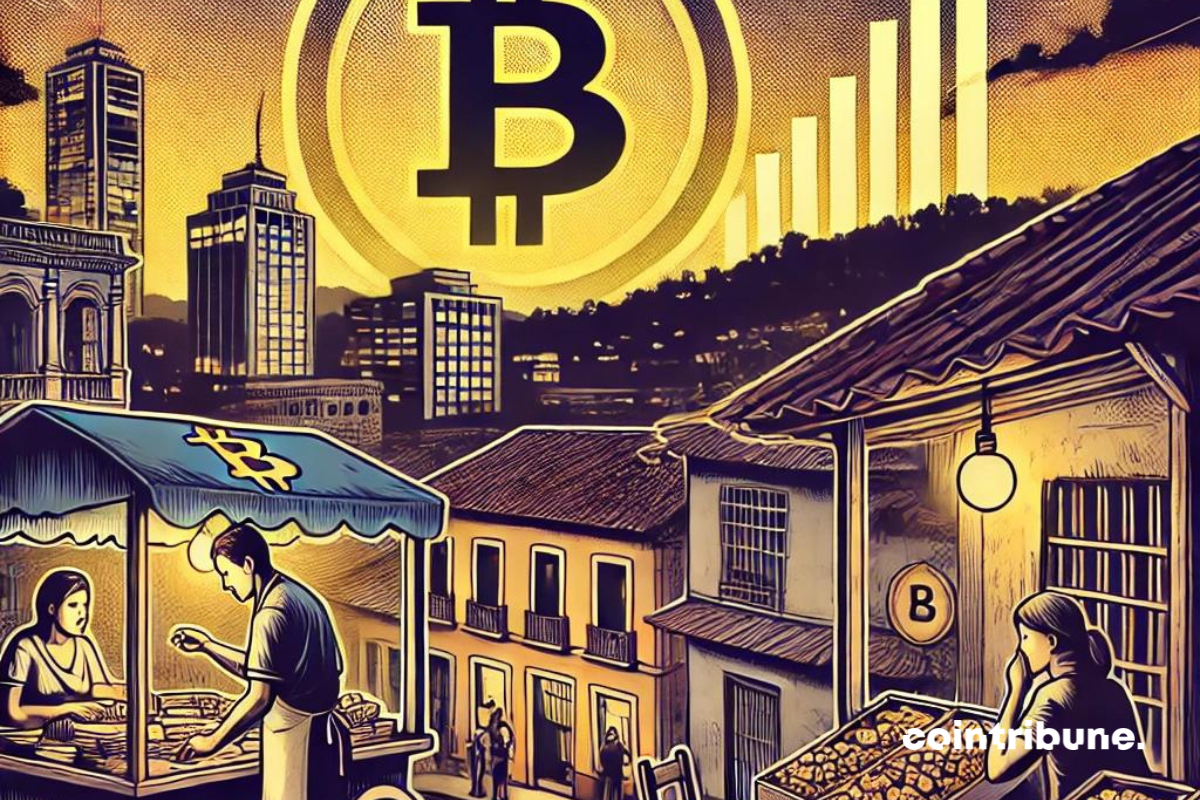
In 2021, El Salvador surprised the world by becoming the first country to adopt Bitcoin as legal tender. This radical choice was intended to position the country as a pioneer in financial innovation, in order to attract foreign investment and promote financial inclusion. However, this decision, although visionary, is accompanied by complex challenges that are beginning to be felt. In a recent interview, President Nayib Bukele admitted that the adoption of Bitcoin by the local population is far from what was hoped for.
Bitcoin in El Salvador: between ambition and reality
In an interview with Time, Salvadoran President Nayib Bukele admitted that widespread adoption of Bitcoin by his fellow citizens was not yet a reality. There is therefore a contrast between initial expectations and the current situation on the ground. This statement comes at a time when many observers had anticipated rapid adoption, supported by government incentives and an intense media campaign. In reality, the volatility of Bitcoin’s price, combined with a lack of trust and limited understanding of crypto among the population, seems to have dampened the initial enthusiasm.
Bukele, however, defended the country's overall crypto strategy.. Despite the slow adoption, he believes the strategy has helped put El Salvador on the global map of financial innovation and attract the attention of investors. Incentives, such as the absence of capital gains taxes for Bitcoin investors and the creation of special economic zones dedicated to blockchain companies, have indeed attracted international interest. However, the tangible results of these initiatives have yet to be confirmed.
Hesitant adoption despite government efforts
Despite the government’s efforts to promote the use of Bitcoin, adoption among the Salvadoran population remains slow and limited. Many Salvadorans, especially those in rural areas, continue to favor traditional payment methods. For one local economist, there is a gap between the government’s idealism and the daily reality of citizens. Technical obstacles, such as limited internet access and the lack of smartphones in some areas, further complicate the process. In addition, distrust of a currency known to be volatile and unstable does not encourage widespread use.
In response to this slow adoption, the Salvadoran government has adjusted its strategy. Bukele has spoken about the importance of financial education to overcome cultural and technological reluctance. The Ministry of Economy recently launched a series of initiatives to educate citizens about the potential benefits of using Bitcoin. Digital literacy programs are also underway to help Salvadorans navigate the crypto ecosystem.
El Salvador’s Bitcoin experiment is a bold test of how crypto can be integrated into a national economy. However, it is also indicative of the complex challenges of adopting new financial technologies on a large scale. We are hopeful that the common front with Argentina on Bitcoin will allow the Salvadoran government to overcome the obstacles.
Maximize your Tremplin.io experience with our 'Read to Earn' program! For every article you read, earn points and access exclusive rewards. Sign up now and start earning benefits.